By Costantine Muganyizi
East African Community (EAC) central bank governors have renewed their commitment to introducing a single regional currency by 2031, reaffirming their determination to advance the East African Monetary Union (EAMU).
However, the governors acknowledged that, despite the progress made, none of the bloc’s Partner States has yet met all the key macroeconomic convergence criteria required to establish the monetary union, underscoring the need to accelerate reforms over the next five years.
Meeting on July 24, 2026, at the 29th Ordinary Meeting of the Monetary Affairs Committee (MAC) in Kampala, the governors reviewed progress in implementing the revised East African Monetary Union (EAMU) Roadmap and underscored the importance of accelerating reforms to keep the region on course toward adopting a common currency.
The Committee noted that while significant milestones have been achieved -including modernising monetary policy frameworks, harmonising central banking operations, strengthening macroeconomic statistics, improving financial sector oversight and expanding regional payment systems – further efforts are required to meet the four primary convergence criteria that underpin a successful monetary union.
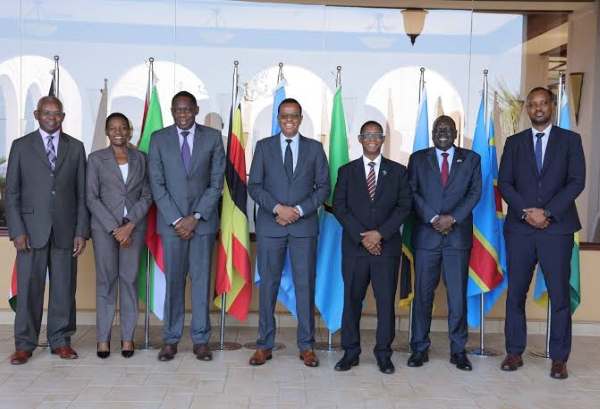
“The meeting noted that although Partner States have undertaken significant macroeconomic reforms and implemented policies to meet the convergence criteria, the progress has been uneven with no Partner State having attained all four primary convergence criteria,” the seven governors wo attended the meeting said in a statement.
Despite the remaining challenges, the governors expressed confidence in the region’s economic outlook, projecting the EAC economy to grow by 5.2 percent in 2026, significantly above the 4.3 percent forecast for Sub-Saharan Africa. They said the stronger performance reflects resilient domestic demand, continued public and private investment, and ongoing regional integration efforts.
The Committee also welcomed the steady decline in regional inflation, which fell from 9.6 percent in the 2024/25 financial year to 6.7 percent in 2025/26, attributing the improvement to prudent monetary policies, easing global commodity prices and improved food supplies. Inflation is expected to remain moderate, provided geopolitical tensions and supply chain disruptions continue to ease.
Recognising the growing importance of seamless financial integration, the governors announced that implementation of the EAC Cross-Border Payment System Masterplan has officially commenced. The initiative is expected to modernise regional payment infrastructure by reducing transaction costs and settlement times, improving interoperability among payment systems, promoting financial inclusion and facilitating trade and investment across Partner States.
The Committee said implementation will be guided through annual work plans and supported by the mobilisation of financial and technical resources, describing the project as a critical pillar in advancing the East African Monetary Union.
The governors, however, cautioned that the regional economy continues to face significant external risks arising from geopolitical conflicts, higher energy prices, elevated shipping costs and weakening global economic activity.
Global growth is projected to slow from 3.5 percent in 2025 to 3.0 percent in 2026, posing potential risks to inflation, trade and investment flows across the region.
To strengthen economic resilience, the Committee urged Partner States to continue implementing sound fiscal and monetary policies while enhancing regional coordination to safeguard macroeconomic stability.
The meeting also reviewed the stability of the region’s financial sector and concluded that EAC banking systems remain generally resilient, supported by adequate capital buffers and strong liquidity positions.
Nevertheless, the governors identified cybersecurity as one of the fastest-growing threats to financial stability and agreed to deepen regional cooperation in strengthening cyber resilience, information sharing and supervisory frameworks.
In addition, the Committee encouraged central banks to diversify foreign exchange reserves through measures such as increasing domestic gold purchases, attracting remittance inflows and strengthening regional policy coordination to improve resilience against external shocks.
To fast-track progress toward the monetary union, the governors called for enhanced macroeconomic surveillance, the establishment of a peer review mechanism among Partner States and accelerated implementation of the revised EAMU Roadmap and the operational framework supporting the EAC Five-Year Development Strategy (2026/27–2030/31).

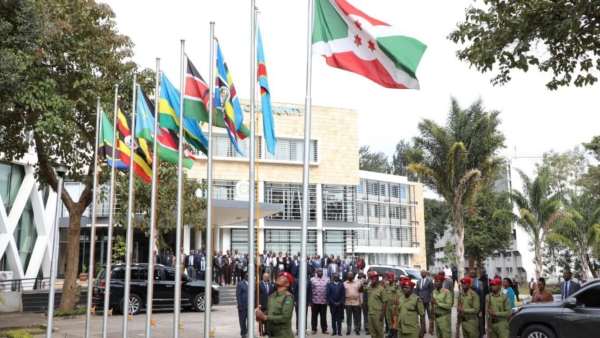
The meeting brought together governors and senior officials from the central banks of all EAC Partner States, reaffirming their shared commitment to deeper regional financial integration and a stable macroeconomic environment that supports sustainable economic growth.
For businesses, investors and financial institutions, the Committee’s resolutions signal renewed momentum toward a more integrated East African market, with a common currency and modern cross-border payment infrastructure expected to lower transaction costs, enhance trade competitiveness and strengthen the region’s position as one of Africa’s fastest-growing economic blocs. The EAC MAC comprises the Governors of the Central Banks of the EAC partner states and is responsible for coordinating monetary and financial sector policies to advance regional financial integration and the implementation of the East African Monetary Union Protocol. The committee plays a central role in preparing the region for the eventual introduction of a single East African currency.