By Business Insider Reporter, Zanzibar
Zanzibar is stepping up investment in youth skills and entrepreneurship as part of efforts to build the human capital needed to support its long-term economic transformation.
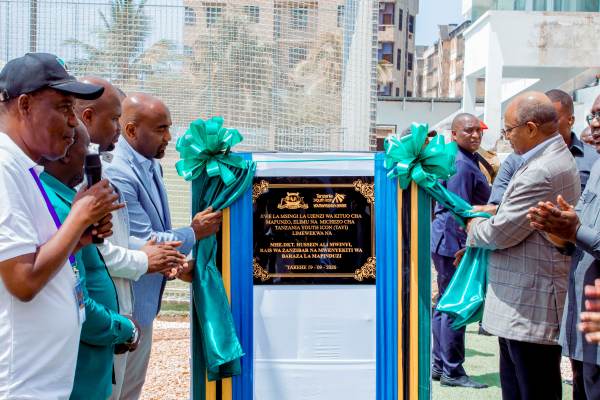
President Hussein Ali Mwinyi on Saturday laid the foundation stone for a modern youth training, education and sports centre in Kikwajuni, describing the project as an example of how partnerships between government and non-state institutions can help deliver Zanzibar’s development ambitions.
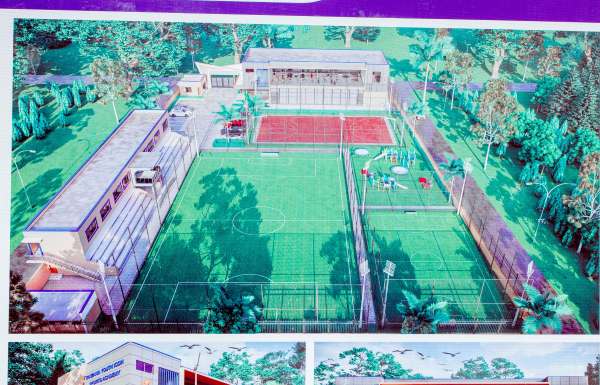
The centre, being developed by the Tanzania Aspiration Initiatives (TAYI), is expected to provide young people with training across a range of disciplines while creating opportunities for employment, enterprise and innovation.
Speaking at the foundation-stone ceremony on September 19, President Mwinyi said the government was taking various measures to ensure the ambitions set out in its development vision, election manifesto and other development plans were translated into tangible results.
“Today, I have participated in laying the foundation stone for a modern youth training, education and sports centre, a project which, as we have been informed, was conceived and is being implemented by TAYI,” he said.
The President said the project demonstrated the role that collaboration between the government, private sector and other institutions could play in achieving the objectives of Zanzibar Development Vision 2050.
Once completed, the facility is expected to expand employment opportunities for young people, support entrepreneurship and business development, and provide training aimed at building a more innovative and productive society.
Human capital at the centre
The economic significance of the project goes beyond the construction of a new facility.
For Zanzibar, where the government is seeking to expand economic activity and create opportunities for a young population, developing employable and entrepreneurial skills will be critical to ensuring that economic growth translates into jobs and incomes.
TAYI has operated for nearly 15 years, providing young people with training in areas including sports, entrepreneurship, innovation, fashion, arts, vocational skills, languages, information technology, computing, environmental management and community safety.
About 1,800 young people are estimated to have received various forms of training through the organisation since its establishment.
The new centre is intended to expand that footprint and create a more modern platform for skills development.
Hamad Yussuf Masauni, the Kikwajuni MP and Minister of State in the Vice-President’s Office responsible for Union and Environment, said investment in young people was closely connected to Zanzibar’s broader development agenda.
He said Zanzibar Development Vision 2050 seeks significant economic and social transformation supported by healthy, competitive, innovative and productive human capital.
For an economy seeking to move towards higher-value activities, that human-capital component is particularly important. Infrastructure and investment can create economic opportunities, but businesses also require workers with technical, digital and entrepreneurial capabilities to exploit them.
Public-private partnerships
Masauni said TAYI’s experience also demonstrated that the task could not be left to the government or any single organisation.
“TAYI believes that youth development cannot be achieved by one institution alone. On that basis, we continue strengthening cooperation with the government, educational institutions, the private sector, development organisations and communities,” he said.
That partnership model could become increasingly important as Zanzibar seeks to meet growing demand for skills while simultaneously investing in physical infrastructure and public services.
Youth training centres can also serve a wider economic purpose when their programmes are closely linked to the skills businesses actually need. Entrepreneurship training, digital capabilities, vocational education and creative industries can provide alternative pathways into employment while helping young people establish businesses of their own.
The inclusion of sports facilities adds another dimension, potentially combining skills development with opportunities in the growing sports and recreation economy.
Masauni said TAYI’s ambition was to develop the Kikwajuni facility into a centre capable of providing solutions to the needs of young people not only in Zanzibar and Mainland Tanzania, but eventually across East and Central Africa.
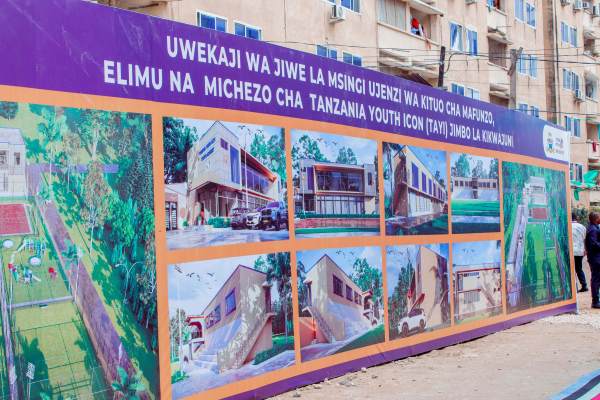
President Mwinyi said the project was consistent with the government’s efforts to turn the aspirations of Vision 2050 into practical development initiatives. For the centre, however, the longer-term measure of success will extend beyond the completion of its buildings. Its economic impact will ultimately depend on how many young people acquire marketable skills, move into employment, establish sustainable businesses and use those skills to participate in Zanzibar’s changing economy.