

By A Correspondent
The Office of the Treasury Registrar (OTR) and Tanzania-Zambia Mafuta (TAZAMA) Pipeline Limited have held strategic discussions on the company’s future business direction, regional competitiveness and opportunities to expand its petroleum transportation operations in Tanzania.
The discussions, held in Dar es Salaam on November 9, 2026, focused on strengthening TAZAMA’s commercial sustainability, identifying new revenue opportunities and positioning the company to respond to growing competition from alternative energy transportation infrastructure across the region.
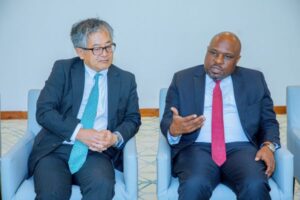
The meeting took place when TAZAMA’s Zambia-based Acting Managing Director, Ian Mutale, paid an introductory visit to Treasury Registrar Nehemiah Mchechu.
Mr. Mutale was accompanied by the company’s Director of Corporate Services, Mussa Mbura, and Director of Operations and Engineering, Dora Ernest.
Tanzania holds a 33.3 percent stake in TAZAMA through the OTR, while the Zambian government owns the remaining 66.7 percent, making the company an important cross-border public investment with strategic significance for both countries.
During the meeting, Treasury Registrar, Mr Nehemia Mchechu (pictured above) emphasised the need for a more commercially focused approach to managing government investments, stressing that public enterprises must prioritise business growth, financial sustainability and shareholder value creation.
He said investment decisions should be guided by sound commercial considerations while protecting the interests of shareholders and ensuring that companies remain competitive over the long term.
The Treasury Registrar underscored the importance of managing public enterprises with clear performance objectives, effective governance and a strong focus on delivering sustainable business results.
Regional competition reshapes TAZAMA’s outlook
For his part, Mr Mutale outlined TAZAMA’s strategic position in the regional petroleum transportation market, highlighting the emergence of alternative infrastructure and changing dynamics in the movement of petroleum products.
He specifically cited the Lobito Corridor and other emerging transportation routes as developments that could influence the company’s competitive position and future business prospects.

The growing availability of alternative transportation corridors presents both challenges and opportunities for established petroleum logistics operators, making efficiency, cost competitiveness and strategic market positioning increasingly important.
For TAZAMA, maintaining its relevance will require continued attention to operational performance, infrastructure utilisation and the ability to offer commercially attractive transportation services to customers.
Tanzania offers expansion potential
Mr. Mutale also identified Tanzania as a promising market for expanding TAZAMA’s commercial activities, pointing to its existing infrastructure, established presence and longstanding business relationships.
He observed that the country offered a natural starting point for potential business expansion because TAZAMA already had an operational foundation and established relationships, unlike markets where it would have to invest in infrastructure and build commercial networks from scratch.
The discussions highlight the importance of leveraging existing assets to unlock new revenue streams and improve returns on public investments.
For Tanzania, strengthening TAZAMA’s commercial performance also has implications for the broader energy and logistics sector, particularly in relation to petroleum transportation, regional trade and cross-border economic integration.
As competition from alternative transportation corridors grows, the company’s ability to adapt its business strategy, improve operational efficiency and identify new markets will be critical to sustaining its position in the regional energy supply chain. The engagement between OTR and TAZAMA therefore reflects a broader government emphasis on ensuring that public enterprises operate as commercially sustainable businesses while delivering long-term value to their shareholders and the economies they serve.