By Correspondent Peter Haule, Arusha
Tanzania is positioning efficient supply chain management at the heart of its long-term industrial transformation, with the National Supply Chain Management Policy emerging as a key instrument for delivering the country’s Development Vision 2050 (Dira 2050).
The policy is expected to strengthen domestic manufacturing by increasing the use of locally produced goods, services and raw materials, while improving the efficiency of public procurement and creating a more competitive business environment for local enterprises.
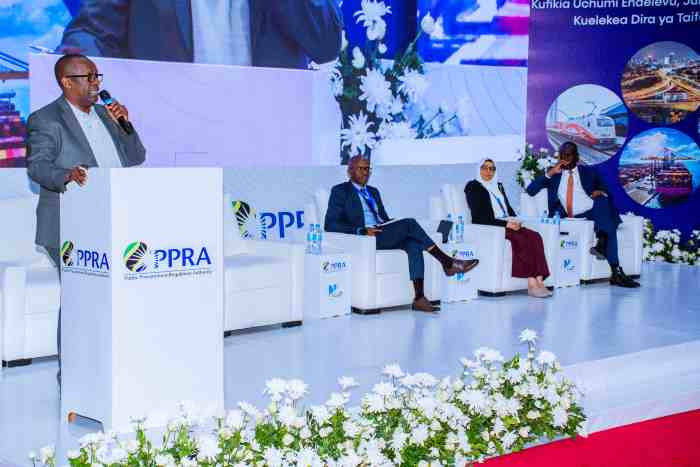
Speaking during the 10th Public Procurement Forum 2026 at the Arusha International Conference Centre (AICC), Acting Commissioner for Public Procurement Policy at the Ministry of Finance, Alex Haraba, said the policy provides the strategic framework needed to modernise supply chain management across government institutions and unlock broader economic opportunities.
He noted that the policy is designed to expand market access for Tanzanian manufacturers and service providers, strengthen the competitiveness of the private sector, stimulate industrial production and generate employment, while increasing government revenue and attracting investment.
“The policy establishes a comprehensive framework for effective supply chain management and implementation. It is intended to improve public service delivery and resource utilisation, strengthen markets for locally produced goods, services and raw materials, and enhance the participation of the private sector and special interest groups in economic development,” Mr. Haraba said.
Beyond procurement, the policy introduces a coordinated approach covering every stage of the public supply chain, from planning and acquisition to customs clearance, inspection, warehousing, distribution, utilisation and disposal of government assets.

According to Mr. Haraba, the reforms are expected to ensure that goods, services and public works consistently meet required quality standards, reducing losses associated with substandard deliveries while improving value for money from public expenditure.
He added that stronger inspection and acceptance procedures would increase efficiency in the use of public resources and ultimately improve the quality of services delivered to citizens.
The policy also integrates environmental sustainability, climate resilience and good governance into supply chain operations, reflecting the government’s broader commitment to sustainable economic growth as Tanzania pursues its industrialisation agenda.
Haraba explained that prior to 2025, procurement activities were carried out without a unified policy linking the different components of supply chain management. As a result, government institutions faced persistent challenges, including difficulties in procuring goods that met procurement objectives, weaknesses in customs clearance and cargo management, inefficient inspection and acceptance procedures, poor inventory and asset management, and limited efficiency in the distribution and disposal of government property.
He further noted that environmental considerations, climate change mitigation and governance principles received insufficient attention within the previous system.
The National Supply Chain Management Policy seeks to address these structural weaknesses by introducing an integrated framework that aligns procurement, logistics and asset management with Tanzania’s long-term economic ambitions.
Its implementation is expected to increase the uptake of locally manufactured products and services, strengthen domestic industries, improve productivity and competitiveness, deepen private sector participation and expand opportunities for women, youth and other special groups.

The reforms are also expected to deliver broader economic benefits through higher employment, increased government revenue and more efficient use of public resources. As Tanzania accelerates the implementation of Dira 2050, policymakers view the supply chain not merely as an administrative function, but as a strategic economic tool capable of supporting industrialisation, strengthening domestic value chains and enhancing the country’s competitiveness in regional and global markets.