By Benny Mwaipaja, London
Tanzania has taken a significant step towards integrating its financial markets with the global investment community after the country’s first offshore bond denominated in Tanzanian shillings was listed on the London Stock Exchange.
The US$100 million (approximately TSh262.5 billion) bond, arranged by the International Finance Corporation (IFC), the private-sector investment arm of the World Bank Group, is more than another fundraising exercise. It is the first time international investors have been able to buy a debt instrument linked directly to the Tanzanian shilling through one of the world’s largest capital markets.
The proceeds will be channelled to NMB Bank Plc, which will use the funds to expand long-term lending to small and medium-sized enterprises (SMEs) – businesses that generate the majority of jobs in Tanzania but have historically struggled to access affordable financing.
Importantly, 20 per cent of the facility – around TSh52.5 billion – has been earmarked for women-owned businesses, reflecting growing recognition that female entrepreneurs remain among the country’s most underserved borrowers.
For Tanzania, the listing represents more than access to fresh capital. It signals increasing confidence in the country’s macroeconomic management and the ability of its financial system to attract international investors without relying on foreign currency borrowing.
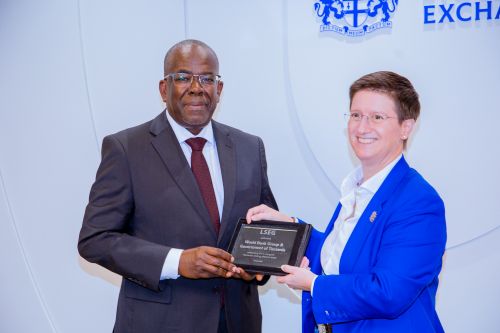
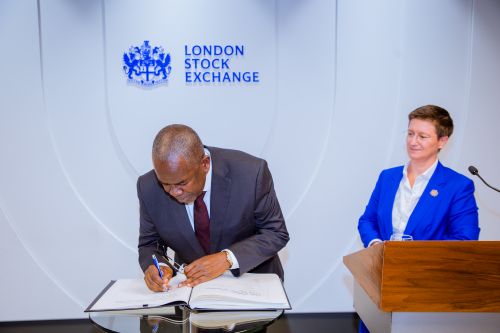
Launching the bond at the London Stock Exchange, Tanzania’s Minister for Finance, Ambassador Khamis Mussa Omar, described the milestone as a new chapter in the country’s financial development.
“This is an important first step in Tanzania’s participation in international capital markets using our own currency.
The listing demonstrates the confidence that global financial institutions have in our economy and in the reforms we have undertaken in the financial sector,” he said.

The minister said the transaction supports the government’s broader ambition of mobilising long-term private capital needed to deliver the country’s Development Vision 2050 (Dira 2050), which aims to transform Tanzania into a US$1 trillion economy over the next quarter century.
He noted that listing a Tanzanian shilling-denominated instrument on a globally recognised exchange such as London also strengthens Tanzania’s financial reputation internationally, potentially lowering future borrowing costs while broadening the country’s investor base.
“The real success of this transaction will not be measured by the listing itself,” he said. “It will be measured by how these resources help businesses grow, create jobs and expand economic activity across Tanzania.”
Financing businesses that drive the economy
For NMB Bank, the transaction expands its ability to provide longer-term credit at a time when demand from growing businesses continues to outpace available financing.
Chief Executive Officer Ruth Zaipuna said the facility would enable the bank to support entrepreneurs who often face difficulties securing capital despite playing a central role in Tanzania’s economy.
“This funding will allow us to extend more long-term financing to small and medium-sized businesses, helping accelerate private-sector growth, production and employment,” she said.
The latest transaction also strengthens NMB’s relationship with international capital markets.
In 2023, the bank raised more than TSh400 billion through its sustainability bond listed in London. The new IFC-backed transaction, however, is regarded as more significant because it is the first offshore bond issued and listed in Tanzanian shillings, reducing foreign exchange risk while deepening confidence in the local currency.
A vote of confidence in Tanzania
World Bank Vice President and Treasurer Jorge Familiar said the institution viewed the transaction as an investment in Tanzania’s long-term economic transformation rather than simply another financing arrangement.
“What matters to us is not only the amount invested but the impact it creates,” he said.
He said the programme is expected to support between 13,000 and 20,000 jobs, while giving international investors an opportunity to participate directly in financing Tanzania’s growing private sector.
The transaction also reflects IFC’s expanding commitment to Tanzania.
The institution has invested more than US$1.6 billion in the country across infrastructure, agriculture, energy, financial markets and other strategic sectors designed to stimulate private investment and economic growth.
Building deeper capital markets
The bond arrives as Tanzania seeks to diversify its financing sources beyond traditional sovereign borrowing and domestic banking.
Developing deeper capital markets has become increasingly important as governments across Africa search for sustainable ways to finance development while encouraging greater private-sector participation.
For Tanzania, attracting international investment in local-currency instruments reduces exposure to exchange-rate volatility and demonstrates growing investor confidence in the country’s macroeconomic stability.
If replicated, similar transactions could provide banks and companies with new funding options while expanding Tanzania’s presence in international capital markets.
For London investors, the bond offers exposure to one of East Africa’s fastest-growing economies. For Tanzanian businesses, it promises something far more tangible: greater access to the capital needed to expand, invest and create jobs.