By Correspondent Saidina Msangi, Abidjan
In a decisive move to break free from decades of commodity vulnerability, African nations have pledged to prioritise funding for industries rooted in the continent’s vast natural and mineral resources.
The landmark strategy aims to accelerate local value addition, fortify intra-continental trade, and build a resilient, self-sustaining economic future.
The collective commitment was finalized at the conclusion of the 9th Joint Meeting of the African Union Specialized Technical Committee (STC) on Finance, Monetary Affairs, Economic Planning, and Integration, combined with the 5th STC on Trade, Tourism, Industry, and Minerals, held in Abidjan, Côte d’Ivoire.
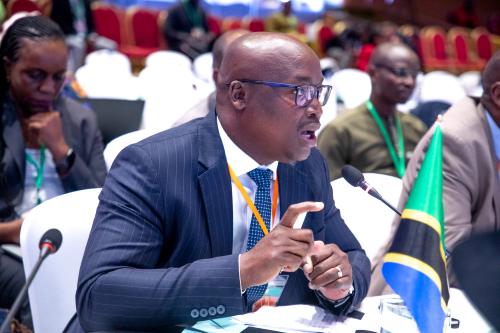
Speaking after the summit, Tanzania’s Deputy Minister for Finance, Eng. Mshamu Ali Munde (pictured above), highlighted that the primary objective is to fast-track structural economic transformation.
By processing raw materials locally and deepening regional integration, Africa seeks to dramatically reduce its reliance on external funding and foreign aid.
“Africa possesses immense wealth in minerals, trade, and tourism—pillars capable of transforming our economies if backed by seamless cross-border coordination,” stated Munde. “Crucially, we must execute targeted strategies to manage national debt sustainability and curb external financial dependency.”
Capitalising on a tech-savvy youth demographic
Beyond mineral assets, the ministers identified Africa’s rapidly growing, creative youth population as its greatest competitive edge. Hon. Munde stressed that modernising education and skills development – paired with the strategic deployment of emerging technologies such as Artificial Intelligence (AI) – will equip the workforce to drive an advanced industrial revolution.
Addressing cross-border commercial friction, he reaffirmed the continent’s intention to dismantle both tariff and non-tariff barriers under the African Continental Free Trade Area (AfCFTA).
“To unlock true regional commerce, we must reform discriminatory trade policies and build robust economic corridors linking nations,” Hon. Munde explained. “This will enable the frictionless movement of people, goods, and services across the continent.”
Building corridors and value chains
Echoing these priorities, Tanzania’s Deputy Minister for Industry and Trade, Hon. Dennis Londo, urged delegates to accelerate financial inclusion and modernise logistics and supply networks to sharpen Africa’s global competitiveness.
“We must harmonize regulatory frameworks and eliminate cross-border friction,” Londo emphasised.
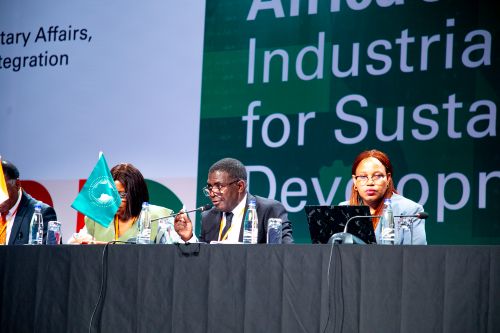
He added: “Unlocking trade requires streamlining transit procedures, guaranteeing freedom of movement, and committing capital to strategic infrastructure – roads, railways, ports, and waterways.”
Londo noted that connecting agricultural and mining hubs directly to regional processing centres will allow Africa to construct resilient, high-value supply chains.
This shift will enable the continent to export finished, internationally compliant products rather than low-margin raw commodities. The two-day ministerial conference, held under the banner “Financing Africa’s Industrialization for Sustainable Development,” concluded with a unified blueprint: to turn Africa’s rich resource base into the engine of its own sustainable industrial development.