
By Business Insider Reporter
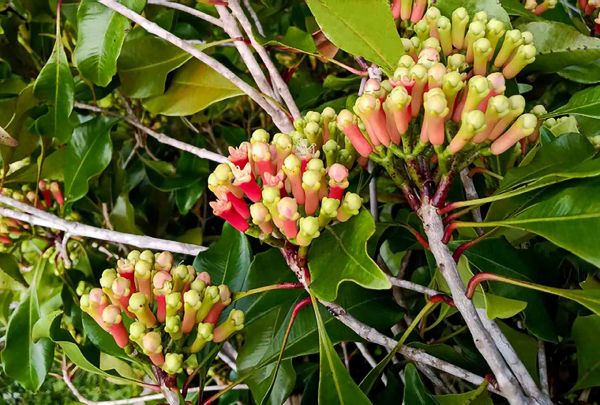
Zanzibar’s clove export earnings surged by about 513 percent to US$38 million in the year ending September 2026, providing a major boost to the Isles’ foreign exchange earnings and reinforcing the importance of the traditional cash crop alongside tourism.
The sharp increase, from US$6.2 million recorded in the corresponding period of 2025, was accompanied by a substantial rise in export volumes, which reached approximately 6,500 tonnes compared with 1,100 tonnes a year earlier.
The performance contributed to a broader expansion in Zanzibar’s external earnings, with exports of goods and services increasing by 15.9 percent to US$1.864 billion from US$1.609 billion, according to the Bank of Tanzania’s October 2026 Monthly Economic Review (MER).
“This performance was largely due to higher service receipts, particularly from
tourism-related activities, as well as increases in both clove production and exports.
On a month-on-month basis, exports of goods and services rose to US$176.6 million from US$159.1 million recorded in September 2025m,” explains the central bank (BoT) in the new MER.
The clove export performance is particularly significant for Zanzibar, where the crop has historically been an important agricultural commodity and source of export income. Its latest performance points to the potential contribution of agricultural exports to the Isles’ efforts to diversify foreign exchange sources beyond services.
However, BoT noted that the significant increase in clove exports was partly due to the crop’s cyclical nature. This is an important consideration when assessing the sustainability of the growth and its implications for future export earnings.
Tourism remains the main pillar of external earnings
While cloves recorded the most dramatic growth among the highlighted traditional export commodities, tourism-related services continued to underpin Zanzibar’s external sector performance.
Services receipts reached US$1.799 billion in the year ending September 2026, representing an increase of 14.3 percent. The sector’s contribution highlights the importance of tourism and other services in generating foreign exchange, supporting employment and sustaining economic activity.
The combination of stronger agricultural exports and expanding services earnings illustrates the complementary role that traditional commodities and tourism can play in Zanzibar’s economy.
The performance also provides an opportunity to strengthen linkages between agriculture and tourism, including the development of local supply chains, value addition and markets for locally produced goods.
Imports rise as external trade expands
Zanzibar’s import bill also increased during the period, with imports of goods and services rising by 34 percent to US$899.4 million from US$671.1 million.

The increase included higher imports of capital goods, which rose to US$228.3 million from US$81.2 million, while intermediate goods imports increased by 20.7 percent to US$494.2 million. Consumer goods imports rose by 45 per cent to US$111 million.
Despite the faster growth in imports, Zanzibar recorded a current account surplus of US$986.8 million, an increase of 18.7 percent from US$831.4 million in the year ending September 2025.
The surplus was supported by strong services earnings, which more than offset the merchandise trade deficit.
The latest figures underline the importance of sustaining tourism growth while strengthening the productivity, quality and export competitiveness of traditional agricultural commodities.