

High Court clears opposition leader of treason but convicts him of incitement, leaving questions over political freedoms and Tanzania’s post-election climate
By Business Insider Reporter
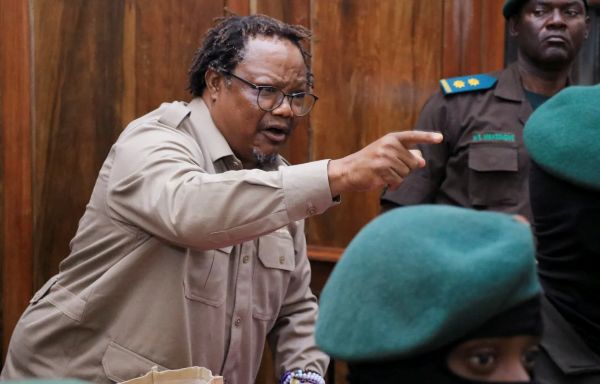
Tanzania’s main opposition leader, Tundu Lissu, has escaped the possibility of execution after the High Court acquitted him of treason, but he will remain behind bars for four years following his conviction on the lesser charge of incitement.
The ruling, delivered on Friday, November 6, brings a dramatic turn to one of Tanzania’s most closely watched political trials, which has kept the chairman of Chama cha Demokrasia na Maendeleo (CHADEMA) in detention for more than 570 days.
A three-judge panel led by Justice Dunstan Ndunguru found that the prosecution had failed to prove two of the three essential elements required to establish treason, an offence punishable by death under Tanzanian law.
However, the judges ruled that the prosecution had presented sufficient evidence to establish incitement, concluding that statements made by Lissu had encouraged actions intended to interfere with the conduct of the October 2025 General Election.
The decision drew criticism from Lissu who told the court in his mitigation that he is surprised to have been found guilty and sentenced to a charge which he was not tried on.
Although Lissu has been cleared of the more serious allegation, his conviction for incitement means that his legal troubles are far from over.
The court held that Lissu’s public remarks, made in the presence of journalists and subsequently circulated widely, were intended to reach a broader audience and encourage unlawful actions capable of disrupting the electoral process.
Justice Ndunguru said the statements infringed on the constitutional rights of other citizens, particularly their right to participate in elections without unlawful interference.
In sentencing, the court considered mitigating circumstances, including Lissu’s status as a first-time offender and the absence of previous criminal convictions.
A political campaign that became a criminal case
Lissu was arrested on April 9, 2025, in Mbinga, in Tanzania’s southern region, following a political rally at which he was advocating electoral reforms.
He was subsequently charged with treason over remarks he had made at CHADEMA headquarters in Dar es Salaam on April 3, 2025.
Prosecutors alleged that he had called on supporters to prevent the general election, mobilise rebellion and disrupt the electoral process.
Lissu denied the allegations, maintaining that his statements were part of a legitimate political campaign aimed at securing reforms to Tanzania’s electoral system.
The campaign, conducted under the slogan “No Reforms, No Election”, reflected CHADEMA’s demands for an independent electoral commission, greater transparency and changes intended to strengthen public confidence in elections.
For the opposition, these demands were central to ensuring that future elections would be credible and competitive. The government and prosecution, however, viewed Lissu’s statements differently, arguing that they went beyond political advocacy and amounted to an attempt to threaten the government and undermine constitutional order.
The defence challenged the prosecution’s interpretation, arguing that the evidence did not meet the legal requirements for treason.
The judges ultimately accepted that the prosecution had failed to establish the essential elements of that offence, but found Lissu guilty of incitement under Section 390 of the Penal Code.
A trial overshadowed by political tensions
The case unfolded against an increasingly tense political environment in the run-up to the October 29, 2025 General Election.
CHADEMA was barred from participating in the poll after refusing to sign the electoral code of ethics, arguing that the government had failed to address its demands for meaningful electoral reforms.
The party’s exclusion deepened tensions between the opposition and the authorities, with the dispute over electoral reforms becoming a defining feature of the political debate ahead of the election.
The vote was subsequently followed by widespread protests and a violent security response, with hundreds of people reported killed in different parts of the country.
A commission appointed by President Samia Suluhu Hassan later reported that at least 518 people had died during the unrest, attributing the violence to protesters. The government has rejected allegations by human rights organisations that security forces used excessive force.
Against this background, Lissu’s prosecution attracted considerable attention both within Tanzania and internationally. His supporters and human rights advocates raised concerns about political freedoms, the independence of the judiciary and the treatment of opposition figures.
The treason charge was particularly controversial because of the possibility of a death sentence, making the proceedings a major test of public confidence in the country’s justice system.
Lissu’s political history
The case also brings renewed attention to Lissu’s long and turbulent political journey.
In 2017, he survived an assassination attempt in Dodoma, when he was shot multiple times outside his home. He subsequently spent several years receiving medical treatment abroad before returning to Tanzania.
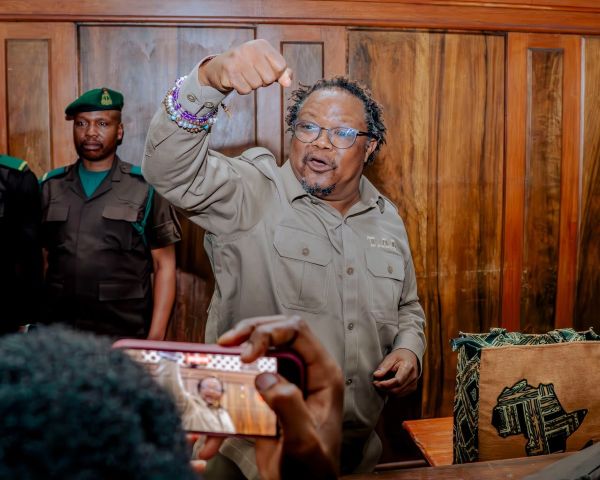
His political career has been closely associated with calls for constitutional, electoral and institutional reforms, placing him among the most prominent critics of the country’s political system.
Friday’s ruling therefore carries significance beyond the immediate question of his imprisonment. It leaves CHADEMA without its chairman at a time when the party and the wider opposition face difficult questions about their political future following the disputed electoral environment.
For the authorities, the conviction reinforces the position that political participation must remain within the limits of the law. For the opposition, the case remains part of a broader debate about the space available for political mobilisation and criticism.
Lissu retains the right to challenge both his conviction and sentence through the appellate process. His acquittal on treason is a significant legal victory, but the four-year prison term ensures that the political and legal implications of the case will continue to shape Tanzania’s public debate.