
By Business Insider Reporter
Cancer is no longer a death sentence if it is detected early, according to the Executive Director of the Ocean Road Cancer Institute (ORCI), Dr Diwani Msemo, who has urged Tanzanians to make routine cancer screening part of their healthcare habits.
Speaking to reporters, Dr. Msemo said early diagnosis allows patients to receive timely treatment, significantly improving survival rates and enabling many to return to normal, healthy lives.
“Like many other diseases, cancer is treatable when it is detected in its early stages,” said Dr. Msemo, a specialist oncologist. “Unlike many chronic non-communicable diseases that require lifelong medication, some cancers can be successfully treated if diagnosed early, allowing patients to recover fully and resume their normal lives.”
He said ORCI has significantly expanded its cancer detection and treatment services, supported by continued government investment in specialised cancer care infrastructure, equipment and human resources.
Dr. Msemo called on the public to take advantage of the institute’s screening services, stressing that prevention and early diagnosis remain the most effective weapons against cancer.
He specifically encouraged men aged 45 years and above to undergo regular prostate cancer screening, noting that misconceptions continue to discourage many from seeking early diagnosis.
“Many men avoid prostate cancer screening because they wrongly believe the examination is invasive and uncomfortable,” he said. “In reality, the initial screening is as simple as an ordinary blood test, similar to a malaria test. Only if abnormalities are detected would a doctor recommend further investigations such as an ultrasound scan or CT scan.”
He explained that every man has a prostate gland located near the urinary tract, and symptoms such as difficulty in passing urine may indicate enlargement of the gland. However, he cautioned that such symptoms do not automatically mean a patient has cancer, making professional screening essential.
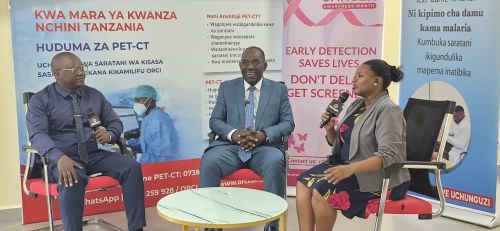
“Not every enlarged prostate is cancerous. That is why people should avoid self-diagnosis and instead seek medical assessment as soon as symptoms appear,” he said.
Dr Msemo also expressed concern that many patients still arrive at hospital when the disease has reached advanced stages because they initially rely on unproven alternative remedies instead of seeking professional medical care.
“Some patients delay treatment because of misconceptions about cancer and confidence in alternative medicine. Unfortunately, by the time they come to hospital, many are already in stage three or four, when treatment becomes more complex and the chances of successful recovery are reduced,” he said.
To improve public awareness and encourage early diagnosis, ORCI continues to organise cancer screening campaigns across the country while expanding community education programmes aimed at dispelling myths surrounding the disease.
Dr Msemo thanked journalists for their role in educating the public, saying accurate and responsible reporting is helping more people understand the importance of early cancer detection and treatment. “Our goal is to ensure that every Tanzanian understands that cancer is treatable when detected early. Regular screening can save lives,” he said.