By Correspondent Benny Mwaipaja, London
Tanzania has stepped up its campaign to attract global investment, pitching a pipeline of large-scale opportunities in infrastructure, energy, manufacturing, agriculture, mining and financial services as the country seeks to mobilise private capital to deliver its Vision 2050 ambitions.
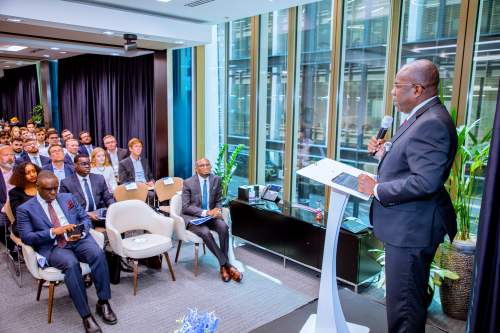
Speaking at the Tanzania Strategic Investment and Partnership Forum in London, Minister of Finance Ambassador Khamis Mussa Omar invited international investors to explore Tanzania’s rapidly expanding economy, describing the country as one of Africa’s most stable and promising long-term investment destinations.
The forum, organised by the Ministry of Finance in collaboration with Standard Bank UK, brought together senior executives from leading global financial institutions, insurers, investment funds and risk management firms to discuss opportunities across Tanzania’s priority growth sectors.
The meeting forms part of Tanzania’s broader economic diplomacy strategy, which seeks to position the country as a preferred destination for foreign direct investment while accelerating the implementation of Dira 2050.
Private capital at the centre of growth
Addressing investors, Ambassador Omar said Tanzania had deliberately placed the private sector at the heart of its long-term development strategy.
The government aims to build a US$1 trillion economy by 2050, with around 70 percent of the investment required expected to come from the private sector.
“We have created an enabling investment environment backed by competitive fiscal incentives and policy reforms designed to attract long-term capital,” he said.
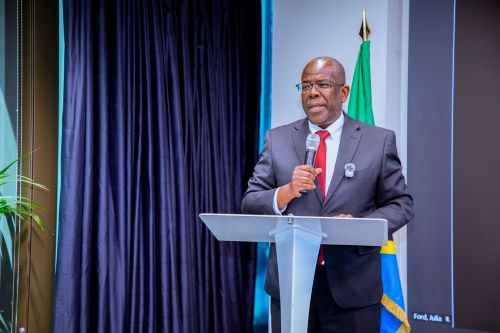
Photo: Government Communications Unit, Ministry of Finance – London.
The minister said Tanzania offers investment opportunities across strategic sectors including transport infrastructure, renewable and conventional energy, manufacturing, commercial agriculture, mining, logistics and financial services.
His message was clear: Tanzania is not simply seeking investors, but long-term development partners.
Strong economic fundamentals
Ambassador Omar supported his investment pitch with a series of macroeconomic indicators intended to reassure international investors.
He said Tanzania’s economy expanded by 5.9 per cent in 2025, up from 5.5 per cent in 2024, while inflation remained below 5 percent, among the lowest rates in Africa.
Fiscal performance has also improved significantly.
The budget deficit has narrowed to 3.1 percent of GDP, while 74.2 per cent of the national budget is now financed through domestic revenue, reflecting stronger revenue mobilisation and reduced dependence on external financing.
He added that Tanzania’s public debt remains sustainable according to assessments by the International Monetary Fund (IMF), providing further confidence in the country’s macroeconomic stability.
These indicators, he said, provide a solid platform for investors seeking predictable, long-term returns.
Strategic projects attract investor interest
The discussion quickly moved from economic indicators to investment opportunities.
International investors sought updates on Tanzania’s proposed US$42 billion Liquefied Natural Gas (LNG) project, regarded as one of Africa’s largest planned energy investments.
Ambassador Omar said negotiations had reached an advanced stage, noting that the remaining issues largely concern commercial arrangements among project partners rather than government approvals.
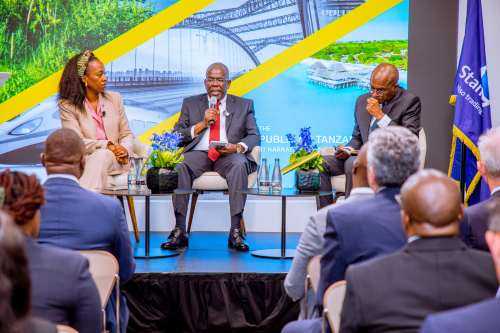
“The Government remains ready to proceed once the commercial partners complete their internal processes,” he told participants.
Transport infrastructure also featured prominently.
Investors expressed strong interest in Tanzania’s expanding Standard Gauge Railway (SGR) network, together with the ports of Dar es Salaam, Tanga and Mtwara, recognising their strategic importance in regional trade.
Government officials said that by 2030/31, nearly 2,000 kilometres of the SGR network are expected to be completed, significantly enhancing Tanzania’s position as East Africa’s principal logistics and trade gateway.
For international investors, the railway represents more than a transport project. It is expected to reduce freight costs, improve regional connectivity and strengthen supply chains serving landlocked neighbouring countries.
Beyond infrastructure
The forum also highlighted opportunities beyond traditional infrastructure.
Participants discussed foreign exchange availability, energy security, the digital economy, commercial agriculture and value addition in manufacturing.
Particular attention was given to Tanzania’s “Cotton-to-Cloth” initiative, which seeks to transform the country’s cotton industry from exporting raw fibre into producing higher-value textiles and garments for domestic and export markets.
The initiative aligns with Tanzania’s industrialisation agenda by encouraging investment across the entire manufacturing value chain rather than relying on raw commodity exports.
Standard Bank backs Tanzania
Standard Bank reaffirmed its commitment to supporting investment into Tanzania.
Ian Carson, Deputy Chief Executive of Standard Bank Europe and Chief Executive of Standard Bank Tanzania, said the bank remains committed to connecting African economies with international financial markets.
He described Tanzania as one of the continent’s most attractive destinations for long-term investment, citing its political stability, improving infrastructure and consistent economic reforms.
The bank said it intends to continue facilitating cross-border investment and financing solutions that enable international businesses to participate in Tanzania’s economic transformation.
Building confidence through dialogue
Tanzania’s Ambassador to the United Kingdom, Mbelwa Kairuki, said the government remains committed to maintaining regular engagement with the international investment community.
“Tanzania is implementing a comprehensive programme of economic reforms centred on sound macroeconomic management, structural transformation and private sector participation,” he said.
“We welcome sustained partnerships with international investors as we pursue inclusive and sustainable economic growth.”
His remarks reflected a broader shift in Tanzania’s investment strategy, where continuous dialogue with investors is increasingly viewed as essential to building confidence and attracting long-term capital.
A broader investment message
The London forum demonstrated Tanzania’s growing confidence in presenting itself to international investors.
Rather than promoting isolated projects, government officials outlined an integrated investment story built on economic stability, infrastructure expansion, industrialisation and private sector-led growth.
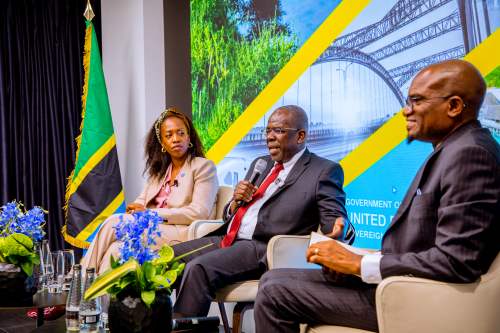
With major projects ranging from LNG and the SGR to port modernisation and industrial value chains gathering momentum, Tanzania is positioning itself as one of Africa’s most compelling long-term investment destinations. For investors seeking exposure to one of the continent’s fastest-growing economies, the message from London was straightforward: Tanzania is open for business – and looking for partners prepared to grow alongside it.