
By Business Insider Correspondent
As Tanzania accelerates implementation of ambitious national development programmes under Dira 2050, the government is increasingly turning its attention to one of the country’s less visible but strategically important sectors – the accounting and financial reporting profession.
The Minister of Finance, Khamis Mussa Omar, has directed the National Board of Accountants and Auditors (NBAA) to strengthen ethical standards and professional integrity within the accounting sector to ensure the country produces professionals capable of supporting Tanzania’s evolving economic transformation.
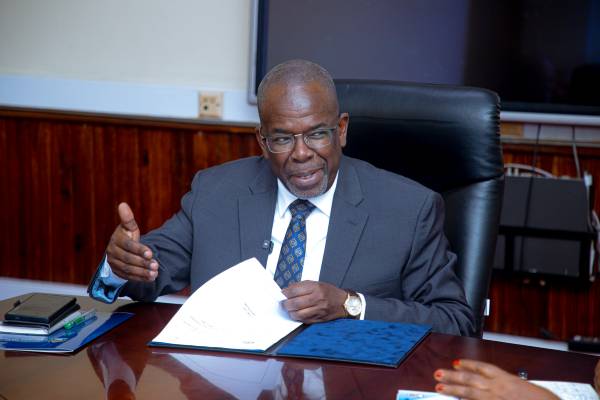
Speaking during a meeting with NBAA leadership in Dar es Salaam, the minister said the accounting profession remains central to improving financial governance, strengthening investor confidence, and ensuring transparency in the management of national resources.
“Our expectation is for NBAA to continue building a profession grounded in ethics, integrity, accountability and patriotism because accounting directly touches the management of the nation’s resources,” Ambassador Omar said after receiving the institution’s implementation report for the 2025/26 financial year.
The directive comes at a time when Tanzania is pursuing large-scale public investments, infrastructure expansion and increased private sector participation in the economy – developments that are placing growing pressure on institutions responsible for financial oversight, compliance and corporate governance.
Across emerging economies, strong accounting systems are increasingly viewed not only as administrative tools, but as critical foundations for attracting foreign direct investment, improving capital market confidence and reducing financial fraud.
Strengthening institutional trust
Analysts say the government’s renewed emphasis on accounting standards reflects broader efforts to modernise Tanzania’s financial ecosystem as the country seeks to position itself as a competitive regional investment destination.
Transparent financial reporting has become increasingly important as Tanzania expands sectors such as energy, mining, logistics, infrastructure, banking and public-private partnerships. Investors and lenders are placing greater demand on reliable audited financial statements, sustainability reporting and digital compliance systems.
The Finance Minister commended NBAA for ongoing reforms, including the adoption of modern technologies in financial reporting oversight and the continued registration of accountants and audit firms across the country.
NBAA Board Chairperson, Sylvia Temu, said the institution has continued strengthening professional standards while focusing on producing accountants capable of meeting international benchmarks.
According to her, by the third quarter of the 2025/26 financial year, NBAA had registered 8,864 CPA Graduate Accountants, 6,631 Associate-level accountants and 529 Fellow accountants.
She added that between July 2025 and March 2026, the board also registered 22 new audit firms, 19 accounting firms and 271 professional accountants.
“These achievements demonstrate the growing demand for professional accounting services as the economy expands and becomes more sophisticated,” Prof. Temu noted.
Digital transformation in financial reporting
One of the institution’s most significant recent developments is the completion of a new digital financial reporting system known as NBAA-VN.
According to NBAA Chief Executive Officer, Siasa Mzenzi, the system has already collected more than 11,000 financial reports from companies across Tanzania.
He said the platform is expected to significantly improve transparency, reduce financial statement fraud, eliminate fake audit firms and enhance accessibility of financial information for regulators, banks and other stakeholders.
“We want to ensure that financial reports in Tanzania are secure, accurate and easily accessible to relevant government institutions and private sector players, including banks,” Prof. Mzenzi explained.
The introduction of digital financial reporting systems mirrors global trends where governments are increasingly leveraging technology to strengthen tax administration, financial monitoring and corporate accountability.
In Tanzania, the reforms also support broader government efforts to formalise sections of the economy and improve domestic revenue mobilisation.
Preparing accountants for sustainability finance
NBAA is also responding to shifting global investment standards, particularly the growing importance of environmental, social and governance (ESG) reporting.
Prof. Mzenzi revealed that more than 2,149 accountants have already received training on International Sustainability Financial Reporting Standards (ISSFRS), aimed at preparing professionals to integrate climate risks, sustainability metrics and environmental accountability into corporate reporting.
The move comes as global investors increasingly prioritise sustainability disclosures when making investment decisions, particularly in sectors linked to climate resilience, energy transition and green finance.
For Tanzania, the development could become strategically important as the country seeks to attract climate financing, green investments and international development capital aligned with sustainability standards.

Economic transformation requires professional capacity
The government’s push to strengthen NBAA reflects a wider recognition that Tanzania’s long-term economic ambitions will depend not only on infrastructure and industrial growth, but also on the strength of institutions and professional capacity.
As public and private investment flows expand, demand is expected to rise for highly skilled accountants, auditors and financial analysts capable of supporting increasingly complex transactions and regulatory environments.
In many respects, the accounting profession is becoming a silent but critical pillar of Tanzania’s economic transformation – helping ensure that growth is matched by transparency, accountability and investor trust. And as Tanzania moves toward a more sophisticated and globally integrated economy, the role of institutions like NBAA is likely to become even more central in shaping the credibility and resilience of the country’s financial system.