
By Business Insider Reporter
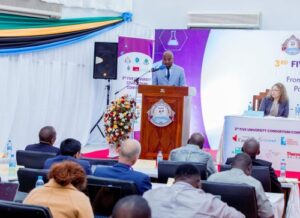
A major shift in billionaire industrialist Aliko Dangote’s (pictured above) proposed East African oil refinery project is triggering fresh debate across the region after reports emerged that the Nigerian tycoon is now leaning towards Kenya instead of Tanzania as the preferred location for the multi-billion-dollar investment.
The proposed refinery – estimated to cost between US$15 billion and US$17 billion – had initially been linked to Tanzania’s northern port city of Tanga as part of a broader regional energy integration strategy involving Kenya, Uganda, South Sudan and the Democratic Republic of Congo.
However, in recent remarks reported by the Financial Times and Reuters, Dangote indicated that Kenya’s port city of Mombasa may offer stronger commercial and logistical advantages than Tanga, citing its deeper port infrastructure, larger fuel market and stronger consumption base.
“I’m leaning more towards Mombasa because Mombasa has a much larger, deeper port,” Dangote said, while also describing Kenya as the bigger economy with higher fuel demand.
The development represents a potentially significant setback for Tanzania, which had increasingly been positioning itself as the future home of East Africa’s first large-scale regional refinery.
Only weeks earlier, Kenyan President William Ruto publicly stated that East African nations had agreed in principle to pursue a joint refinery project in Tanga, modeled after Dangote’s 650,000-barrel-per-day refinery in Nigeria – currently Africa’s largest.
For Tanzania, the refinery had been viewed as a transformational industrial project capable of reshaping the country’s energy, logistics and manufacturing sectors.
Strategic implications for Tanzania
Energy analysts say losing the refinery to Kenya could carry broader economic implications beyond the direct investment itself.
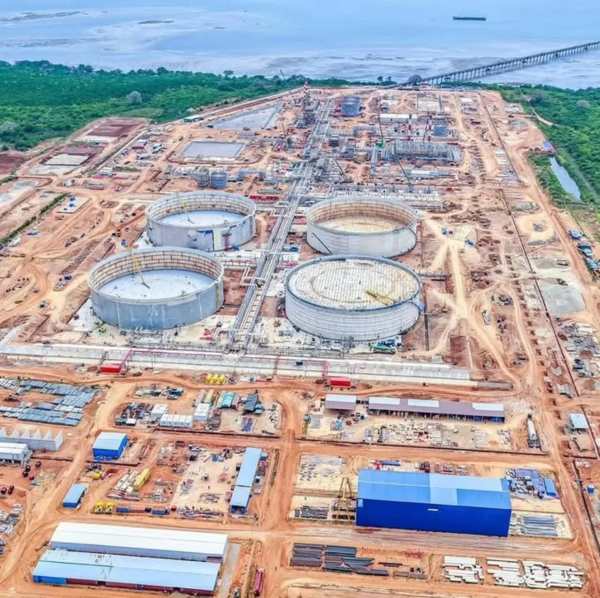
A refinery of such scale would likely have stimulated large downstream industries including petrochemicals, storage infrastructure, pipeline networks, shipping, industrial parks and export-oriented manufacturing.
It would also have strengthened Tanzania’s strategic role in regional fuel distribution, particularly through the Port of Tanga, which has increasingly been marketed as a gateway for inland African markets.
The refinery could additionally have generated thousands of direct and indirect jobs while boosting foreign exchange earnings and reducing East Africa’s heavy dependence on imported refined petroleum products.
Currently, East African countries import nearly all refined fuel products, largely from the Middle East, exposing regional economies to global supply shocks and price volatility.
The urgency of regional refining capacity has intensified amid recent geopolitical tensions affecting global oil markets, including disruptions linked to Middle East conflicts.
Tanzania still holds strategic advantages
Despite Dangote’s apparent preference for Kenya, analysts caution that Tanzania remains strategically important in any future regional refinery arrangement.
Tanga’s proximity to Uganda’s planned crude oil export infrastructure and its location along regional transport corridors still provide important commercial advantages.
The original proposal also envisioned pipeline connectivity between Mombasa and Tanga while processing crude sourced from Uganda, South Sudan, Kenya and the DRC.
Moreover, Tanzania has in recent years positioned itself as one of East Africa’s fastest-growing energy and logistics hubs through investments in ports, railways, pipelines and natural gas infrastructure.
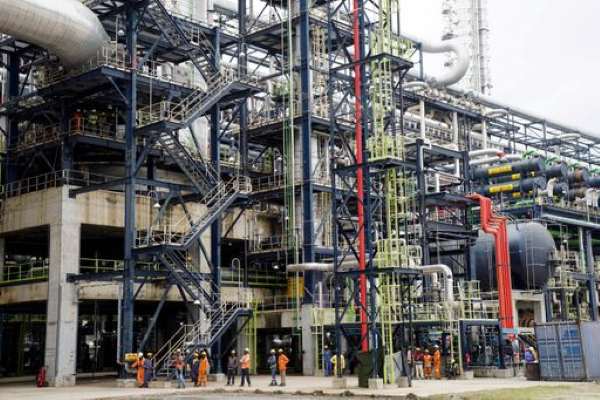
The government has simultaneously been pursuing broader industrialisation goals under its long-term development agenda, with energy security increasingly viewed as central to sustaining manufacturing growth.
Regional competition intensifies
Dangote’s latest comments also highlight growing competition among East African economies to attract large-scale industrial investments.
Kenya appears to be leveraging the commercial strength of Mombasa Port and its larger domestic fuel market, while Tanzania has been emphasizing strategic geography, regional connectivity and industrial land availability.
For regional governments, the refinery discussions underscore a wider challenge facing Africa’s industrial ambitions: balancing national economic interests with regional integration objectives.
Even so, Dangote has maintained that the project’s final location will ultimately depend on political support and cooperation from regional governments.
“The ball is in the hands of President Ruto,” he said in the interview. Whether the refinery eventually lands in Kenya, Tanzania or emerges as a shared regional project, the proposal has already reignited debate over East Africa’s long-standing dependence on imported fuel and the urgent need for large-scale industrial energy infrastructure capable of supporting the region’s next phase of economic growth.