By Business Insider Reporter
The Tanzanian government has intensified pressure on contractors involved in the construction of the 49.5MW Malagarasi Hydropower Project in Kigoma, signaling a tougher stance on accountability, project execution and public infrastructure management as the country accelerates investment in energy security.
Energy Minister Deogratius Ndejembi issued a series of strong directives during an inspection tour of the project, expressing dissatisfaction with the pace of implementation by Chinese contractor Dongfang Electric International Corporation.
The minister accused the contractor of repeated delays, failure to honour contractual obligations and offering excuses instead of accelerating execution of one of Tanzania’s strategic electricity projects.
Among the key directives issued were an immediate special audit into the use of more than US$20 million in advance payments already made to the contractor, and the removal of the contractor’s project manager over what the minister described as poor performance and weak supervision.
“We cannot tolerate unnecessary delays caused by contractor inefficiency on a project of this national importance,” Mr. Ndejembi said during the inspection.
Rising scrutiny over infrastructure execution
The Malagarasi Hydropower Project, valued at more than TSh300 billion, is considered a critical component of Tanzania’s broader strategy to strengthen electricity access and diversify energy generation sources beyond natural gas and large-scale hydroelectric projects.
Located along the Malagarasi River in western Tanzania, the project is expected to significantly improve electricity supply in Kigoma, Katavi, Kagera and neighbouring regions while adding new capacity to the national grid.
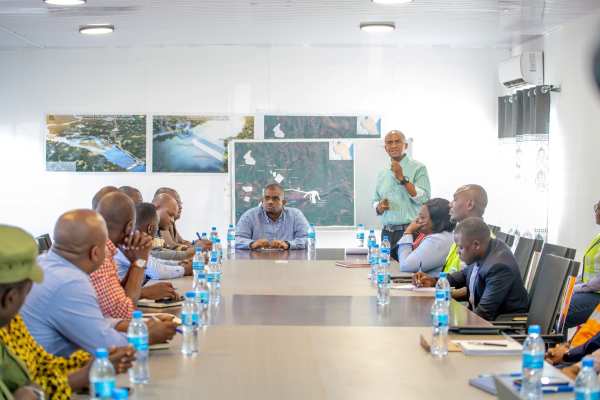
Construction officially began on April 30, 2024, with completion scheduled for October 2027.
However, government officials now fear implementation delays could undermine broader economic and industrialisation goals tied to reliable energy access.
The minister specifically cited delays in the construction of workers’ housing and access roads – both considered foundational components for smooth project execution.
According to Mr. Ndejembi, the level of completed work does not correspond with the substantial advance payments already disbursed by the government.
The move to order a special financial audit reflects growing government concern over cost efficiency and value for money in public infrastructure projects.
Government tightens oversight
Mr. Ndejembi instructed the Tanzania Electric Supply Company (TANESCO), together with project consultants, to intensify supervision of the contractor and ensure strict compliance with contractual obligations.
He further warned that the government would not approve additional project costs or budget variations, arguing that contractors often intentionally underquote during tendering processes only to later demand extra funding.
“Some contractors deliberately bid at low prices to secure contracts and later seek cost escalations. The government will not tolerate such practices,” he said.
The minister directed TANESCO to complete the special audit within two weeks and submit a detailed report to his office.
The latest intervention signals a broader policy shift under Tanzania’s infrastructure programme, where authorities are increasingly demanding stronger accountability, faster execution and tighter financial controls in publicly funded projects.
Energy demand driving urgency
The pressure surrounding the Malagarasi project comes as Tanzania experiences rapidly growing electricity demand driven by industrial expansion, urbanisation and increased investment in mining, manufacturing and transport infrastructure.
Reliable electricity supply has become central to the government’s industrialisation agenda and long-term economic transformation strategy.
Over the past several years, Tanzania has invested heavily in large-scale energy infrastructure, including the Julius Nyerere Hydropower Project (JNHPP), rural electrification expansion and natural gas-based generation projects.
The government is also positioning energy security as a key pillar for attracting investment into strategic sectors such as agro-processing, logistics, mining and manufacturing.
Analysts note that western Tanzania, including Kigoma and Katavi, has historically faced electricity reliability challenges that have constrained industrial development and private sector investment.
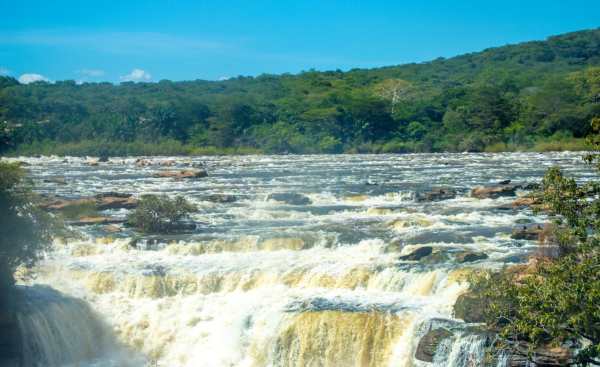
Once completed, the Malagarasi project is expected to improve grid stability in the western corridor while supporting regional economic integration and cross-border trade opportunities within the Great Lakes region.
TANESCO pledges compliance
TANESCO Managing Director Lazaro Twange said the utility had received all directives issued by the minister and would ensure their implementation within the required timelines.
He also noted that TANESCO had already been conducting regular meetings with the contractor in an effort to resolve operational bottlenecks affecting the project. The project is being implemented by Dongfang Electric International Corporation under a contract signed with TANESCO as part of Tanzania’s broader efforts to expand generation capacity and improve nationwide electricity access.