By Business Insider Correspondent, Nairobi
Tanzania stands to emerge as one of the key beneficiaries of France’s growing economic pivot toward East Africa following the inaugural Africa Forward Summit in Nairobi, where European and African leaders signaled a major shift from aid-driven relations toward investment, technology partnerships and industrial cooperation.
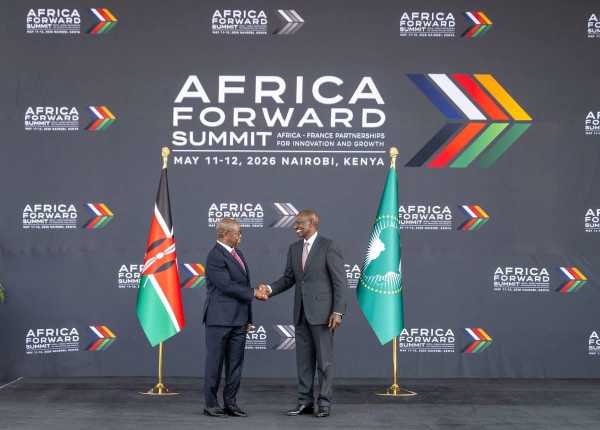
The high-level summit, co-chaired by Kenyan President William Ruto and French President Emmanuel Macron, brought together more than 30 heads of state and over 1,500 business leaders to explore new commercial opportunities in artificial intelligence, renewable energy, infrastructure, agriculture, healthcare and digital transformation.
For Tanzania, analysts say the summit’s outcomes could create fresh opportunities for foreign direct investment, technology transfer, infrastructure financing and export market expansion as France seeks stronger commercial ties with the rapidly growing East African region.
Europe’s new strategic frontier
The Nairobi summit marked the first time since the launch of the France-Africa summits in 1973 that the event has been hosted in a non-Francophone African country – a move widely interpreted as recognition of East Africa’s rising economic and geopolitical importance.
The shift comes as France attempts to redefine its African engagement strategy following declining political influence in parts of West and Central Africa.
Increasingly, European investors are looking toward East Africa’s relatively stable economies, expanding middle class, young population and growing demand for infrastructure, energy and digital services.
For Tanzania, the timing is particularly significant.
The country has in recent years accelerated investment in strategic infrastructure projects including the Standard Gauge Railway (SGR), the Julius Nyerere Hydropower Project (JNHPP), port modernisation initiatives and digital connectivity expansion – all sectors closely aligned with French and European investment interests.
New opportunities for Tanzanian industries
The summit’s focus on green energy, resilient health systems, artificial intelligence, sustainable agriculture and blue economy development closely matches Tanzania’s long-term economic priorities under Vision 2050 and broader industrialisation ambitions.
French companies are already active in several sectors across Tanzania, including energy, logistics, telecommunications, construction and urban infrastructure.
Analysts say increased French engagement in East Africa could accelerate investment into Tanzania’s renewable energy projects, agribusiness value chains, healthcare systems and transport infrastructure.
Tanzania’s strategic geographic position also strengthens its attractiveness.
With access to the Indian Ocean and growing regional trade links through the East African Community (EAC) and the African Continental Free Trade Area (AfCFTA), the country is increasingly positioning itself as a gateway to inland African markets including Zambia, the Democratic Republic of Congo, Rwanda, Burundi and Uganda.
The Port of Dar es Salaam, which continues to undergo major expansion and efficiency upgrades, is expected to become increasingly important in supporting future Europe-East Africa trade flows.
Technology and youth economy
One of the strongest themes emerging from the summit was Africa’s demographic advantage.
European policymakers and investors are increasingly viewing Africa’s youthful population not as a development challenge, but as a strategic economic opportunity capable of driving innovation, digital entrepreneurship and future global productivity.
For Tanzania, where a large proportion of the population is under the age of 35, the growing interest in digital partnerships could support the expansion of fintech, digital services, innovation hubs and startup ecosystems.
The summit’s emphasis on artificial intelligence and digital transformation may also create opportunities for Tanzanian universities, technology firms and financial institutions to collaborate with European partners in skills development, research and digital infrastructure.
Energy transition and climate financing
Another area where Tanzania could benefit significantly is climate and energy financing.
As Europe intensifies investment in green transition initiatives, Tanzania’s abundant renewable energy resources – including hydro, solar, wind and natural gas – position the country as an attractive destination for sustainable energy partnerships.
French-backed financing institutions and development agencies are expected to increase support for climate-resilient infrastructure, clean cooking energy, sustainable transport systems and environmental projects across East Africa.
The summit also discussed reforms to international financial systems aimed at improving African countries’ access to development financing and private capital.
A changing relationship
Beyond economics, the Nairobi summit reflects a broader transformation in Africa-Europe relations.
Rather than traditional donor-recipient dynamics, discussions increasingly centre on investment, industrial partnerships, innovation and market expansion.
For Tanzania, the shift could provide access not only to capital, but also to advanced technology, industrial expertise and global value chains needed to accelerate economic diversification. As East Africa cements its position as Africa’s fastest-growing regional bloc, Tanzania appears increasingly well placed to leverage the changing geopolitical landscape into long-term business and investment gains.