
By Business Insider Reporter
East Africa has become Africa’s economic bright spot. From Tanzania’s vast infrastructure programme and Rwanda’s technology-driven expansion to Uganda’s oil ambitions and Kenya’s financial sector, the region has consistently outperformed much of the continent over the past decade.
Yet the next phase of that success may depend less on how fast economies are growing and more on how they finance that growth.
That is the central message emerging from the African Development Bank’s (AfDB) East Africa Economic Outlook 2026, which argues that while East Africa remains Africa’s fastest-growing region, sustaining that performance will require governments to fundamentally rethink how development is financed in an increasingly fragmented global economy.
The report comes at a time when governments across the region are confronting shrinking concessional finance, tighter global credit conditions, rising debt servicing costs and mounting geopolitical risks that have pushed up fuel, freight and import prices.
For policymakers, the challenge is no longer simply delivering growth. It is finding new ways to pay for it.
Growth remains resilient amid headwinds
According to the AfDB, East Africa’s economy is projected to expand by 5.9 percent in 2026, down from an estimated 6.6 percent in 2025, before rebounding to 6.4 percent in 2027 as external shocks ease and infrastructure investments begin generating stronger economic returns.
The slowdown is not being driven by domestic weakness.
Instead, it reflects external pressures ranging from supply chain disruptions linked to geopolitical tensions in the Middle East to higher energy and import costs, all of which have squeezed government budgets and private sector investment.
Even so, East Africa continues to outperform every other African region.
For investors, that resilience reinforces the region’s reputation as one of Africa’s most attractive long-term growth markets.
The financing model is changing
Perhaps the report’s most important message is that Africa can no longer rely on traditional development finance.
Foreign aid is declining, global investors have become more cautious and borrowing costs have risen sharply.
The AfDB argues that the continent’s challenge is not necessarily a shortage of capital but an inability to mobilise and deploy its own financial resources efficiently. Its flagship African Economic Outlook 2026 estimates that Africa could unlock more than US$1.4 trillion annually through stronger domestic revenue mobilisation, deeper capital markets, better public investment management, expanded public-private partnerships and reduced illicit financial flows.
That represents a profound shift in thinking.
Rather than asking where external funding will come from, policymakers are increasingly asking how domestic savings, pension funds, sovereign wealth, insurance assets and private capital can finance Africa’s own development.
Tanzania’s strategy fits the new thinking
Few countries illustrate that transition more clearly than Tanzania.
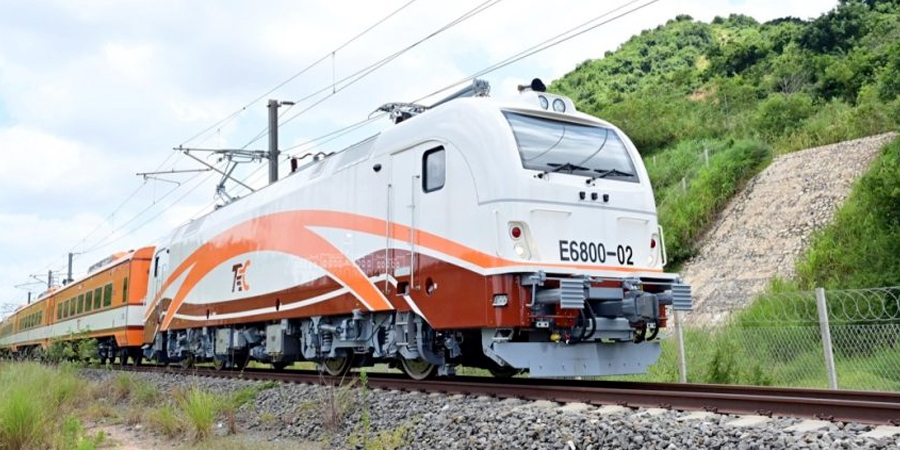
The government has spent the past several years investing heavily in strategic infrastructure including the Standard Gauge Railway (SGR), ports, electricity generation, roads and logistics corridors.
But officials increasingly acknowledge that infrastructure alone does not create prosperity.
The next phase is industrialisation.
That explains why institutions such as the Tanzania Investment Bank (TIB) are now seeking regional partnerships with development finance institutions across Southern Africa to mobilise larger pools of capital for manufacturing, mineral processing and agricultural value addition.
The approach closely mirrors the AfDB’s recommendation that governments move beyond financing individual projects and instead develop integrated industrial ecosystems supported by blended finance and regional investment partnerships.
It also aligns with Tanzania’s Development Vision 2050 (Dira 2050), which aims to transform the country into a US$1 trillion economy through private-sector-led industrial growth.
Private capital becomes indispensable
The report makes another point that should resonate strongly with East African policymakers.
Governments alone cannot finance the region’s development ambitions.
Public budgets are already under pressure.
Debt servicing consumes an increasing share of government revenues.
External borrowing has become more expensive.
The implication is clear: private investment must fill much of the financing gap.
That means improving regulatory certainty, strengthening financial markets, simplifying investment procedures and creating bankable projects capable of attracting institutional investors.
Infrastructure financing is also evolving.
Instead of governments funding every railway, industrial park or logistics hub, future projects are increasingly expected to combine public finance with pension funds, commercial lenders, sovereign investors and multilateral development institutions.
Integration as economic necessity
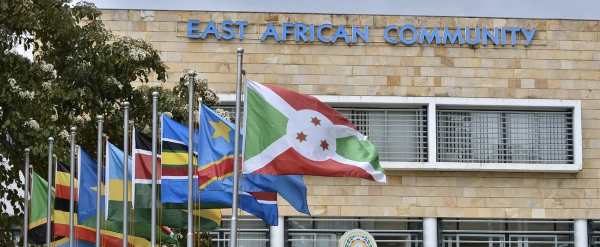
The AfDB also argues that East Africa’s competitiveness will increasingly depend on regional rather than national markets.
Cross-border infrastructure, harmonised regulations and integrated financial systems are becoming essential if manufacturers are to achieve the scale needed to compete internationally.
For Tanzania, this presents a significant opportunity.
The country’s strategic investments in ports, transport corridors and energy infrastructure position it as a potential logistics gateway linking the Indian Ocean to landlocked neighbours across East and Central Africa.
If complemented by industrial parks, export-processing zones and efficient customs systems, those assets could transform Tanzania from a transport corridor into a regional manufacturing platform.
Missing ingredient
Finance alone will not sustain growth.
The AfDB argues that bold institutional reforms are equally important.
These include strengthening governance, improving public financial management, expanding domestic tax collection, deepening capital markets and creating a more predictable business environment.
Without such reforms, attracting long-term investment becomes significantly harder regardless of economic growth rates.
For East African governments, the message is particularly timely.
The region has demonstrated that it can build roads, railways and ports.
The next test is whether it can build the institutions capable of financing and sustaining industrial transformation over the coming decades.
Climate risks cannot be ignored
The report’s optimism is also tempered by mounting climate risks.
The AfDB has warned that an anticipated “super” El Niño could inflict economic losses of between US$10 billion and US$20 billion across Africa through droughts, floods, food insecurity and infrastructure damage. Such shocks highlight why climate resilience must become an integral part of development financing rather than an afterthought.
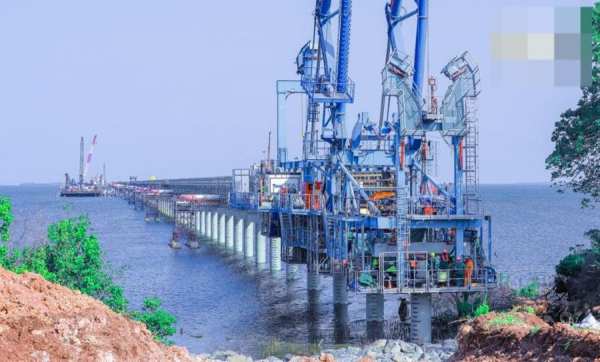
For East Africa – where agriculture remains a major employer and export earner – building climate-resilient infrastructure and financing adaptation measures will be essential to protecting future growth.
Beyond rapid growth
East Africa’s economic story is entering a new chapter.
For years, success was measured by GDP growth.
Today, the more important question is whether governments can convert that growth into sustainable industrialisation, productive employment and rising incomes.
The AfDB’s message is that the region possesses the fundamentals to achieve that ambition. What is needed now is a new financing architecture that mobilises domestic capital, attracts private investment and deepens regional cooperation.
If East Africa succeeds, it will not merely remain Africa’s fastest-growing region. It could become the continent’s most compelling example of how infrastructure, financial innovation and structural reform can combine to deliver long-term economic transformation.