Bank says nearly one billion Africans still lack access to clean cooking as governments turn to electricity, LPG, biogas and other alternatives, with Tanzania incorporating electric cooking into wider electrification investments.
By Peter Nyanje
The African Development Bank Group (AfDB) is pushing clean cooking to the centre of Africa’s energy transition, arguing that solving one of the continent’s most persistent household energy problems could unlock investment while delivering gains in health, productivity, gender equality and environmental protection.
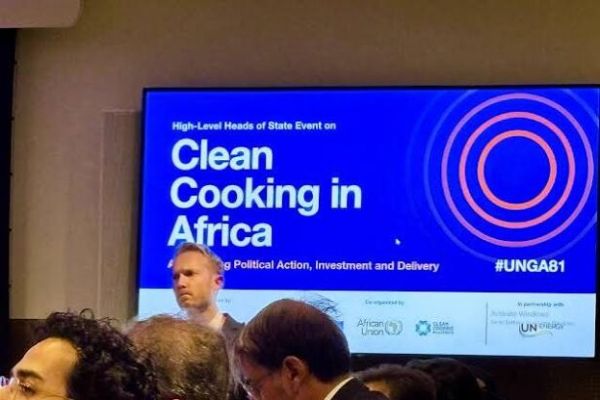
The Bank made the call during the first high-level clean cooking event held at the United Nations General Assembly in New York on September 22, as African governments and development partners sought to accelerate progress towards universal access.
Nearly one billion people in Africa still lack access to clean cooking, leaving a potentially vast market for technologies ranging from electric cooking appliances and liquefied petroleum gas (LPG) to biogas, bioethanol, improved cookstoves and briquettes.
The meeting was convened by Kenya and Norway in partnership with the International Energy Agency, Clean Cooking Alliance and UN Energy.
For Tanzania, the push is particularly significant because electric cooking devices are already being incorporated into broader electrification investments supported by the AfDB.
The approach signals an emerging shift in Africa’s energy investment agenda: expanding electricity generation and connections alone will not be sufficient unless households can also use modern energy for everyday activities such as cooking.

“How a family cooks affects health, forests, productivity, gender equality and the daily lives of millions of women and children in Africa,” AfDB Group Senior Vice-President Marie-Laure Akin-Olugbade said.
“It is therefore not a marginal issue. It is central to development, climate action and human dignity.”
US$2bn commitment
The Bank has backed that position with a commitment of US$2 billion over 10 years, announced following the first Summit on Clean Cooking in Africa in 2024.
About US$135 million has since been channelled into clean-cooking projects – 10 times the AfDB’s cumulative financing for the sector before the summit.
The investment drive is also being tied to Mission 300, a joint AfDB and World Bank Group initiative seeking to connect 300 million Africans to electricity by 2030.
According to Akin-Olugbade, all 36 National Energy Compacts adopted through the initiative contain clean-cooking targets, potentially giving the sector a more prominent position in national energy investment planning.
The technologies being pursued differ according to individual country conditions and include improved cookstoves, LPG, electricity, biogas, bioethanol and briquettes.
That diversity could create opportunities across several industries, from energy distribution and appliance manufacturing to financing, fuel supply chains and technology services.
Tanzania joins electric cooking push
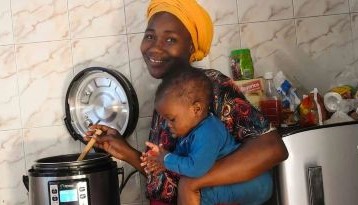
In Tanzania, the AfDB is incorporating electric cooking appliances into wider electrification investments, potentially allowing increased electricity access to translate into greater household use of modern cooking technologies.
Elsewhere, the Bank is experimenting with different models.
In Uganda, it is supporting biogas plants and subsidies for efficient electric cooking appliances, while in Rwanda results-based financing is intended to expand clean-cooking access to 100,000 households and 300 institutions.
The AfDB is also expanding concessional and catalytic financing through the Rome Process/Mattei Plan Financing Facility and the Africa Clean Cooking Programme under the Sustainable Energy Fund for Africa.
Such financing could prove important because one of the major challenges facing the clean-cooking industry is turning technological solutions into affordable products that millions of low-income households can adopt.
The economic case extends beyond selling appliances and fuels.
Heavy dependence on wood, charcoal and other traditional fuels contributes to indoor air pollution and deforestation, while households – particularly women and children – spend considerable time collecting fuel. Reducing that burden could free time for education and income-generating activities while lowering health and environmental costs.
Next test: turning pledges into projects
Attention will now shift to Nairobi, where Kenya is scheduled to host the second Summit on Clean Cooking in Africa in January 2027.
The meeting is expected to focus on converting political commitments into financing and implementable projects.
That will be a critical test for a sector that has historically attracted less investment than electricity generation and other large-scale energy infrastructure.
“Success will not be measured by the dollars we invest, but by the lives we improve,” Akin-Olugbade said.
“Clean cooking must become a central pillar of Africa’s energy transition, one that demands political leadership, sustained financing and collective action at scale.” For Tanzania and other African economies, that shift could increasingly make the household kitchen part of the continent’s wider energy investment story – linking electricity expansion, private capital and new technologies to a market serving hundreds of millions of consumers.