
By Business Insider Reporter
Tanzania’s land transport sector has undergone a significant transformation over the past five years, with the number of transport licences rising by 146.1 per cent as technology, online taxi services, round-the-clock bus operations and an expanding railway network reshape the industry.
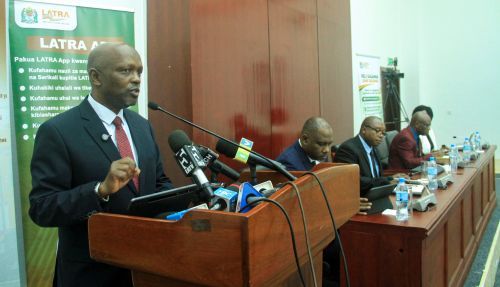
Data released by the Land Transport Regulatory Authority (LATRA) Diurector General, Dr. Habib Suluo (pictured above) shows that licences issued to passenger, goods-carrying and private-hire vehicles increased from 239,953 in 2021/22 to 590,468 in 2025/26 – an increase of 350,515 licences and an average annual growth rate of 27.2 percent.
The figures form part of LATRA’s five-year performance assessment presented to editors in Dar es Salaam on September 24, highlighting how the regulator’s role has expanded alongside changes in Tanzania’s transport economy.
Private-hire vehicles recorded the sharpest increase, with licences rising from 61,975 to 322,081 over the period. Goods vehicle licences increased from 143,011 to 238,733.
Passenger service vehicle licences, however, moved in the opposite direction, declining from 34,967 to 29,654.
The contrasting trends suggest that the expansion of Tanzania’s regulated transport market has not been uniform, with private-hire and freight services accounting for much of the growth.
Online taxis enter the formal economy
One of the biggest structural changes has been the formalisation of app-based transport services.
By 2026, LATRA had registered and approved 22 online taxi platform companies, connecting 23,532 licensed operators.
Of those licences, 11,407 were for two-wheel motorcycles, 8,083 for three-wheel motorcycles and 4,042 for cars.
LATRA has also decentralised the licensing of private-hire vehicles.

Regulatory changes introduced in 2023 allowed companies, cooperatives, public institutions and individuals to operate as authorised licensing agents. By the end of 2025/26, the regulator had certified 100 agents.
Over the three-year implementation period, the agents generated about TSh7.88 billion in licensing revenue, while earning approximately TSh2 billion in commissions.
For the wider transport economy, the shift represents an attempt to bring a fast-growing segment – particularly motorcycles, three-wheelers and technology-enabled taxi services – further into the formal regulatory system.
Technology takes centre stage
LATRA’s transformation has also involved greater use of technology to monitor vehicles and drivers.
The number of buses connected to the regulator’s Vehicle Tracking System (VTS) increased from 5,979 in 2021/22 to 14,743 in 2025/26.
The satellite and GPS-based system enables LATRA to monitor bus movements from its control centre.
The regulator has complemented the technology with driver identification devices known as i-buttons. The number of drivers issued with the devices increased from just 256 in 2022/23 to 13,829 in 2025/26.
This represents a gradual shift from conventional physical inspection towards technology-enabled supervision, particularly for long-distance buses.
More than 15,000 drivers tested
Professional standards have also become a larger part of LATRA’s regulatory programme.
Between 2022/23 and 2025/26, 15,547 drivers sat LATRA’s certification examinations, of whom 8,642 passed, equivalent to an average pass rate of 56 percent.
In 2025/26 alone, 6,356 drivers sat the examination and 4,079 passed, raising the annual pass rate to 64 percent.
The figures, however, highlight an unresolved skills challenge. LATRA says the overall 56 percent pass rate reflects, among other factors, inadequate preparation by some drivers and difficulties using computers during examinations.
The regulator has similarly stepped up training for bus attendants. Between January 2024 and June 2026, 7,216 attendants underwent training, with 4,664 registered by LATRA and issued identification cards.
E-ticketing becomes a 2.13/-tr market
Perhaps one of the clearest signs of digitalisation is the growth of electronic ticketing.
LATRA began implementing e-ticketing in 2022/23 before developing the Core e-Ticketing System, or CeTS, which integrates intercity and cross-border buses as well as TRC’s railway services.
By June 2026, 14 e-ticketing service providers had integrated their systems with LATRA.
Over four years, the ticketing system recorded 62.18 million passenger transactions worth TSh2.13 trillion. Annual passenger numbers captured by the system increased from 7.11 million in 2022/23 to 28.67 million in 2025/26, when recorded fares reached nearly TSh994 billion.
Yet digital payment adoption remains a work in progress. About 95.3 percent of passengers recorded during the period still paid cash, leaving online payments with only a small share of the market.
That gap potentially represents an opportunity for banks, mobile-money operators and transport technology companies as the industry moves towards greater digitalisation.
24-hour buses reshape travel
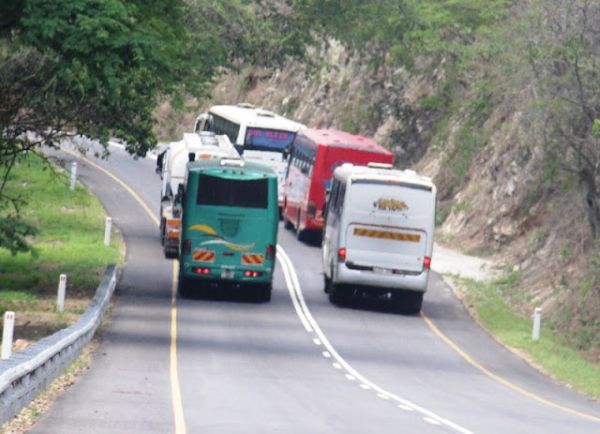
Another major reform was the introduction of round-the-clock intercity bus operations on October 1, 2023.
LATRA says improvements in road infrastructure, communications and vehicle monitoring made the change possible.
Its 2024/25 assessment found that night services had helped reduce congestion at terminals and given passengers greater flexibility. For some travellers, particularly businesspeople, overnight travel also reduces accommodation costs while freeing daytime hours for productive activities.
For operators, LATRA says the system has created additional business and investment opportunities.
Regulation expands onto the rails
LATRA’s regulatory footprint has expanded beyond roads as Tanzania invests in rail transport.
Between 2021/22 and 2025/26, the regulator carried out 275 railway inspections, covering infrastructure, signalling and communications, locomotives, coaches and operations. Of these, 143 involved Tanzania Railways Corporation operations and 132 TAZARA.
For the Standard Gauge Railway, LATRA certified 17 new locomotives, 56 passenger coaches, 10 electric multiple units, eight TRC engines and 264 freight wagons before they entered public service.
The five-year record therefore points to a regulator whose role is becoming broader and increasingly digital as Tanzania’s transport market evolves.

But the next phase will be measured by more than licence numbers. Low online-payment adoption and the modest overall driver examination pass rate show that gaps remain. For LATRA, the bigger test will be whether the rapid expansion of regulation, technology and transport services ultimately delivers safer, more efficient and more commercially competitive mobility for passengers and businesses.