Government calls for stronger risk-management systems, continuous training and closer cooperation between boards, management and auditors as new technologies create fresh challenges for public institutions.
By Correspondent Asia Singano, Arusha
Tanzania is stepping up efforts to strengthen risk management and the capacity of internal auditors as public institutions confront emerging challenges, including the growing use of artificial intelligence and other technologies.
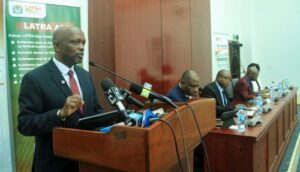
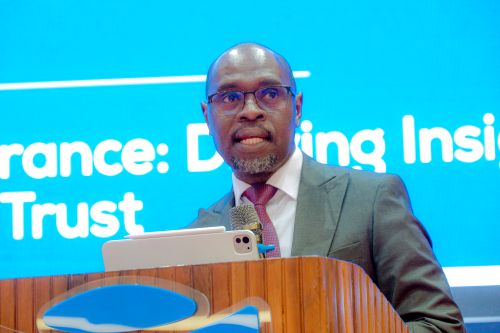
Acting Internal Auditor-General at the Ministry of Finance, Engineer Kenneth Nindie (pictured above), said stronger institutional risk management would require robust systems, continuous professional development and greater use of available training opportunities.
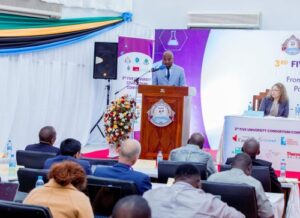
Speaking at the closing of the 19th Annual Internal Audit Conference, Nindie said the Ministry of Finance recognised the importance of continuously developing the skills of internal auditors to strengthen their ability to identify, assess and manage risks facing public institutions.
The government expects to make greater use of online training to expand access to professional development for auditors.
“We expect to have online training to enhance the capacity of internal auditors,” Nindie said.
He said discussions during the conference should also help auditors understand what boards expect from them and how their work can help institutions achieve their objectives while ensuring that public assets and resources deliver value to citizens.
The emphasis on skills development comes as the role of internal auditors increasingly extends beyond traditional financial controls to broader institutional risks.
Nindie said stronger cooperation between boards, management teams, internal auditors and other stakeholders was essential if audit findings and recommendations were to translate into improved institutional performance.
“We will continue working closely with all stakeholders to strengthen internal audit and risk-management systems in order to improve productivity and efficiency, with the ultimate objective of ensuring that public resources are used productively to contribute to national development,” he said.
Effective internal auditing, he said, should ultimately help institutions ensure that resources entrusted to them are used efficiently and produce value for the public.
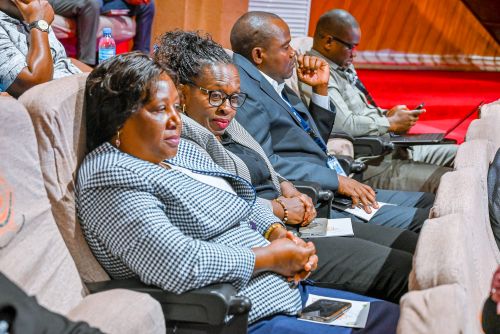
The conference provided participants with an opportunity to exchange experiences and discuss ways of strengthening audit practices and institutional governance.
Among Ministry of Finance officials attending the meeting was Lusius Mwenda, Director of Administration and Human Resources Management.
AI emerges as new audit challenge
Technology, particularly artificial intelligence, featured prominently in discussions as auditors considered the opportunities and risks emerging from its growing use.
Participants were urged not to focus solely on the potential benefits of AI, but also to participate actively in discussions around its risks and implications and how those risks should be managed.
The discussions highlighted the need for internal audit professionals to continuously update their skills as technology changes the environment in which public institutions operate.
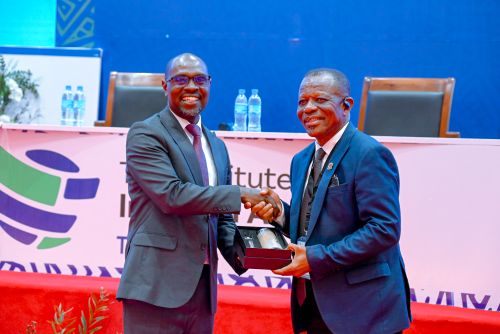
(Photo by Government Communications Unit, Ministry of Finance – Arusha)
The challenge is particularly relevant to risk management because technological change can introduce new issues that institutions must identify and manage alongside traditional financial and operational risks.
Continuous training, including through online platforms, is therefore being positioned as one of the tools for ensuring auditors remain equipped to respond to changing institutional demands.
The 19th Annual Internal Audit Conference concluded with participants having exchanged experiences and undergone training on a range of issues, including the application of technology and artificial intelligence.
For the Ministry of Finance, strengthening the profession will require more than improving technical audit procedures. It will also depend on building the capacity of auditors, improving institutional risk-management systems and strengthening cooperation between auditors, boards and management. The ultimate objective, Nindie said, is to ensure that stronger oversight translates into greater efficiency and better use of public resources for national development.