Government wants scientific discoveries to move beyond university laboratories and deliver measurable economic and social impact, as academics call for greater investment in research infrastructure and innovation ecosystems.
By Business Insider Reporter, Arusha
Tanzania is pushing universities to move research beyond academic publications and laboratories and turn scientific knowledge into practical solutions, technologies and investment opportunities capable of addressing the country’s economic, environmental and social challenges.
Minister of State in the Vice-President’s Office responsible for Union and Environment, Hamad Yussuf Masauni, said universities should increasingly serve as problem-solving and innovation hubs linking science and technology with government policy, private-sector needs and communities.
He said strengthening that connection would be critical if research spending is to translate into measurable development outcomes rather than knowledge that remains largely within academic institutions.
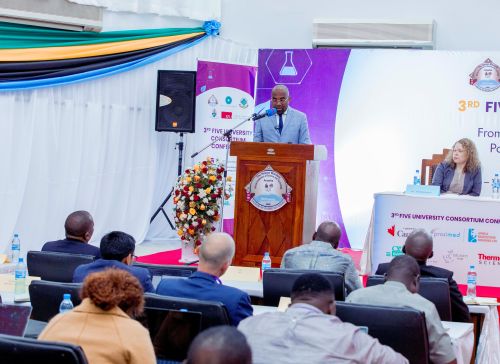
Masauni made the remarks in Arusha on September 24 while closing the third conference of the Five Universities Consortium, hosted by the Nelson Mandela African Institution of Science and Technology (NM-AIST).
The consortium brings together NM-AIST, the University of Dar es Salaam, Aga Khan University, Sokoine University of Agriculture and Simon Fraser University.
From research to economic value
The government’s message places renewed emphasis on a longstanding challenge for universities: ensuring that scientific research produces tangible benefits outside academia.
For businesses, that means research capable of producing commercially applicable technologies, improving productivity, addressing climate-related risks or providing evidence that can support better investment and policy decisions.
Masauni said successful academic conferences should not be judged merely by presentations or closing ceremonies, but by the partnerships, technologies, policy ideas and investment opportunities they generate.
“A successful conference should not end with the final presentation or the closing ceremony,” he said.
“I believe that during these three days you have generated new research questions, new collaborations, new technologies, new policy and investment ideas and, ultimately, visible and measurable outcomes.”

The conference was held under the theme, “From Dialogue to Impact: Integrating Science, Technology, Policy and Climate Resilience for a Sustainable Future.”
Masauni said the theme should translate into action, challenging researchers and innovators to demonstrate how their work can respond to real problems facing communities and the economy.
Science cannot remain in laboratories
A central concern raised at the meeting was the gap between generating knowledge and applying it.
Masauni said science would have limited impact if its benefits remained within universities and research institutions.
“The world needs your ideas,” he told researchers. “Do not limit your ambitions to the problems immediately around you. Start with those problems, understand them deeply, then ask yourselves how the knowledge and solutions you develop can contribute to the development of Africa and the world.”
He challenged participants to assess what new research partnerships had emerged from the conference, which problems could now be tackled jointly and which innovations could move from laboratories into communities.
For Tanzania, improving that transition could also strengthen links between universities and businesses seeking solutions in areas ranging from agriculture and natural-resource management to climate resilience and technology.
Private sector brought into the equation
The government says it is working to strengthen the environment for research and innovation while encouraging closer collaboration among universities, research institutions, businesses and international partners.
Masauni said scientific evidence should also play a greater role in the formulation and improvement of public policy.
That would potentially give research institutions a larger role not only in generating knowledge but also in shaping how Tanzania responds to development challenges.
The government, he said, recognises science, technology, research and innovation as important components of sustainable development and is seeking to strengthen cooperation between universities and research institutions as well as their links with the private sector and international community.
Climate resilience adds urgency
The inclusion of climate resilience in the conference agenda is particularly significant as governments, companies and communities increasingly have to factor environmental risks into investment and development decisions.
Universities and research institutions could play an important role in generating technologies and evidence that help businesses and policymakers respond to those challenges.
That requires research to be designed not simply around academic questions but also around problems confronting farmers, businesses, policymakers and communities.
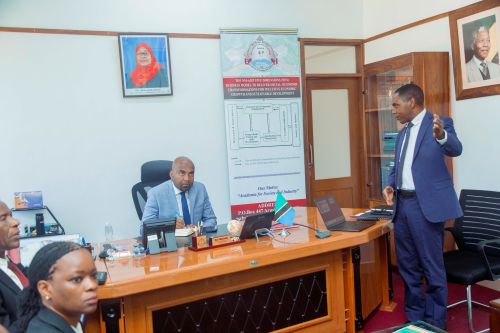
Masauni particularly challenged young researchers, scientists and innovators to ensure that knowledge and innovations generated within educational and research institutions reach communities and address practical problems.
Africa still faces an investment gap
NM-AIST Vice-Chancellor Professor Maulilio Kipanyula, meanwhile, said Africa already possesses considerable intellectual talent, biodiversity, natural resources, indigenous knowledge and a large young population.
What remains inadequate, he said, is investment in the systems needed to convert those advantages into scientific and technological progress.
He called for greater investment in research, scientific infrastructure, postgraduate training and innovation ecosystems, alongside stronger international scientific partnerships.
Such cooperation, Kipanyula said, should be built on mutual respect, shared responsibility and genuine co-creation of knowledge.
That investment gap is important to the wider debate about the economic role of African universities. Laboratories, specialist researchers and postgraduate programmes require long-term financing, while taking an innovation from research to practical application requires connections with government, investors, businesses and end users.
For Tanzania, the challenge highlighted in Arusha is therefore not simply producing more research. It is building a system in which research becomes technology, technology solves problems, scientific evidence informs policy, and promising innovations can move from university laboratories into the economy.