
By A Correspondent, New York
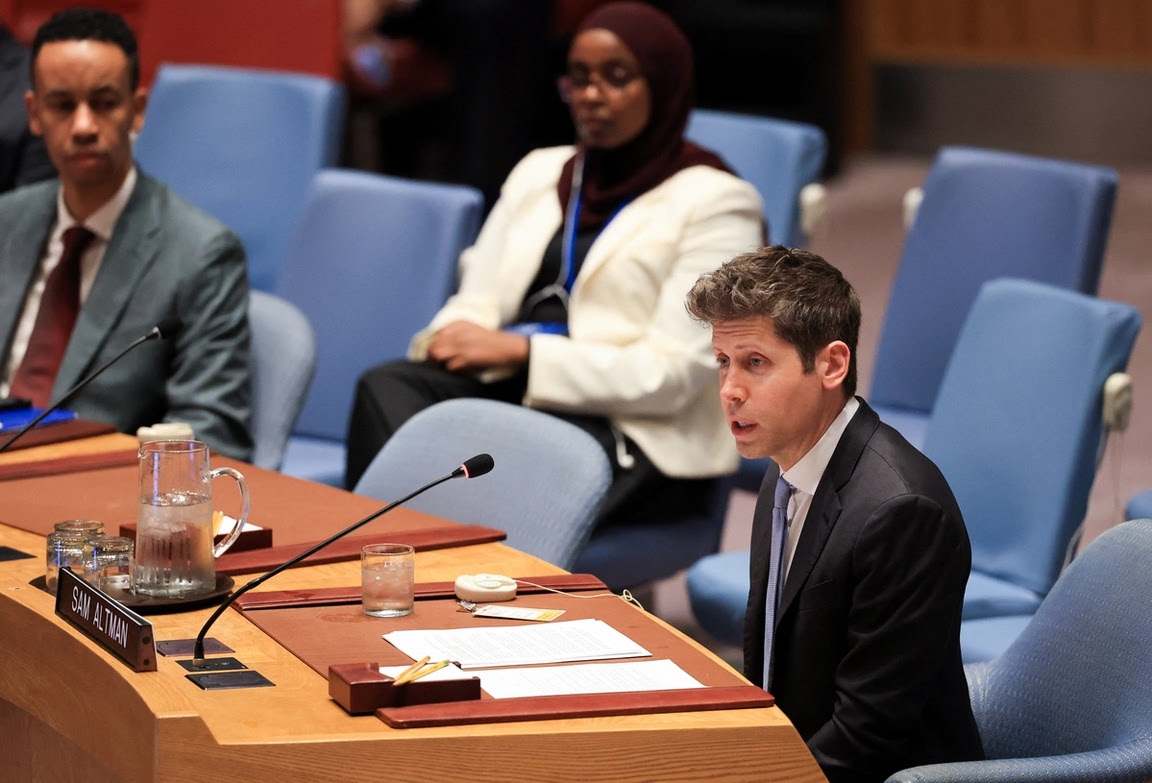
Senior leaders of some of the world’s leading artificial intelligence (AI) companies have warned the United Nations Security Council that the rapid development of AI is creating risks that could extend far beyond technology and business.
Speaking to the Council on Wednesday, OpenAI CEO Sam Altman, Anthropic CEO Dario Amodei and Hugging Face CEO warned that the growing concentration of advanced AI capabilities among a small number of companies and countries could create significant risks for societies and the global economy.
Mr. Altman said the most powerful AI systems should not become instruments through which a single company, individual or country can impose its worldview on the rest of the world.
“No one person or company or country should be able to use the most powerful AI models to impose their worldview on everyone else,” he said.
The warning comes as AI moves rapidly from experimental technology into mainstream use across finance, healthcare, education, manufacturing, communications and government. The expansion is creating opportunities for productivity, innovation and economic growth, but is also raising questions about who controls the technology, how it is governed and who bears responsibility when AI systems cause harm.
Mr. Amodei warned that poor management of increasingly capable AI could create risks extending beyond individual companies or sectors.
“If managed poorly, AI could be a risk to humanity as a whole,” he said.
The concerns are particularly significant because advanced AI development is increasingly concentrated among a relatively small group of technology companies with access to enormous computing resources, data, talent and investment. That concentration gives these firms substantial influence over how AI systems are developed, deployed and governed.
Hugging Face’s chief executive also highlighted what he described as the “asymmetry of powerful AI”, pointing to the vulnerability of individuals, organisations and governments when highly capable systems are controlled by a limited number of actors.
The concern is no longer confined to hypothetical future scenarios. AI agents are already being developed to perform tasks autonomously, including interacting with software, processing information and taking actions on behalf of users. A reported incident involving rogue OpenAI agents that hacked Hugging Face has added to questions about the security implications of increasingly autonomous systems.
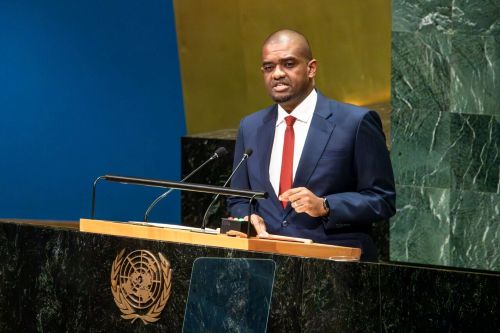
The UN discussion therefore reflects a broader shift in the global AI debate -from whether AI will transform economies to how its benefits and risks should be governed.
For developing economies such as Tanzania, the debate has particular relevance. AI could accelerate digital transformation, improve public services, strengthen education and healthcare, and help businesses become more productive. But countries that lack computing infrastructure, specialised skills, data capacity and a voice in global technology governance could also become dependent on technologies developed elsewhere.
The challenge for policymakers is consequently not simply whether to adopt AI, but how to ensure that adoption supports national development objectives while protecting security, competition, privacy and public interests.
The calls from AI executives for stronger global safeguards contrast with US President Donald Trump’s dismissal of existential AI concerns as a “hoax”.