By Costantine Muganyizi
Tanzania’s inclusive finance agenda is entering a more demanding phase.
After years of successfully expanding access to bank accounts, mobile money, digital payments and credit, the question is increasingly shifting from how many people and businesses are inside the financial system to what they are able to do with that access.
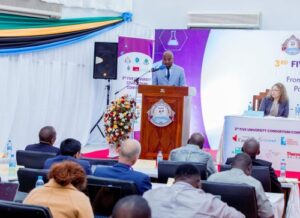
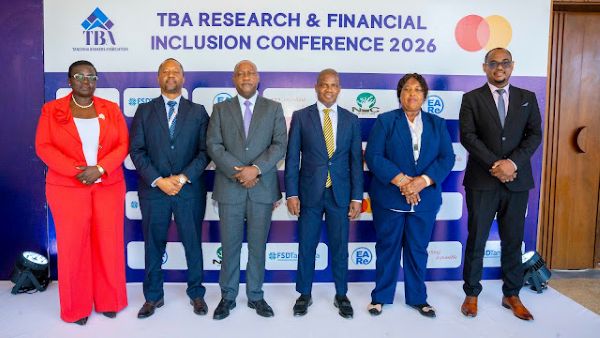
That was the more consequential message emerging from the Tanzania Bankers Association (TBA) Research and Financial Inclusion Conference 2026, held in early September in Kizimkazi, Zanzibar, under the theme “Transforming MSME Financing for Sustainable Development — Policy Reforms, Innovation, and Opportunities.”
The two-day conference brought together bankers, policymakers, regulators, researchers, academics, technology companies and development partners around a question with implications well beyond the banking industry: Can financial inclusion become a more powerful engine of investment, enterprise development, employment and sustainable economic growth?
Dr. Hamad Omar Bakari, Deputy Minister for Finance and Planning, Zanzibar, who graced the event provided the strongest policy framing.
He said the financial sector has an important role in ensuring that the benefits of economic growth reach a broader section of society, while emphasizing the importance of appropriate and affordable financial services in strengthening general enterprises (MSMEs), supporting investment and expansion and creating employment.
Dr. Bakari also placed MSMEs within the wider ambitions of Dira 2050 and Zanzibar Development Vision 2050, which seek inclusive and sustainable economic transformation.
His message goes to the heart of the financial inclusion challenge. Access is not the same as inclusion.
A person may have a bank account but lack the income, financial knowledge or confidence to use it effectively. An entrepreneur may obtain digital credit but find its cost or repayment period unsuitable for the business. A small enterprise may be formally registered yet remain excluded from meaningful investment finance because it lacks conventional collateral or a sufficiently strong credit history.
The next stage of financial inclusion must therefore be judged increasingly by quality, affordability, usage and outcomes. That was also the strategic message from TBA Executive Director Tuse Mwaikasu, who called for research to go beyond academic inquiry and generate practical, actionable insights that can inform policy and produce solutions for the financial industry.
Research moves to centre stage
According yo her, research has value when it helps the financial sector solve real problems- including how to deepen access to financial services among underserved groups and expand sustainable financing opportunities for MSMEs.
That made the conference’s research agenda particularly relevant to Tanzania’s next phase of financial inclusion. One of its strongest features was its decision to place research and evidence at the centre of the financial inclusion debate.
That matters because financial inclusion policies can easily become exercises in counting accounts, transactions and borrowers without sufficiently examining whether financial services improve the economic resilience and productive capacity of users.
Research presented at the conference tackled precisely those questions. Dr. Lusekelo Kasongwa of Mzumbe University examined whether digital credit deepens financial inclusion or can instead amplify financial fragility. The issue is increasingly important as instant digital borrowing becomes more accessible, particularly to customers who may previously have been outside conventional banking.
Digital finance can reduce distance, transaction costs and barriers to formal finance. But convenience does not automatically mean empowerment. If borrowing becomes too frequent, expensive or poorly matched to income and cash-flow patterns, inclusion can potentially create new vulnerabilities.
Another study by Upendo Jaka of TCB Bank examined the effect of compliance with credit-reference-bureau regulations on SME loan performance. Ms Jaka said this points to another foundation of meaningful inclusion: information.
Better credit information can enable lenders to assess borrowers more accurately, potentially reduce information asymmetry and help viable enterprises access finance without relying exclusively on traditional collateral.
The conference also examined “Beyond Collateral”, exploring ecosystem-based development-finance models for youth-led enterprises.
That is an important direction for Tanzania. If the financial system depends too heavily on physical collateral, many potentially productive young entrepreneurs can remain excluded despite having viable business ideas, markets or cash flows.
The challenge is to develop financing models that better assess business potential, cash flow, transaction history and the wider enterprise ecosystem.
From policy reform to practical inclusion
The research agenda was matched by discussions on policy and regulation.
A major session on how policy and regulatory reforms can unlock SME growth was moderated by Kennedy Komba, Director at the Bank of Tanzania, bringing together banking, government and academic perspectives.
TBA says the significance is clear: banks cannot deliver sustainable financial inclusion in isolation. Inclusive finance works best when supported by strong partnerships, effective synergies, policy consistency and a supportive regulatory environment.

The regulatory environment determines how financial institutions innovate, manage risk, use data, extend digital services and develop new products. At the same time, regulation must balance innovation with consumer protection and financial stability.
Another panel examined innovative and digital financing solutions, reflecting the growing role of technology in taking financial services beyond traditional branches.
For Tanzania, this creates a major opportunity. Digital platforms can reach underserved communities, reduce transaction costs and make payments, savings and credit more accessible. But the next challenge is ensuring that digital inclusion does not become simply digital access.
Customers need products that are understandable, affordable and appropriate to their circumstances.
Building the ecosystem
Ms Joune’s emphasis on collaboration reinforced perhaps the most important institutional message from the conference: financial inclusion and MSME financing cannot be delivered by banks acting alone.
Banks, regulators, policymakers and other stakeholders must work together to turn research and industry dialogue into practical reforms that widen access, strengthen financing and support sustainable growth.
A separate discussion, moderated by Ravneet Chowdhury, CEO of Diamond Trust Bank Tanzania, examined partnerships involving financial institutions, government, development partners, technology companies and SMEs, with perspectives including Mastercard and FSDT.
Such partnerships are increasingly necessary because the barriers facing small businesses extend beyond finance.
An enterprise may need credit, but also digital payments, insurance, financial literacy, technology, markets, business skills, reliable data and links to formal supply chains. This makes financial inclusion an ecosystem issue, not merely a banking product.
Government and regulators provide the policy and infrastructure framework. Banks provide financial intermediation. Fintechs expand reach and develop new delivery models. Development partners can help de-risk underserved segments. Researchers generate evidence. And businesses themselves must become active participants in building transparent and sustainable financial relationships.
Productive Inclusive Finance
The real significance of the Kizimkazi conference is therefore not simply that MSMEs need more finance. That is already well understood.
The more important question is whether Tanzania can build a financial system in which access leads to productive economic participation.
That means moving from account ownership to active usage; from digital borrowing to responsible digital finance; from collateral-based exclusion to better risk assessment; and from isolated financial products to integrated business-support ecosystems.
Dr. Bakari’s emphasis on appropriate and affordable financial services provides the clearest test.
If financial inclusion enables a young entrepreneur to establish a financial record, a small business to obtain working capital on sustainable terms, a farmer to save and insure, or an informal enterprise to enter the formal economy, then inclusion becomes more than a financial-sector statistic.
It becomes an instrument of development.
For Tanzania’s ambitions towards 2050, that distinction could prove decisive. The next chapter of financial inclusion will not be measured simply by how many people enter the financial system, but by how effectively the system enables them to save, invest, manage risk, build assets, grow enterprises and participate in the economy. That is the real transformation the banking sector now needs to deliver.