By Business Insider Reporter
East African central bank governors have renewed their commitment to launching a single regional currency by 2031, signalling fresh momentum behind one of the continent’s most ambitious economic integration projects despite mounting global economic uncertainties.
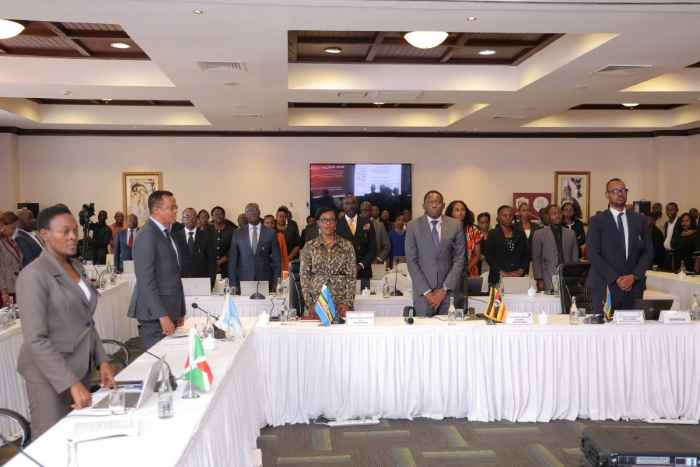
Meeting in Kampala for the 29th Ordinary Session of the East African Community (EAC) Monetary Affairs Committee (MAC), policymakers agreed that the region must accelerate reforms needed to establish the East African Monetary Union (EAMU), while strengthening financial integration to unlock greater trade and investment opportunities across the bloc.
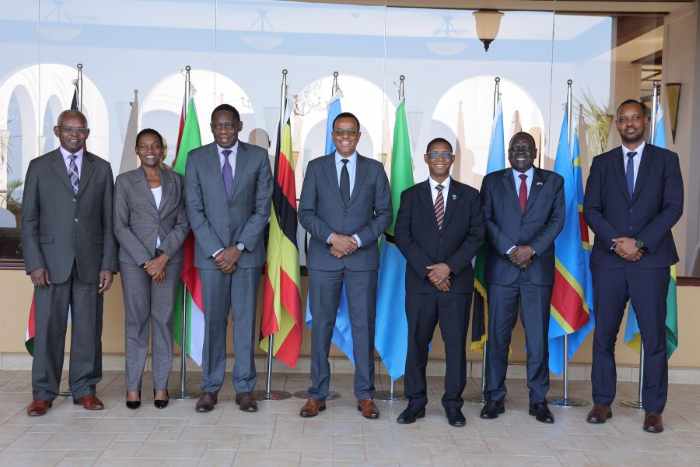
The meeting brought together governors and senior officials from the central banks of EAC Partner States, led by Bank of Uganda Governor Dr Michael Atingi-Ego, alongside representatives of the EAC Secretariat.
Their message was clear: the region has made notable progress, but the journey towards a common currency now requires faster implementation and stronger policy coordination.
For investors and businesses, the discussions carry significance beyond monetary policy.
A fully integrated monetary union promises lower transaction costs, more predictable exchange rates, easier cross-border payments and a more attractive investment environment for businesses operating across East Africa. Collectively, the EAC represents one of Africa’s fastest-growing regional markets, with expanding trade links and a population exceeding 300 million people.
Despite ongoing geopolitical tensions, elevated energy prices and higher global shipping costs, the Committee noted that East Africa continues to outperform much of the continent.
Regional economic growth is projected at 5.2 percent in 2026, comfortably above the Sub-Saharan African average of 4.3 percent, underlining the resilience of East African economies amid an increasingly uncertain global environment.
The macroeconomic picture is also improving.
Average headline inflation across the bloc declined to 6.7 percent during the 2025/26 financial year, down from 9.6 percent a year earlier. Central bank governors attributed the improvement to prudent monetary policies, improving domestic economic conditions and efforts to maintain macroeconomic stability.
Regional currencies are also expected to remain broadly stable, supported by diversified foreign exchange earnings and reforms aimed at deepening domestic foreign exchange markets.
These improvements provide an important foundation for the next phase of monetary integration.
However, the Committee acknowledged that progress towards meeting the agreed macroeconomic convergence criteria remains uneven across Partner States.
The convergence framework requires countries to align key economic indicators – including inflation, fiscal deficits, public debt and foreign exchange reserves – before adopting a common currency. Achieving those benchmarks is widely regarded as one of the most demanding aspects of establishing a successful monetary union.
Recognising these challenges, the governors agreed to strengthen peer review mechanisms, reinforce national implementation programmes and encourage governments to maintain fiscal discipline while continuing to invest in critical infrastructure.
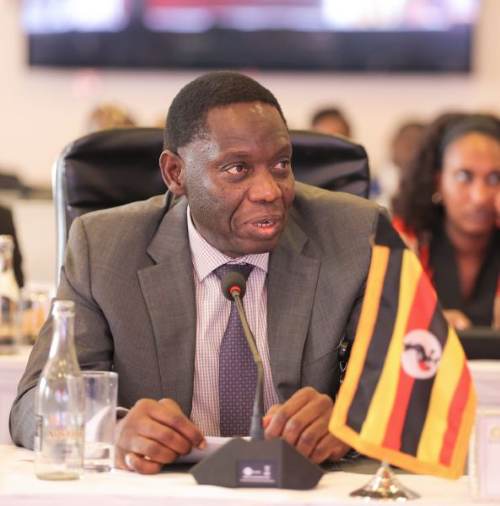
“The East African Monetary Union remains a strategic objective that demands sustained commitment, policy harmonisation and strong regional institutions,” said Dr. Michael Atingi-Ego (pictured above_.
“While our commitment to the Monetary Union is unwavering, we must accelerate implementation, strengthen peer review mechanisms and reinforce national action plans to ensure we remain on course towards a single East African currency by 2031.”
The Monetary Affairs Committee’s renewed focus aligns with the EAC’s Seventh Development Strategy (2026/27–2030/31), which places monetary integration among the Community’s highest priorities.
EAC Deputy Secretary General for Customs, Trade and Monetary Affairs, Annette Ssemuwemba, said the strategy seeks to fast-track both the legal and technical preparations required before the introduction of a regional currency.
She noted that deeper cooperation among Partner States would be essential to ensure the success of the initiative.
“Partnership, consensus and shared responsibility have shaped the work of the Committee. Together, we must continue strengthening our institutions, deepening regional integration and creating more opportunities for the people of East Africa,” she said.
Beyond the proposed single currency, governors also reviewed progress on the implementation of the EAC Cross-Border Payment System Masterplan – a project with immediate implications for businesses trading across the region.
The initiative aims to modernise payment infrastructure by improving interoperability between national payment systems, reducing transaction costs and enabling faster cross-border settlements.
For businesses, particularly small and medium-sized enterprises, these reforms could significantly simplify regional trade by reducing delays, lowering banking charges and easing payments between EAC countries.
Improved payment systems are also expected to support financial inclusion by expanding access to digital financial services while encouraging greater use of formal payment channels.
The Committee welcomed the commencement of implementation activities, including annual work plans, prioritisation of strategic projects and mobilisation of technical and financial resources needed to deliver the programme.
Financial sector stability also featured prominently during the discussions.
The governors concluded that East Africa’s banking sector remains resilient, supported by strong capitalisation and adequate liquidity buffers. Nevertheless, they cautioned that increasing digitalisation has heightened exposure to cyber threats, making regional cooperation on cybersecurity an increasingly important component of financial stability.
Strengthening collective defences against cyber risks, they agreed, will be critical to maintaining confidence in the region’s rapidly evolving financial systems.
Although a single East African currency remains five years away, the latest meeting suggests the region is entering a more decisive phase of implementation.
For the private sector, the significance extends beyond monetary policy. A successful monetary union has the potential to reshape the region’s investment landscape by reducing exchange rate risks, improving capital mobility and creating a more integrated market for goods, services and finance. The pace of reform will ultimately determine whether East Africa can deliver on its long-held monetary ambitions. But with stronger economic growth, easing inflation and renewed political commitment, the foundations for deeper financial integration are becoming increasingly visible.