
From property transactions and public transport to mobile airtime and roadside vendors, the government is betting that technology will become the engine of economic transparency, financial inclusion and fiscal independence
By Peter Nyanje, Dodoma
For generations, cash has been the lifeblood of Tanzania’s economy.
From bustling markets in Kariakoo and Mwanjelwa to bus terminals, restaurants and real estate transactions, physical money has remained the preferred medium of exchange for millions of citizens and businesses.
That reality is now facing perhaps its greatest challenge yet.
Through a series of far-reaching measures unveiled in the 2026/27 budget, the government has launched what may become one of the most ambitious digital transformation programmes in the country’s history.
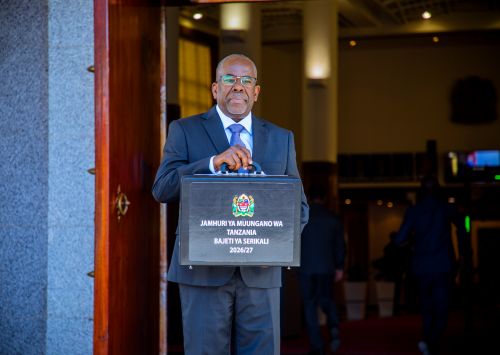
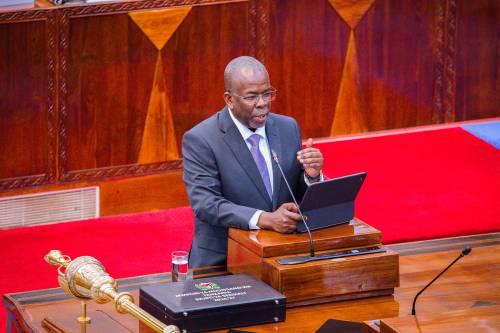
The objective extends well beyond modernising payment systems, as outlined by Minister for Finance, Khamis Mussa Omar when presenting 2026/27 budget to the Parliament on June 11.
A thorough scrutiny of the budget suggests that the government seeks to fundamentally change how Tanzanians transact, save, borrow, invest and interact with government institutions.
At the centre of the strategy lies a broader vision: building a resilient economy through digital transformation while increasing transparency, expanding the tax base and strengthening domestic resource mobilisation.
The reforms are expected to touch nearly every aspect of economic life – from how a boda boda rider receives payment to how a citizen purchases land or transfers ownership of a vehicle.
A turning point for economic governance
The Finance Minister made little effort to hide the government’s intentions when presenting the budget to Parliament.
The government wants to reduce the role of cash transactions across the economy and replace them with traceable digital alternatives.
The rationale is straightforward.
Cash transactions, while convenient, are difficult to monitor, easy to underreport and often create opportunities for tax leakages, fraud and illicit financial activities.
On the kiother hand, digital transactions leave a trail which creates transparency wbhich in turn creates accountability.
Tanzania’s ambitions under Dira 2050 require unprecedented levels of investment in infrastructure, industrialisation, healthcare, education and technology.
Meeting those ambitions will depend heavily on the state’s ability to mobilise domestic resources efficiently.
Digitalisation is increasingly viewed as the mechanism that can make that possible.
The cashless mandate arrives
Beginning July 1, 2026, a wide range of economic activities will be required to adopt digital payment systems, Minister Omar told the Parliament.
The government’s directive covers public transport services, including bus rapid transit systems, ferries, railways and airlines.
It also extends to hotels, restaurants, tourism services, educational institutions, shopping malls, fuel stations, conference centres, vehicle sales and property transactions.
Historically, many of these sectors have relied heavily on cash payments despite the rapid growth of mobile money and banking services.
Officials argue that moving transactions into digital channels will improve efficiency while reducing revenue losses associated with undocumented cash payments.
The government’s confidence is partly driven by the remarkable growth already recorded within Tanzania’s digital payments ecosystem.

According to budget figures, transactions processed through the Tanzania Instant Payment System (TIPS) reached 651 million in 2025, valued at TSh54.95 trillion, up from 453 million transactions worth TSh29.82 trillion the previous year.
The figures suggest that the behavioural shift toward digital payments is already underway.
Property becomes a digital enforcement tool
Among all the reforms announced in the budget, one stands out for its potential impact.
Beginning July 1, 2026, proof of digital payment will become a mandatory requirement for the transfer of assets such as land, buildings and motor vehicles.
This measure could fundamentally change the way high-value transactions are conducted in Tanzania.
In the past, authorities often faced difficulties verifying the true value of transactions involving property and vehicles.
Cash payments created opportunities for under-declaration and reduced transparency.

The Minister stressed that under the new system, institutions including the Tanzania Revenue Authority, the Ministry of Lands, BRELA and other public agencies will require digital payment verification before approving ownership transfers.
Economists describe this as one of the strongest enforcement mechanisms introduced in recent years.
Rather than relying solely on audits and inspections, the government is embedding compliance directly into the transaction process itself.
The message is simple: no digital trail, no transfer.
The power of Jamii Namba
Another key pillar of the digital transformation agenda is the introduction of the Jamii Namba programme under the National Identification Authority (NIDA).
The initiative is expected to play a central role in improving identity verification and data integration across government systems.
For years, policymakers have struggled with fragmented databases that make it difficult to track economic activity, verify identities and deliver services efficiently.
The Jamii Namba programme seeks to change that.
By linking individuals and businesses through a unified identification framework, authorities hope to improve transparency, reduce fraud and simplify interactions between citizens, businesses and government institutions.
In practical terms, the programme could eventually influence everything from taxation and banking to social protection and business registration.
For investors and financial institutions, improved identity verification also reduces risk and enhances confidence in digital transactions.
Bringing the informal economy online
Perhaps the most transformative aspect of the government’s strategy is its focus on small-scale operators.
Historically, digital finance adoption has been concentrated among larger businesses and urban consumers.
The new reforms aim to change that dynamic.
The government plans to expand the use of Lipa Namba and QR code payment systems among boda boda operators, food vendors, market traders and other micro-enterprises.
Importantly, adoption is being linked to incentives rather than mandates alone.
Businesses that accept digital payments will receive additional consideration when applying for government-supported loans and financial services.
This approach reflects a broader understanding that digitalisation succeeds when users see tangible benefits.
For many small businesses, access to affordable credit remains one of the biggest constraints to growth.
Digital transaction histories can provide lenders with valuable information about business performance, making it easier for entrepreneurs to qualify for financing.
In effect, every digital payment becomes part of a financial record that can unlock future opportunities.
Farewell to the scratch card
Another symbolic measure announced by the Minister in the budget is the gradual elimination of physical airtime scratch cards in urban areas.
The initiative will begin in cities before expanding to other parts of the country.
While the change may appear minor, it reflects a broader shift in government thinking.
Scratch cards have long represented one of the most visible examples of a cash-based consumer transaction.
Chasing fiscal sovereignty
Behind every digital reform announced in the budget lies a larger economic objective.
The government wants greater control over revenue collection, stronger visibility into economic activity and reduced dependence on external financing.
In many ways, digitalisation has become the new frontier of fiscal policy.
Rather than introducing dramatic tax increases, policymakers are increasingly focused on improving the efficiency of collection systems and expanding the formal economy.
A new economic era
The transition to a digital economy will not happen overnight.
Challenges remain, including internet connectivity, digital literacy, cybersecurity risks and resistance from businesses accustomed to operating in cash.
Yet the direction of policy is unmistakable.
The government is signalling that the future of Tanzania’s economy will be increasingly digital, connected and data-driven.
The reforms unveiled in the 2026/27 budget are not simply about payment methods.
They represent an attempt to redesign the architecture of economic activity itself.
If successful, the programme could accelerate financial inclusion, strengthen tax compliance, improve access to credit and deepen economic formalisation.
More importantly, it could redefine the relationship between citizens, businesses and the state.
For decades, cash has dominated Tanzania’s economic landscape.
The budget suggests that era may be drawing to a close. What comes next is a future in which digital transactions become not merely an alternative, but the foundation upon which the country’s next phase of economic growth is built.