
By Peter Nyanje, Dodoma
For decades, one of the defining challenges facing many African economies has been the question of how to finance development sustainably.
Roads, railways, hospitals, schools and power infrastructure require enormous amounts of capital, yet government revenues often struggle to keep pace with rising development needs. The result has frequently been greater reliance on borrowing and donor support.
Tanzania’s latest budget suggests the government wants to change that equation.
At the centre of the 2026/27 fiscal strategy is a determined push to increase domestic revenue collection, not through higher taxes alone, but through a comprehensive effort to modernise tax administration, digitise financial transactions, formalise informal businesses and close long-standing leakages in the economy, as outlined by Finance Minister, Khamis Mussa Omar when tabling the budget in parliament on June 11.
According to the Minister, the strategy reflects a broader philosophy that economic sovereignty begins with fiscal sovereignty.
Presenting the budget in Parliament, Finance Minister Khamis Mussa Omar argued that the government’s reforms are intended to strengthen domestic resource mobilisation while improving transparency and efficiency across the economy.
The ambition is significant.
As Tanzania enters a new phase of economic transformation under Dira 2050, the government increasingly wants development to be financed by Tanzanians themselves rather than by external partners.
The question is no longer whether domestic revenue should increase, but how.
The cashless mandate
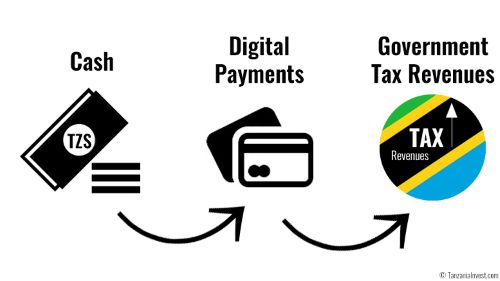
Perhaps the most far-reaching measure announced in the budget is the government’s decision to mandate digital payments across several major sectors of the economy beginning July 1, 2026.
The directive covers a broad range of economic activities, including public transport services, education fees, hotel payments, restaurants, property rentals, property transactions and key agricultural value chains.
The move represents one of the most ambitious attempts yet to reduce the role of cash in Tanzania’s economy.
Finance officials believe cash transactions have historically created opportunities for tax evasion, under-reporting of income and revenue leakages.

By shifting transactions into traceable digital platforms, the government expects to improve transparency and increase the accuracy of tax reporting.
The policy follows rapid growth in Tanzania’s digital payments ecosystem.
According to the budget speech, transactions processed through the Tanzania Instant Payment System (TIPS) rose from 453 million transactions worth TSh29.82 trillion in 2024 to 651 million transactions worth TSh54.95 trillion in 2025.
Those numbers tell a remarkable story.
In just one year, the value of transactions processed through the system nearly doubled, highlighting how quickly Tanzanians are embracing digital financial services.
Government officials view this trend not merely as a technological development but as an opportunity to improve fiscal management.
“The reduction of cash usage will enhance transaction efficiency, prevent financial crimes and simplify revenue administration,” the Minister told Parliament.
For businesses, the implications are profound.
From bus operators and hotels to schools and landlords, sectors traditionally dependent on cash payments will increasingly be required to operate within digitally traceable systems.
The rise of AI in tax administration
Beyond digital payments, the government is preparing for a technological overhaul of revenue administration itself.
The budget outlines plans to integrate advanced technologies including Artificial Intelligence (AI), Big Data analytics and Blockchain into revenue collection systems.
Although many governments around the world have begun experimenting with such technologies, Tanzania’s approach reflects a growing recognition that future tax administration will depend as much on data as on human oversight.
For revenue authorities, AI offers several potential advantages.
It can identify suspicious transaction patterns, detect tax avoidance risks, improve compliance monitoring and automate routine administrative processes.
Big Data systems can analyse millions of transactions simultaneously, helping authorities identify gaps that would be difficult to detect manually.
Blockchain technology, meanwhile, promises improved security, transparency and traceability.
The government’s broader objective is clear: reduce physical interactions between taxpayers and tax officials while increasing efficiency.
That approach serves multiple goals.
It reduces opportunities for corruption, lowers administrative costs and creates a more predictable environment for businesses.
In many respects, the government is attempting to build what could become one of East Africa’s most technologically advanced tax administration systems.
Turning compliance into a national culture
One of the most innovative elements of the revenue strategy is the introduction of what officials are calling a “Patriotism Award” programme.
Scheduled to launch in July 2026, the initiative seeks to encourage voluntary tax compliance through incentives rather than penalties alone.
The concept is straightforward.
Consumers who demand receipts and businesses that issue them correctly will become eligible for prize draws and awards.
While the programme resembles lottery-based compliance schemes used in countries such as Taiwan and China, its significance extends beyond the prizes themselves.
Formalising the informal economy
Yet perhaps the biggest untapped opportunity lies outside the formal tax system altogether.
Tanzania’s informal sector remains one of the largest components of the national economy.
Millions of people earn livelihoods through small-scale trading, transport services, food vending and other informal activities.
While these enterprises contribute significantly to economic growth and employment, many remain outside formal taxation and regulatory systems.
The government’s response is increasingly focused on incentives rather than coercion.
In addition to a one-year tax holiday for newly registered businesses, authorities are expanding support programmes aimed at encouraging formalisation.
Local government authorities have been directed to increase loan allocations for youth and women from 10 percent to 15 percent of internally generated revenues.
Importantly, five percentage points of those allocations will be dedicated to infrastructure development, including markets and business centres designed to attract informal traders into organised commercial clusters.
The budget also emphasises the continued development of dedicated business clusters connected to essential infrastructure such as roads, electricity, water and information technology networks.
These initiatives reflect a broader shift in policy thinking.

Rather than viewing informal businesses primarily as a tax problem, the Minister stated that the government increasingly sees them as potential engines of growth that need support to formalise.
“The long-term goal is not simply to increase tax collections but to expand economic participation,” he said.
The Bigger Picture: Fiscal independence
Taken individually, each measure announced in the budget appears significant.
Collectively, however, they reveal something much larger.
Mr. Omar said the government is pursuing a comprehensive transformation of the way revenue is generated, monitored and collected.
Cash transactions are being replaced with digital records.
Manual oversight is being supplemented by artificial intelligence.
Informal businesses are being encouraged to formalise.
Tax compliance is being promoted through incentives as well as enforcement.
These reforms are occurring at a time when Tanzania is seeking to finance increasingly ambitious development goals, including major infrastructure investments, industrialisation programmes and social services expansion.
Domestic revenue mobilisation has therefore become a strategic priority rather than merely a fiscal objective.
The success of that strategy will not be measured solely by tax collections.
It will also depend on whether the reforms improve trust, strengthen transparency and create a business environment that supports growth while expanding the tax base.
A new revenue era
The 2026/27 budget may ultimately be remembered as a turning point in Tanzania’s fiscal history.
For years, debates about taxation focused largely on rates and levies.
Today, the conversation is shifting toward systems, technology and economic formalisation.
The government’s vision is ambitious: a digitally connected economy where transactions are visible, compliance is encouraged, leakages are minimised and development is increasingly financed through domestic resources.
Whether that vision is fully realised remains to be seen.
But one thing is already clear that Tanzania is no longer treating revenue collection as a back-office government function. It is becoming a central pillar of the country’s broader economic transformation agenda.