
By Correspondent Benny Mwaipaja
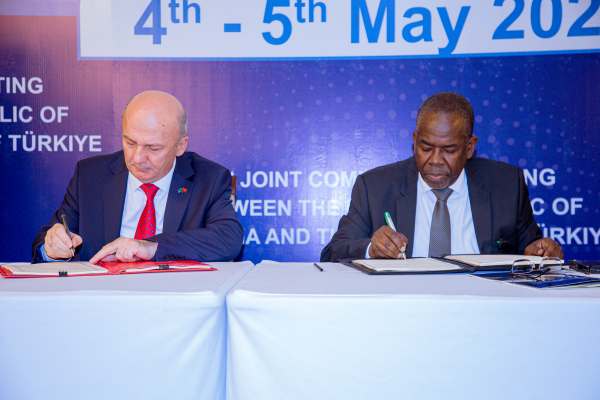
Tanzania and Turkey have signed two landmark agreements aimed at eliminating double taxation and preventing tax evasion on income, a move expected to accelerate investment flows and strengthen bilateral trade between the two economies.
The agreements, signed in Dar es Salaam, mark a significant step in Tanzania’s broader strategy to enhance its attractiveness as an investment destination by reducing fiscal uncertainties for foreign investors.
Speaking at the signing ceremony, Finance Minister Khamis Mussa Omar said the deal is Tanzania’s 13th Double Taxation Agreement (DTA), underscoring the government’s commitment to building a predictable and investor-friendly tax regime.
He noted that such agreements play a critical role in boosting investor confidence by eliminating the risk of the same income being taxed in two jurisdictions. When combined with Bilateral Investment Treaties (BITs), DTAs are widely regarded as powerful instruments for stimulating foreign direct investment (FDI) and expanding cross-border trade.

“Evidence shows that countries with strong double taxation frameworks tend to attract higher levels of foreign direct investment,” Omar said, adding that the agreement positions Tanzania to draw increased capital inflows from Turkey and beyond.
The signing also closes a long-standing gap in the Tanzania–Turkey economic relationship. While the two countries have maintained an investment protection agreement since 2011, the absence of a DTA had been seen as a constraint on deeper commercial engagement.
Its introduction sends a clear signal to Turkish investors that Tanzania is ready to facilitate and safeguard business operations.
Economic ties between the two countries have been gaining momentum in recent years, particularly following the 2024 state visit by President Samia Suluhu Hassan to Turkey. Bilateral trade reached approximately US$281.7 million, with Turkey exporting a larger share of goods, including machinery, industrial equipment, and manufactured products, while Tanzania’s exports remain concentrated in primary commodities.
Officials say the new agreements could help rebalance this trade relationship by encouraging more diversified Tanzanian exports and facilitating Turkish investment in key sectors such as manufacturing, agriculture, energy, and tourism. These sectors are central to Tanzania’s industrialisation agenda and long-term economic transformation.
According to Said Shaib Mussa, the agreements form part of a broader roadmap to translate diplomatic relations into measurable economic outcomes.
Tanzania and Turkey have maintained formal diplomatic ties since 1963, with cooperation expanding across trade, education, transport, defence, and social development.
He added that both countries are now working towards a joint target of increasing trade and investment volumes to US$1 billion, supported by structured mechanisms such as the Joint Commission, which will monitor implementation, identify new priority areas, and deepen collaboration in strategic sectors.

Turkey’s Ambassador to Tanzania, Bekir Gezer, described the agreements as a catalyst for strengthening both diplomatic and economic relations, noting that they will provide a more secure and transparent environment for businesses operating across the two markets.
For Tanzania, the agreements come at a time when the government is intensifying reforms to improve the business climate.
These include the digitalisation of tax and customs systems, simplification of business registration processes, and ongoing legal reforms in land, labour, and dispute resolution frameworks. Such measures have contributed to Tanzania’s growing reputation as one of Sub-Saharan Africa’s more attractive investment destinations.
From a business perspective, the elimination of double taxation reduces operational costs for multinational firms, enhances profitability, and improves the predictability of returns – factors that are critical in investment decision-making.
For Turkish companies, many of which have established a strong presence in construction and manufacturing across Africa, Tanzania offers a strategic gateway into East and Central African markets. The agreements therefore represent more than a technical tax adjustment. They signal a maturing economic partnership and a shared ambition to scale up trade and investment flows, positioning both countries to benefit from deeper integration in an increasingly competitive global economy.