

By Correspondent Asia Singano, Dodoma
Tanzania is strengthening oversight of government information systems as the rapid digitalisation of public services creates new risks for public finances and increases the need for auditors capable of scrutinising technology-driven transactions.
The Ministry of Finance is developing and refining guidelines for auditing information systems, part of a broader effort to strengthen internal controls, safeguard public funds and improve efficiency across government institutions.
Acting Government Chief Internal Auditor at the Ministry of Finance, Eng Kenneth Nindie, said the government was reviewing its audit frameworks to ensure they meet required professional standards and respond to changing operational needs.
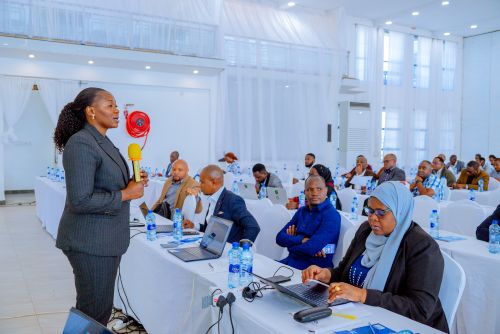
Speaking in Dodoma while opening training on the Information Systems Audit Guideline for government internal auditors, Nindie said the framework covers different stages of the audit process.
Some components are still undergoing validation before the guideline is rolled out fully.
“We are taking some of the components through validation. It is important that these guidelines are reviewed and validated before they become fully operational,” Nindie said.
The initiative comes as government operations increasingly migrate to digital platforms, making information systems central to revenue collection, expenditure management, procurement, payments and delivery of public services.
For public-finance management, that transition means conventional financial auditing is no longer sufficient on its own. Auditors increasingly need the ability to examine system controls, data integrity, access management and other technology-related processes that can expose institutions to financial losses or operational weaknesses.
Nindie said the validation process was intended to ensure that audit guidelines were of the required quality, clearly understood by practitioners and capable of helping auditors perform their responsibilities more effectively.
The move also reflects the growing importance of internal audit as a preventive mechanism rather than simply a tool for identifying irregularities after they have occurred. Strong information-system auditing can help public institutions identify weaknesses before they translate into financial losses, unreliable data or disruptions to essential government services.
Skills become critical
The Ministry is also putting greater emphasis on professional certification as it seeks to strengthen the technical capacity of government auditors.
Nindie said professional qualifications had become an important part of efforts to improve the quality and effectiveness of internal audit functions.
“Professional certification has become an important part of our plans to strengthen staff capacity. I understand that since 2021 there has been a programme aimed at increasing the number of employees holding such certifications,” he said.
Investment in specialist skills is becoming particularly important as public-sector auditing moves beyond traditional examination of accounts towards increasingly complex areas involving information technology and digital systems.
Nindie said continued investment in employees’ professional knowledge and skills would help improve performance and ensure institutions carry out their responsibilities to the required standards.
For Tanzania, stronger digital auditing could also have wider economic implications. Government information systems increasingly underpin the management of billions of shillings in public resources. Weak controls can therefore create financial, operational and governance risks, while stronger audit systems can improve accountability and confidence in the management of public money.

The training, organised by the Ministry of Finance through the Government Internal Auditor General’s Department, brought together internal auditors from public institutions and the Ministry.
Participants were taken through the new information-systems audit framework and its application in their work. As Tanzania expands the use of digital platforms across government, the effectiveness of those systems will increasingly depend not only on the technology itself, but also on whether institutions have skilled professionals and robust controls capable of detecting weaknesses and protecting public resources.