
By Business Insider Reporter
Tanzania is positioning itself to become a regional centre for cancer treatment, specialist training and nuclear medicine as rising government investment in diagnostic and treatment technology expands the country’s healthcare capacity.
Vice-President Deogratius Ndejembi, said Tanzania plans to build on recent investments in cancer prevention, screening and treatment to establish itself as a centre of expertise serving patients and medical professionals from across sub-Saharan Africa.
Speaking on behalf of President Samia Suluhu Hassan at the International Atomic Energy Agency (IAEA) Scientific Forum in Vienna, Austria, Ndejembi said the government was expanding specialist cancer infrastructure while investing in technologies that were previously available only on a limited scale.
The expansion represents a significant shift in Tanzania’s healthcare investment landscape, potentially reducing dependence on overseas treatment while creating opportunities for specialist training, medical technology, pharmaceuticals and regional medical services.
One of the most significant changes has been in diagnostic equipment.
Between 2021 and 2026, the number of MRI machines in Tanzania increased fourfold, from seven to 28, while CT scanners rose from 12 to 97. Mammography machines increased from four to 20 and digital X-ray machines from 147 to 770.
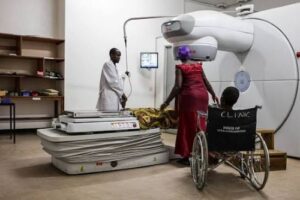
The number of linear accelerators (LINACs), which are used for external-beam radiation treatment of cancer, increased from two to eight.

Tanzania has also introduced a PET scanner integrated with a cyclotron, allowing the production of radioisotopes used in advanced medical imaging and diagnosis. Ndejembi said the development placed Tanzania among the first 10 African countries to provide the service.
Cancer network expands
The number of centres providing radiotherapy increased from three in 2020 to six in 2026, raising access to the service from 14 percent to 26 percent and benefiting about 6,500 patients, according to figures presented by the Vice-President.
The government now plans to establish nine comprehensive cancer centres across six strategic zones in Mainland Tanzania and Zanzibar by 2030.
Such decentralisation could have significant economic and social implications. Specialist cancer services have historically been concentrated in a small number of major facilities, forcing some patients to travel considerable distances for diagnosis and treatment.
Expanding regional capacity could reduce those costs while creating demand for oncologists, radiologists, medical physicists, laboratory professionals, biomedical engineers and other specialised healthcare workers.
Prevention programmes are expanding alongside infrastructure investment.
Ndejembi said coverage of the single-dose human papillomavirus (HPV) vaccine among girls aged nine to 14 had increased from 58 percent in 2018 to 98 percent in 2026. HPV vaccination is an important intervention in preventing cervical cancer.
Ocean Road eyes regional role
Tanzania is also seeking international recognition for the Ocean Road Cancer Institute (ORCI) as it attempts to expand the country’s role beyond domestic cancer treatment.
Ndejembi called on the IAEA to designate the institute as a Centre of Excellence for Cancer, which would enable it to play a greater role in training specialists and building technical capacity for other countries, particularly in sub-Saharan Africa.
If achieved, the designation could support Tanzania’s ambition to develop a regional healthcare and specialist-training market, complementing investments being made in advanced medical facilities elsewhere in the country.
The Vice-President also called for continued support from the IAEA, its member states and development partners to finance cancer projects identified under the agency’s Rays of Hope initiative.
The projects are intended to increase diagnostic and treatment capacity across Tanzania, reducing both the distances patients must travel and the risk of cancers being detected only at advanced stages.
IAEA Director General Rafael Mariano Grossi, who opened the forum, highlighted the agency’s Rays of Hope programme, through which Tanzania is already receiving support to strengthen cancer-care capacity.
Beyond cancer treatment
Tanzania is also seeking to deepen cooperation with the IAEA in other applications of nuclear science and technology, including agriculture and longer-term preparations for a potential nuclear-energy programme.
For the healthcare sector, however, the immediate challenge is turning the rapid expansion of equipment and infrastructure into sustainable services.
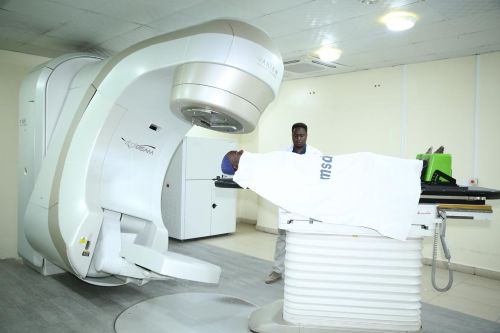
New scanners, radiotherapy machines and cancer centres require significant investment in skilled personnel, maintenance, reliable supplies and recurrent financing.
Tanzania’s next phase will therefore depend not only on purchasing sophisticated technology, but also on developing the specialists capable of operating it and ensuring that patients can afford and access the services.
The two-day Scientific Forum, held under the theme “Rays of Hope: Delivering on the Promise of Cancer Care,” brings together policymakers, scientists and health professionals to discuss ways of narrowing global inequalities in access to cancer diagnosis and treatment. For Tanzania, those discussions come as the country attempts to move from expanding domestic cancer-care capacity towards building a regional market for advanced treatment, nuclear medicine and specialist medical training.