

By Business Insider Correspondent
Tanzania is tightening its focus on imports of banned refrigerant gases and equipment that relies on ozone-depleting substances, as the country seeks to accelerate the transition towards cleaner cooling technologies and meet its international environmental commitments.
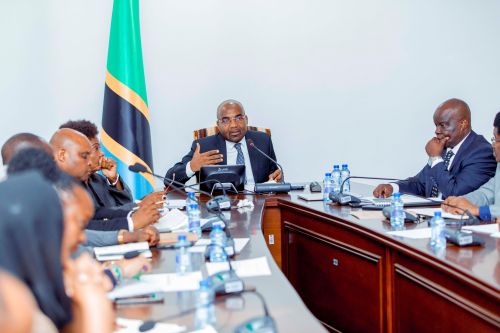
Minister of State in the Vice-President’s Office responsible for Union and Environment, Hamad Yussuf Masauni, has urged businesses and consumers to avoid importing prohibited gases as well as used refrigerators, air conditioners and other equipment containing substances harmful to the ozone layer.
The warning, issued in Dar es Salaam on September 14, comes ahead of the International Day for the Preservation of the Ozone Layer, observed globally on September 16.
While the environmental consequences are significant, the government’s message also has implications for importers, refrigeration and air-conditioning companies, retailers, property developers and businesses that rely heavily on cooling systems.
As environmental standards tighten, companies will increasingly need to pay attention not only to the cost and efficiency of cooling equipment but also to the refrigerants and technologies used in the systems they purchase.
Masauni said the ozone layer plays a critical role in protecting the planet by filtering much of the sun’s harmful ultraviolet radiation before it reaches the Earth’s surface.
Damage to the layer can increase exposure to ultraviolet radiation, contributing to health problems including skin cancer, cataracts, weakened immune systems and premature ageing of the skin.
It can also affect plant growth and compound broader environmental and climate pressures.
“Various human activities contribute to the depletion of the ozone layer, particularly the use of chemicals in refrigerators and air conditioners, fire-extinguishing equipment, metal cleaning, mattress manufacturing, soil fumigation in tobacco nurseries, floriculture and grain storage,” Eng. Masauni said.
Customs controls come into focus
Tanzania will join the international community in marking Ozone Day, which commemorates the signing of the Montreal Protocol in 1987, the landmark global agreement designed to phase out substances that deplete the ozone layer.
This year’s commemoration also marks a decade since the adoption of the Kigali Amendment in 2016, which strengthened international action on refrigerants with high global-warming potential.
“The implementation of these amendments demonstrates how the world can come together to address emerging environmental challenges,” Masauni said.
For Tanzania, implementation increasingly involves what happens at ports, airports and other entry points where refrigerants and cooling equipment enter the domestic market.
The government, through the Vice-President’s Office and other stakeholders, plans to train customs officers and law-enforcement personnel from the Tanzania Revenue Authority (TRA), Tanzania Ports Authority (TPA) at the Port of Dar es Salaam and Tanzania Airports Authority (TAA) through Julius Nyerere International Airport.
The initiative is expected to strengthen the ability of authorities to identify and control prohibited substances and equipment entering the country.
Alongside enforcement, the government plans public awareness campaigns on ozone protection and the adoption of environmentally safer chemicals.
Cleaner cooling market
Masauni urged consumers and businesses to look for products carrying recognised “ozone friendly” labels or using substances with low global warming potential when purchasing refrigerators, air conditioners and related equipment.
He also warned against indiscriminate disposal of old refrigerators and fire extinguishers containing chemicals that can damage the ozone layer or contribute to global warming.
The transition presents both compliance challenges and commercial opportunities.
Demand for more environmentally friendly refrigeration and air-conditioning systems could create a growing market for suppliers of modern cooling equipment, technicians trained to work with alternative refrigerants, recycling and recovery businesses, and companies specialising in energy-efficient technologies.
It also means importers of second-hand cooling equipment will need to pay closer attention to changing environmental requirements and the types of refrigerants contained in the products they bring into Tanzania.
Masauni said public participation would remain critical to the country’s environmental efforts, urging the media to expand awareness of the risks posed by ozone-depleting substances. The government’s broader message is that protecting the ozone layer is no longer simply an environmental issue. As Tanzania modernises its economy, the transition towards cleaner refrigerants and energy-efficient cooling technologies is increasingly becoming an issue of trade, technology, investment and regulatory compliance – with businesses expected to adjust alongside consumers.