Local investment in advanced cancer technology is cutting the cost of treatment abroad while positioning Tanzania to capture a bigger share of East and Central Africa’s growing medical tourism market.
By Business Insider Reporter
Tanzania is positioning itself to become a regional hub for advanced cancer treatment as investment in nuclear medicine reduces dependence on costly overseas referrals and opens new opportunities in medical tourism, insurance, pharmaceuticals and healthcare technology.
That ambition is taking centre stage in Vienna, Austria, this week, where Ocean Road Cancer Institute (ORCI) Executive Director Dr Diwani Msemo is representing Tanzania at the 70th General Conference of the International Atomic Energy Agency (IAEA).
The conference, being held at the Vienna International Centre from September 14 to 18, 2026, brings together thousands of government officials, scientists, regulators and policymakers from IAEA member states.
For Tanzania, however, participation goes beyond nuclear science and diplomacy. It comes at a time when the country is investing heavily in advanced cancer diagnosis and treatment, seeking both to reduce the amount of money Tanzanians spend abroad and attract patients from neighbouring countries.
For years, Tanzania was effectively an exporter of cancer patients – and foreign exchange.
Patients requiring sophisticated diagnostic services such as positron emission tomography-computed tomography (PET-CT), widely used in cancer detection, staging and treatment monitoring, often had to travel abroad, particularly to India.
Such trips could cost Tanzanian families between Sh6 million and Sh8 million when air tickets, accommodation, medical procedures and related expenses were taken into account.
The economic equation is beginning to change.
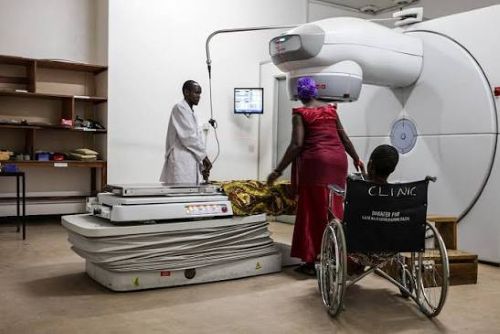
ORCI has invested about Sh18.7 billion in a cyclotron and PET-CT facility, bringing sophisticated nuclear medicine diagnostic services closer to Tanzanian patients.
A PET-CT service that previously required an expensive overseas trip can now be accessed in Dar es Salaam for about Sh1.2 million.
Beyond the direct savings for patients, localisation of such services can reduce government expenditure on overseas medical referrals and retain millions of shillings within Tanzania’s healthcare economy.
It also lays the foundation for what could become an increasingly important business segment: medical tourism.
With advanced cancer services becoming available locally, Tanzania has an opportunity to attract patients from countries including Zambia, the Democratic Republic of Congo, Malawi, Burundi and Comoros.
That would gradually transform ORCI from predominantly a national referral institution into a regional centre for specialised oncology services.
Healthcare investment opportunity
The Vienna gathering is particularly important because discussions extend beyond scientific research into financing, technology transfer, training and nuclear safety.
The IAEA’s Rays of Hope initiative seeks to expand access to cancer diagnosis and treatment, particularly in countries where radiotherapy capacity remains inadequate.
For Tanzania, international partnerships can help accelerate access to radiotherapy equipment, specialist training and nuclear medicine infrastructure that would otherwise require substantial domestic capital investment.
Investment in modern linear accelerators, for example, could increase the number of patients treated daily, shorten waiting periods and reduce the unit cost of cancer treatment as capacity expands.
Improved diagnostic technology could also produce wider economic benefits by enabling cancers to be detected and treated more accurately, potentially reducing the financial burden of prolonged or inappropriate treatment on households, insurers and the public health system.
But the opportunity extends beyond hospitals.
Global conferences such as the Vienna meeting bring pharmaceutical companies, medical-equipment manufacturers, nuclear technology specialists and health-tech firms into direct contact with healthcare institutions and governments.
For ORCI, such exposure could help create opportunities for public-private partnerships in areas ranging from equipment maintenance and medicine supply to artificial intelligence-assisted diagnostics and specialist training.
Private sector opportunities
Tanzania’s expanding cancer-treatment capacity could also create a wider ecosystem of commercial opportunities.
Insurance companies, for instance, could develop cancer-specific or more comprehensive health products as sophisticated treatment becomes increasingly available domestically, reducing some of the uncertainty associated with expensive overseas referrals.
Specialised logistics companies could find opportunities in the handling and transportation of temperature-sensitive medicines, medical supplies and radioisotopes used in nuclear medicine.
Hotels, serviced apartments and other hospitality businesses around Dar es Salaam could also benefit if Tanzania succeeds in attracting growing numbers of patients and accompanying family members from neighbouring countries.
Medical tourism could therefore become more than a healthcare story. It could generate demand across aviation, accommodation, transport, pharmaceuticals, insurance and professional services.
The challenge will be ensuring that Tanzania continues investing in equipment, specialist personnel, reliable medicine supplies and internationally recognised standards of care.
Advanced equipment alone cannot create a regional medical hub. The country will also need oncologists, nuclear medicine specialists, medical physicists, radiographers, engineers and technicians capable of operating and maintaining increasingly sophisticated systems.
That makes partnerships forged through institutions such as the IAEA particularly important.

For Tanzania, the economic objective is increasingly clear: rather than continuing to send patients and money abroad for services that can be provided domestically, the country can build capacity capable of serving both Tanzanians and the wider region.
ORCI’s expanding nuclear medicine capabilities suggest that transition has already begun. If investment in technology, human capital and international partnerships continues, Dar es Salaam could increasingly compete for a share of East and Central Africa’s specialised healthcare market – turning cancer treatment from a major source of outbound medical expenditure into an emerging service export.