By Peter Nyanje, Dodoma
When Tanzania’s new financial year begins on July 1, the government will be making one of the biggest economic bets in the country’s history.
For decades, the state has been the dominant force behind major development projects, from roads and railways to power plants and public services. But under the first year of implementing Dira 2050, the balance is shifting dramatically.
The government’s National Development Plan for 2026/27, which was tabled today in parliament, carries a price tag of TSh86.3 trillion. Yet what stands out is not the size of the investment itself. It is who is expected to provide most of the money.
Of the total funding required, the Minister of State in the President Office, prof. Kitila Mkumbo, reiterated that the private sector is expected to contribute TSh60.1 trillion – nearly 70 percent of the entire development budget.
The public sector, including government institutions and state-owned enterprises, he said, is expected to contribute the remaining TSh26.2 trillion.
Prof. Mkumbo said that the figures signal a profound shift in Tanzania’s development model and perhaps the clearest indication yet that the government sees private investment – not public spending – as the primary engine of economic transformation over the next quarter century.
For investors, financiers and business leaders, the message is unmistakable: the era of private-sector-led growth has arrived.
A new development formula
The numbers reveal a changing philosophy within government.
Over the past five years, the administration of President Samia Suluhu Hassan has invested heavily in strategic infrastructure projects, including the Standard Gauge Railway (SGR), the 2,115-megawatt Julius Nyerere Hydropower Project and the Kigongo-Busisi Bridge. These investments were largely driven by public financing and sovereign borrowing.
Now that much of the foundation infrastructure is in place, policymakers appear eager to see private capital take centre stage.
The 2026/27 development agenda includes some of the country’s most ambitious commercial projects, among them the Bagamoyo Marine Eco-City and Logistics Corridor, the Mchuchuma coal and Liganga iron complex, a national irrigation and agro-processing programme, a rare earth minerals processing hub in Dodoma and the long-awaited liquefied natural gas (LNG) project in Lindi.
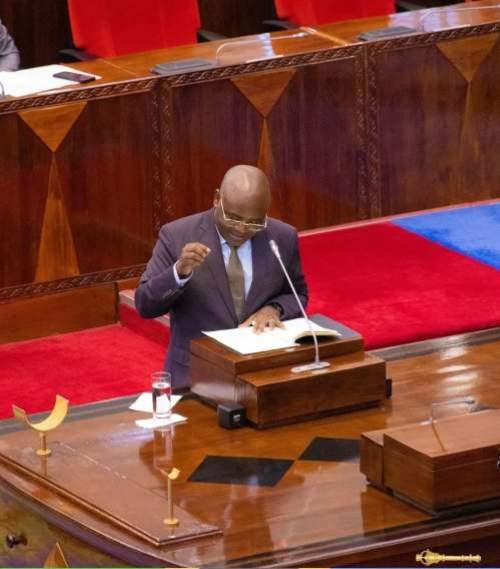
“Many of these projects require billions of dollars in investment and cannot realistically be financed by government alone,” stressed prof. Mkumbo.
The question now is whether investors are ready to answer the call.
Signs of growing investor confidence
There is evidence that appetite for Tanzania is already strengthening.
According to government data, the Tanzania Investment and Special Economic Zones Authority (TISEZA) registered 915 investment projects in 2025 with a combined value of US$10.95 billion, the highest level recorded since formal investment promotion began in 1996. The projects are expected to generate more than 162,000 jobs.
Foreign direct investment also increased significantly, reaching US$1.72 billion in 2025 compared with US$1.34 billion a year earlier.
These figures suggest that investors are responding positively to a series of reforms introduced over the past several years, including efforts to improve the business environment, simplify investment procedures and rebuild confidence among international investors.
The government’s decision to revive major projects that had stalled for years, including LNG negotiations and strategic mining investments, has further strengthened perceptions that Tanzania is becoming a more predictable destination for long-term capital.
The real test begins now
Yet attracting investment commitments and mobilising TSh60 trillion are two very different things.
The amount expected from the private sector is equivalent to nearly three times the value of the government’s own annual budget and represents one of the largest private investment mobilisation exercises ever attempted in Tanzania.
Prof. Mkumbo said achieving that target will require strong participation from domestic banks, pension funds, insurance companies, foreign investors, development finance institutions and local entrepreneurs.
It will also depend on continued reforms.
Government planners acknowledge that successful implementation of the development plan will require improvements in governance, infrastructure, innovation, digital technology and the broader business environment. The plan explicitly identifies private-sector participation as a critical pillar of execution.
Investors will be watching closely for further policy measures aimed at reducing project risks, improving access to finance, streamlining regulations and strengthening legal protections for investment.
From government-led to investor-led growth
The significance of the TSh60.1 trillion target extends beyond the numbers themselves.
It represents the practical beginning of Dira 2050, a strategy that seeks to transform Tanzania into a high-income, industrialised economy powered by productivity, innovation and private enterprise.
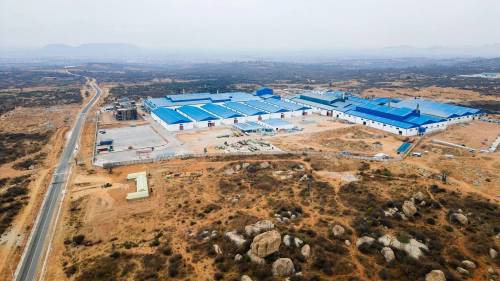
He said In many ways, Tanzania has already completed the first phase of that journey by investing heavily in infrastructure.
The next phase is about commercialising those investments.
Railways must attract cargo. Ports must attract trade. Industrial parks must attract manufacturers. Energy projects must attract factories. Agricultural investments must attract processors and exporters.
That transition can only happen if private capital follows public infrastructure.
The stakes could not be higher
If the strategy succeeds, Tanzania could unlock unprecedented levels of industrialisation, job creation and export growth over the coming decade.
Prof. Mkumbo said the government is targeting the creation of 1.7 million jobs in 2026 alone, a goal that depends heavily on new private investment flowing into productive sectors of the economy.
If investors respond positively, the country could enter a period of accelerated economic transformation.
If they do not, many of the ambitions embedded in Dira 2050 will remain on paper.
That is why the most important figure in Tanzania’s development plan may not be the TSh86.3 trillion cost of the programme itself.
It is the TSh60.1 trillion that government expects businesses to bring to the table. The coming financial year will reveal whether Tanzania’s private sector is ready to carry that responsibility.