By Peter Nyanje, Dodoma
On July 1, Tanzania will quietly begin one of the most ambitious economic transitions in its history.
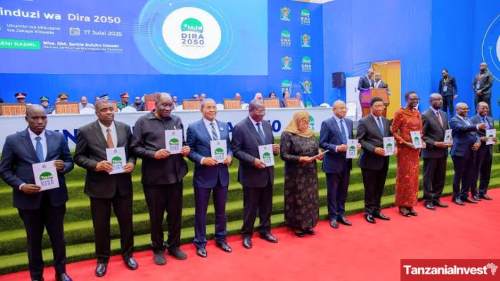
While annual budgets often dominate public attention, the financial year 2026/27 marks something far more significant: the official start of implementing the country’s newly adopted Development Vision 2050 (Dira 2050), a long-term blueprint intended to transform Tanzania into a high-income, industrialised and globally competitive economy over the next quarter-century.
For policymakers, this is more than another fiscal cycle. It is the opening chapter of a new development era following the conclusion of Vision 2025, which guided the country’s economic agenda for the past 25 years.
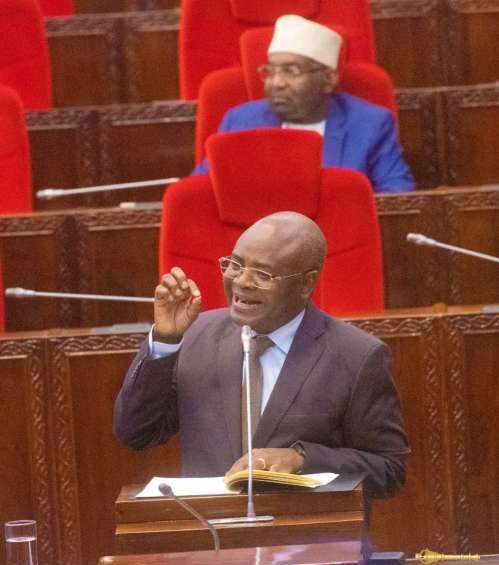
The Minister of State in the President’s Office responsible for Planning and Investments, Prof. Kitila Mkumbo, laid out an ambitious roadmap in the parliament today.
At the centre of the plan, according to Prof. Mkumbo, is the Fourth Five-Year Development Plan (2026/27–2030/31), whose theme is “Transformation for Inclusive Economic Growth and Job Creation.”
From growth to transformation
Tanzania enters the new financial year from a position of relative economic strength.
According to figures presented by prof Kitila ahead of the national budget to be tabled later in the evening, the economy expanded by 5.9 percent in 2025 and is expected to grow by 6.3 percent in 2026. He he further told the House that inflation remains under control at around 3.3 percent, while foreign direct investment rose by more than 28 percent to US$1.72 billion.
The investment story presented by the Minister is also noteworthy.
Drawing data from UNCTUD report, Prof. Mkumbo said the country registered a record 915 investment projects in 2025 worth nearly US$11 billion, surpassing all previous records since the establishment of the country’s investment promotion agency three decades ago. Those projects are expected to create more than 162,000 jobs.
Yet government planners acknowledge that economic growth alone is not enough.
However, available data show that despite years of expansion of the economy, about one-quarter of Tanzanians still live below the basic needs poverty line, highlighting the challenge of ensuring that growth translates into broader prosperity.
That reality is shaping the government’s priorities for the coming year.
Five priorities will drive development
The 2026/27 National Development Plan identifies five broad priorities that will guide public and private investment.
Prof. Mkumbo outlined these as including strengthening governance and democracy, building a more competitive economy, investing in people and social development, protecting the environment and climate resilience, and accelerating reforms in energy, infrastructure, research and digital technology.
According to the Dira 2050, for business leaders, the message is clear: infrastructure, industrialisation and private-sector participation will remain central pillars of Tanzania’s growth strategy.
The government estimates that implementing the 2026/27 development plan will require investments worth TSh86.3 trillion. Significantly, nearly 70 percent of that financing is expected to come from the private sector, underlining the increasingly important role businesses will play in delivering national development goals.
Seven mega projects to watch
The most visible part of Tanzania’s development agenda will be a series of flagship projects designed to reshape the country’s productive capacity.
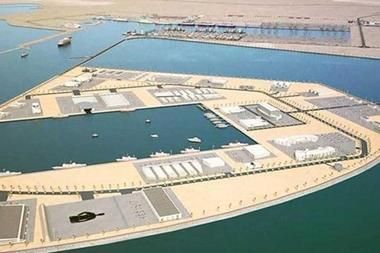
Among the most closely watched initiatives is the proposed Bagamoyo Marine Eco-City and Logistics Corridor, which aims to position Tanzania as a regional logistics and industrial hub.
Equally important is the long-awaited Mchuchuma coal and Liganga iron project, which has been discussed for years as a potential catalyst for Tanzania’s steel industry. If implemented successfully, the project could reduce reliance on imported industrial inputs and support domestic manufacturing.
Agriculture, Prof. Mkumbo said, which still employs the majority of Tanzanians, will receive renewed attention through a national irrigation programme and expanded agro-processing investments aimed at boosting productivity and reducing post-harvest losses.
The government also plans to develop a rare earth minerals processing hub in Dodoma, reflecting growing global demand for critical minerals used in electric vehicles, renewable energy technologies and advanced electronics.
Meanwhile, the long-anticipated liquefied natural gas (LNG) project in Lindi remains a strategic priority that could potentially transform Tanzania into a significant player in global energy markets.
Building on recent successes
The new development push builds upon major investments completed during the first term of President Samia Suluhu Hassan’s administration.
The government points to the completion of the 2,115-megawatt Julius Nyerere Hydropower Project, the launch of passenger services on the Standard Gauge Railway between Dar es Salaam and Dodoma, and completion of the Kigongo-Busisi Bridge as evidence that large-scale infrastructure projects can be delivered successfully.
These projects are already reshaping Tanzania’s economic geography, Prof. Mkumbo noted.
The SGR is expected to lower transport costs and strengthen trade links with neighbouring countries, while expanded electricity generation is providing the energy foundation required for industrial growth.
Jobs become the ultimate test
Perhaps the most important target in the coming financial year is employment, according to plans presented by Prof. Mkumbo.
The government wants the economy to generate 1.7 million jobs in 2026, nearly double the number created in recent years.
This objective reflects a growing recognition that Tanzania’s youthful population presents both an opportunity and a challenge.
Every year, hundreds of thousands of young people enter the labour market. Sustaining social and economic progress will depend largely on the country’s ability to create productive employment opportunities in agriculture, manufacturing, services and technology.
He said the focus on industrialisation, agro-processing, mining and digital transformation is therefore not merely about economic growth; it is fundamentally about jobs.
The rural question
One notable feature of the new development strategy is its emphasis on rural transformation, he told the Parliament.
Government planners recognise that the majority of Tanzanians still live outside major urban centres. As a result, the development agenda includes investments in rural roads, water supply, electricity, telecommunications, affordable housing, vocational training and agricultural value chains.
He said plans are also being developed to improve access to affordable finance, strengthen cooperatives and expand land formalisation programmes to help rural communities participate more fully in the modern economy.

For investors, these initiatives could unlock significant opportunities in agribusiness, logistics, manufacturing and financial services.
The road ahead
The government’s message for the coming financial year is straightforward: the planning phase is over.
After years of consultations, strategy papers and policy frameworks, Tanzania has completed the institutional architecture needed to implement Dira 2050. The focus now shifts to delivery.
Success will ultimately depend on execution, financing and the ability to attract private investment on a scale never before seen in the country’s history. If the ambitions outlined for 2026/27 are realised, the financial year beginning on July 1 may be remembered not simply as another budget cycle, but as the moment Tanzania began building the foundations of its next generation economy.