
By Business Insider Reporter
In its June-July 2026 edition, Forbes Africa profiled Tanzanian businessman Imran Karmali, Owner and Managing Director of GF Trucks & Equipment, as one of the private-sector leaders helping to drive Tanzania’s industrial transformation through vehicle assembly, technology transfer and job creation.
The article, titled “Steel, Scale, and a Tanzanian Vision,” portrays Karmali as a businessman who has moved beyond vehicle distribution to establish one of Tanzania’s most ambitious automotive assembly operations. The magazine highlights how GF Trucks & Equipment has evolved from a distributor of commercial vehicles into a company assembling trucks and passenger vehicles locally, supporting the country’s industrialisation agenda.
Forbes traces the roots of the Karmali family business to 2009, although the family’s involvement in Tanzania’s automotive sector stretches back several decades. What began as a vehicle distribution enterprise has grown into a national operation serving sectors such as mining, construction, agriculture and transport. The company is the authorised distributor of brands including FAW and XCMG in Tanzania.
At the centre of the story is Karmali’s belief that Tanzania can become a manufacturing hub rather than merely a consumer market. Forbes quotes him as emphasizing that the company’s mission is not only to sell vehicles but also to bring new technology and international manufacturing standards into the country.
One of the most significant milestones highlighted in the profile is the establishment of GF Vehicle Assemblers (GFA) in Kibaha, Coast Region. The facility has transformed the company from a distributor into a manufacturer, assembling trucks and other commercial vehicles locally. The plant is regarded as one of Tanzania’s pioneering automotive assembly facilities and has become a symbol of the country’s growing industrial capacity.
Forbes presents Karmali as a second-generation entrepreneur whose vision was shaped by his family’s long-standing business history. The article notes that his exposure to global markets and manufacturing centres inspired him to pursue local assembly rather than continue relying solely on imports. This decision, according to the magazine, was driven by a conviction that Tanzanians could acquire the skills and expertise needed to build vehicles at home.
A major theme in the story is employment creation. Forbes describes how the company has invested heavily in training Tanzanian technicians, engineers and assembly workers. The publication highlights Karmali’s commitment to developing local talent and creating opportunities for young people to participate in advanced manufacturing. Recent company reports indicate that more than 90 percent of the workforce at the assembly plant is Tanzanian, reflecting a deliberate strategy of local capacity building.
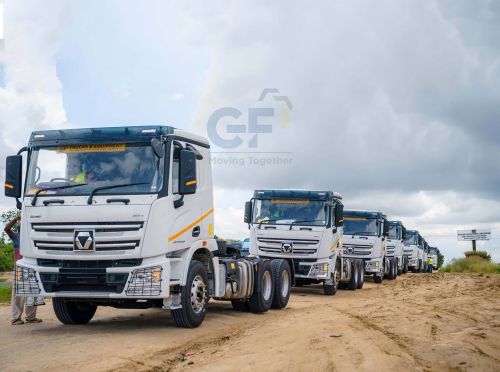
The magazine also focuses on the wider economic impact of GF Trucks & Equipment. Beyond assembling vehicles, the company supports industries that are essential to Tanzania’s economy, including mining, infrastructure development and logistics. Through the supply of heavy-duty trucks, construction machinery and industrial equipment, GF has positioned itself as a key partner in national development.
Forbes further depicts Karmali as an entrepreneur who measures success not only by profits but also by contribution to the country. The article points to the company’s investments in modern technology, workforce development and manufacturing infrastructure as evidence of a long-term commitment to Tanzania.
The profile concludes with a message that encapsulates Karmali’s vision: Tanzania’s future lies in producing more of what it consumes. Through local assembly, technology transfer and skills development, he believes the country can strengthen its industrial base, create jobs and compete more effectively within regional and international markets. In the eyes of Forbes Africa, Imran Karmali represents a new generation of Tanzanian industrialists – business leaders who are combining entrepreneurship with manufacturing ambition to help shape the country’s economic future.