By A Special Correspondent
Africa must rely more on its own capital, strengthen regional partnerships and deepen domestic financial markets if it is to close its infrastructure financing gap and drive long-term economic growth, Stanbic Bank Tanzania has said.
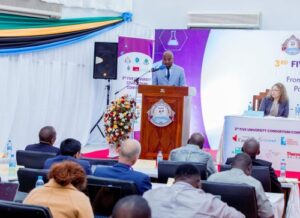
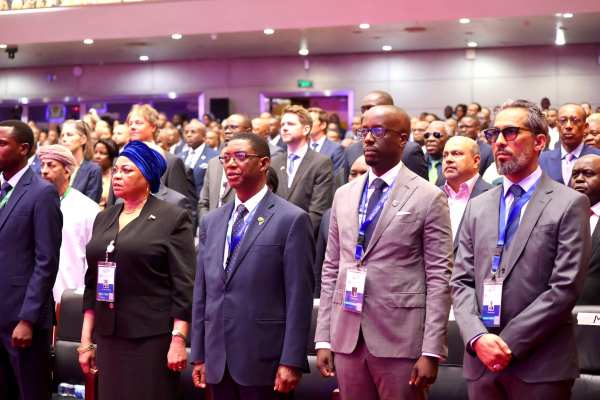
The message emerged strongly during the two-day Africa50 Annual General Shareholders Meeting and Africa Infrastructure Forum in Dar es Salaam, where political leaders, financiers and development experts examined how African institutions can finance the continent’s development at a time when global investment is becoming increasingly selective.
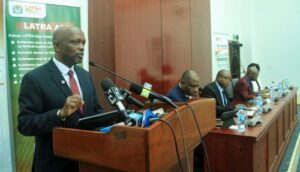
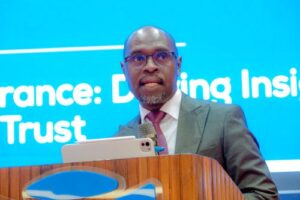
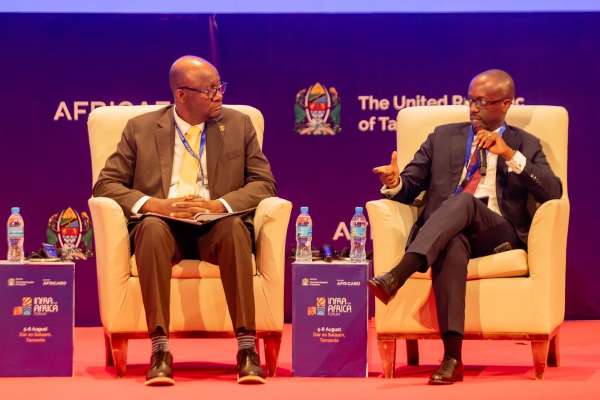
Speaking during the plenary session, “Pace Setters: African-Designed, African-Led,” Stanbic Bank Tanzania Chief Executive Officer Manzi Rwegasira said Africa already has strong financial institutions, but the priority now is scaling up their capacity to meet the continent’s growing infrastructure needs.
“All the good answers will be given, but I think it boils down to scale. We need to think about how we can scale up what we already have on this continent,” Mr. Rwegasira said.
While acknowledging the contribution of institutions such as the African Development Bank and Africa50, he said they alone cannot finance Africa’s infrastructure ambitions.
Instead, he called for greater mobilisation of domestic resources, particularly through stronger local capital markets capable of supporting long-term investments.
“We need to make better use of our national domestic bond markets. They’re still too shallow and too small. We need to make them bigger,” he said.
Mr. Rwegasira also identified regional cooperation as a critical pillar for unlocking larger pools of capital, saying African countries must move beyond working in isolation.
“Maybe regional cooperation is where we can start. We need to work together in collaboration to bring the capital that we have to bear,” he said.
He added that innovative financing models, including securitisation and infrastructure asset recycling, could help governments unlock additional investment without relying solely on new sources of capital.
“Securitisation allows you to recycle the same capital that we have. If we can recycle infrastructure assets, we can use what has already been built to finance new infrastructure,” he said.
The discussions reflected the forum’s broader objective of advancing an African-led financing model under the proposed New African Financial Architecture for Development (NAFAD), which seeks to combine the strengths of African banks, sovereign investors, insurers, development finance institutions and governments to finance infrastructure at scale.
Speaking on the sidelines of the conference, Stanbic Bank Tanzania’s Head of Corporate and Investment Banking, Ester Manase, said the forum demonstrated that partnerships remain the single biggest ingredient for delivering transformative infrastructure across the continent.
“This conference has been extremely beneficial for us as a bank because it has brought together key stakeholders who are committed to supporting infrastructure development across the continent,” she said.
She added: “We believe infrastructure helps unlock the economy. It makes it easier to move agricultural produce and other goods, facilitates imports and exports, and supports overall economic development.”
Ms Manase said the greatest lesson from the two-day meeting was that commercial banks, development finance institutions, insurers, governments and private investors must work together because no institution can finance Africa’s long-term infrastructure requirements on its own.
“The biggest takeaway for me is collaboration. Every stakeholder has an important role to play, but none of us can achieve these ambitions alone,” she said.
The seasoned banker explained that while commercial banks play an important financing role, infrastructure projects require patient, long-term capital that can only be mobilised through partnerships with development finance institutions and institutional investors.
“Commercial banks can only support infrastructure financing to a certain extent. Because these are long-term investments, we need development finance institutions, insurance companies and both the public and private sectors to work together,” she said.
Ms Manase also said Tanzania is strategically positioned to become East Africa’s logistics gateway, citing continued investment in ports, the Standard Gauge Railway and road infrastructure.
“Tanzania is in a very strategic location. We have eight neighbouring countries, six of which are landlocked. That gives us a unique opportunity to become the region’s hub,” he said.
Former President Jakaya Mrisho Kikwete, who also addressed the forum, said infrastructure financing must ultimately improve people’s lives and should therefore be matched by equal investment in human capital.
He said; “Africa’s expanding youth population could become the continent’s greatest economic advantage if governments invest in quality education, skills development and employment opportunities.” Dr. Kikwete stressed that roads, railways and energy projects should not be viewed as development outcomes on their own, but as enablers of productivity, business growth and shared prosperity.