
By Correspondent Saidina Msangi
Tanzania has unveiled a new Government Securities Yield Curve, marking another significant milestone in the country’s efforts to modernise its financial markets, improve investment transparency and attract both domestic and international capital.
The benchmark, launched by the Governor of the Bank of Tanzania (BoT), Emmanuel Tutuba, on behalf of Finance Minister Ambassador Khamis Mussa Omar, is expected to transform how investors, banks and financial institutions price risk and make investment decisions in the country’s growing government securities market.
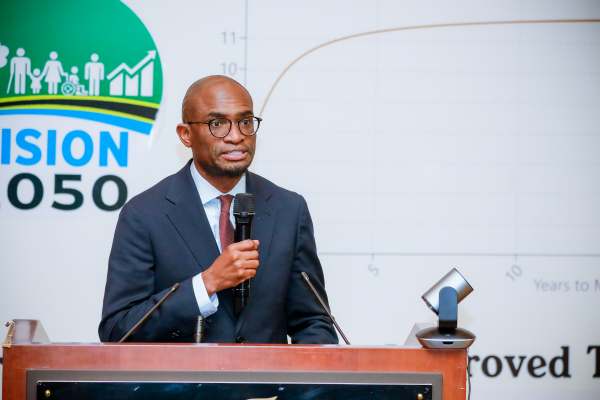
Speaking during the launch at the Bank of Tanzania headquarters in Dar es Salaam, Tutuba described the yield curve as a critical financial market tool that will enhance transparency while providing reliable pricing information for government Treasury bonds traded on the secondary market.
“The yield curve will enable both local and international investors to monitor movements in government securities’ returns and compare Tanzania’s investment opportunities with those available in regional and international markets,” he said.
According to the Governor, the initiative will strengthen investor confidence, increase market transparency and improve Tanzania’s competitiveness as an investment destination.
Benchmark for investment decisions
A government securities yield curve plots the returns offered by Treasury securities across different maturities, providing investors with a clear picture of borrowing costs and market expectations. It is widely regarded as one of the most important indicators in developed financial markets, serving as a benchmark for pricing financial assets.
For Tanzania, the introduction of the yield curve represents a major step towards aligning the country’s financial infrastructure with international best practice.

Investors will now have access to credible market-based information to evaluate government securities against alternative investment opportunities, enabling more informed portfolio decisions.
The reform comes at a time when Tanzania continues implementing broad financial sector reforms aimed at deepening capital markets and expanding access to investment opportunities.
Supporting monetary policy
Beyond improving transparency, the yield curve will also provide valuable insights into market expectations regarding economic growth, inflation and future interest rate movements.
Tutuba said the benchmark would become an important analytical tool for the central bank as it strengthens implementation of its interest-rate-based monetary policy framework.
“The yield curve reflects market expectations on inflation, economic growth and monetary policy, making it an important instrument for effective policy implementation,” he said.
The Governor noted that Tanzania’s government securities market has expanded dramatically over the past quarter-century.
Outstanding government securities have increased from TSh499 billion in 2001 to approximately TSh32.3 trillion, underlining the rapid development of the country’s domestic debt market.
The benchmark will also improve the valuation of government securities pledged by commercial banks as collateral when borrowing from the central bank, enhancing pricing accuracy and financial market efficiency.
Benefits across the financial sector
Banks, pension funds, insurance companies, asset managers and individual investors are expected to benefit significantly from the new benchmark.
Financial institutions will be able to use the yield curve as a risk-free reference rate when pricing loans, mortgages, corporate bonds and other investment products, improving consistency across Tanzania’s financial system.
The enhanced pricing mechanism is also expected to stimulate innovation in fixed-income products while supporting greater liquidity in the domestic bond market.
Tutuba thanked investors and market participants whose continued participation in government securities has enabled the state to finance strategic development projects, including the implementation of the country’s long-term Development Vision 2050 (Dira 2050).
However, he stressed that investor education remains essential if Tanzania is to unlock the full potential of its capital markets.
Currently, only 32,631 investors participate in the government securities market – a figure he described as modest relative to the country’s population.

“There is still considerable room to expand investor participation, and continued financial literacy initiatives will be critical in achieving that objective,” he said.
Private sector financing
The Ministry of Finance believes the strengthened government securities market will play a crucial role in mobilising long-term capital required to deliver Tanzania’s ambitious economic transformation agenda.
Commissioner for Debt Management Japhet Justine said transactions in the government securities market exceeded TSh6.7 trillion during the 2025/26 financial year, reflecting growing investor confidence.
He noted that the market would become increasingly important as Tanzania implements Dira 2050, under which the private sector is expected to finance nearly 70 percent of the country’s development investment requirements.
“The capital market will be a key source of financing for private sector-led growth envisioned under Vision 2050,” he said.
Meanwhile, Dar es Salaam Stock Exchange (DSE) Chief Executive Peter Nalitolela welcomed both the launch of the yield curve and the recent amendments to Tanzania’s foreign exchange regulations, which now allow all non-resident investors to purchase government Treasury bills and bonds.
He said the combined reforms would increase liquidity in the bond market, encourage development of new capital market products and strengthen Tanzania’s financial ecosystem.
“The introduction of the yield curve, together with the liberalisation of foreign participation in government securities, creates the foundation for a more efficient, transparent and competitive capital market,” Nalitolela said. For investors, the reforms provide better pricing signals and improved market confidence. For Tanzania, they represent another step towards building deeper, more sophisticated financial markets capable of supporting sustained economic growth and attracting long-term investment capital.