
By Business Insider Reporter
Tanzania is set to earn more than TSh10 billion from carbon trading after approving four projects expected to generate 4.2 million tonnes of verified carbon credits for sale on the international market, marking one of the country’s clearest signals yet that climate finance is becoming a new economic opportunity rather than simply an environmental agenda.
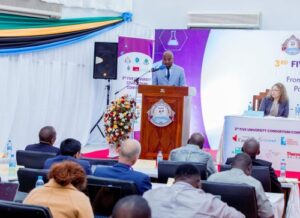
Announcing the decision in Dar es Salaam, Minister of State in the Vice President’s Office (Union and Environment), Engineer Hamad Yussuf Masauni, said the projects would not only reduce greenhouse gas emissions but also support job creation, expand access to clean energy and improve water services across the country.
The approved projects include a clean cooking energy programme implemented by Burn Manufacturing, a social impact programme managed by AP Energy Group in partnership with Sayari SA Limited, a clean water project by Water Mission International Tanzania, and an improved cookstove initiative implemented by Bridge Carbon Tanzania Limited.
Together, the projects are expected to generate verified carbon credits valued at more than US$52.1 million, equivalent to approximately TSh135.5 billion. Under Tanzania’s carbon trading regulations, the government receives 8% of carbon credit sales, giving it an expected revenue share of more than US$2 million, or over TSh10 billion.
“These revenues are the result of the government’s efforts to build a strong carbon trading system that protects national interests and increases the contribution of this sector to the economy,” Masauni said.
The decision represents a significant milestone in Tanzania’s effort to position itself within the rapidly expanding global carbon market, where countries and companies are increasingly paying for verified reductions in carbon emissions.
Climate policy meets economic policy
What makes the announcement particularly important is the government’s attempt to link climate action directly to economic development.
The projects focus on areas with immediate social and economic impact: clean cooking, safe water and energy access.

PHOTO: VICE PRESIDENT’S OFFICE
According to the minister, the initiatives will help reduce emissions by replacing polluting cooking fuels, expand access to clean and safe water, create employment opportunities and support the government’s target of ensuring that 85% of Tanzanians use clean cooking energy by 2034.
The clean water project, which will be implemented across all 26 regions of Tanzania, is expected to create about 1,000 direct jobs and engage more than 100 suppliers. Additional water-related activities in Kigoma and Dodoma are projected to benefit over one million households with improved access to safe water while creating more than 350 jobs.
For a country where energy poverty and water access remain major development challenges, the projects demonstrate how carbon finance can be used to fund infrastructure and services that deliver both environmental and social benefits.
Building a carbon economy
The announcement also highlights how quickly Tanzania’s carbon market architecture is taking shape.
Masauni said the government has strengthened the legal, policy and institutional framework governing carbon trading through amendments to the Environmental Management Act, which established the National Carbon Monitoring Centre (NCMC).
The centre is responsible for project registration, monitoring, verification, reporting and coordination of revenues generated from carbon trading.
As of July 2026, the NCMC had registered 117 carbon trading projects, while the National Project Evaluation Committee continues to conduct technical assessments before recommending projects for government approval.
The scale of registrations suggests that Tanzania is moving beyond pilot initiatives towards a more structured carbon market capable of attracting private investment.
A new source of foreign exchange
Economists say the immediate fiscal gain of TSh10 billion is relatively modest compared with Tanzania’s overall budget, but the broader implications could be far more significant.
Carbon credits generate foreign exchange earnings, attract climate-focused investors and create new revenue streams linked to environmental performance rather than traditional commodity exports.
If the current projects succeed and additional initiatives in water, biodiversity, transport and electric mobility are approved, carbon trading could gradually become a meaningful component of Tanzania’s green economy strategy.
The government has already indicated that projects in biodiversity conservation, transport and electric vehicles are under evaluation, signalling an intention to diversify beyond cookstoves and water programmes.
Balancing opportunity and oversight
The rapid growth of carbon projects also raises questions about governance, transparency and benefit sharing.
Globally, carbon markets have faced criticism over weak verification standards and concerns that local communities do not always receive a fair share of revenues.
By creating a centralised monitoring and coordination system, Tanzania is attempting to avoid some of the governance problems that have affected carbon projects elsewhere.
Whether that framework proves effective will be closely watched by investors, development partners and local stakeholders.
The bigger picture
For Tanzania, the approval of these four projects is about more than carbon credits.
It reflects a broader shift in which environmental assets are increasingly being treated as economic assets.

Clean cooking becomes a source of carbon revenue. Safe water becomes a climate investment. Emission reductions become tradable commodities.
The country’s challenge now is to ensure that the carbon market does not remain a niche financial instrument benefiting only project developers and investors, but evolves into a tool that delivers measurable improvements in household welfare, employment and environmental resilience. If managed well, Tanzania’s emerging carbon economy could provide a rare alignment of climate action, foreign investment and social development – turning the global transition to low-carbon growth into a tangible economic opportunity at home.