By Business Insider Reporter
As Tanzania enters the first full year of implementing its National Development Vision 2050 (Dira 2050), the Vice President’s Office is sharpening its focus on one of the less visible, yet most critical, drivers of economic transformation: institutional performance.
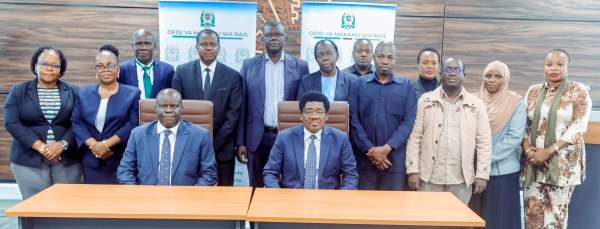
Senior government officials meeting in Arusha this week used a high-level performance review to assess progress made during the 2025/26 financial year while setting priorities for the year ahead, signalling a renewed emphasis on accountability, policy coordination and results-based public administration.
Held at the Pan African Postal Union (PAPU) Conference Centre, the strategic session brought together senior management and technical officials from the Vice President’s Office to evaluate departmental performance, strengthen monitoring and evaluation systems, and align the institution’s work programme with the government’s broader development agenda.
While such reviews are routine within government, this year’s meeting carries added significance as ministries and public institutions begin translating the ambitions of Vision 2050 into measurable outcomes.
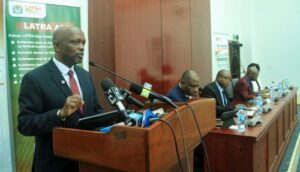
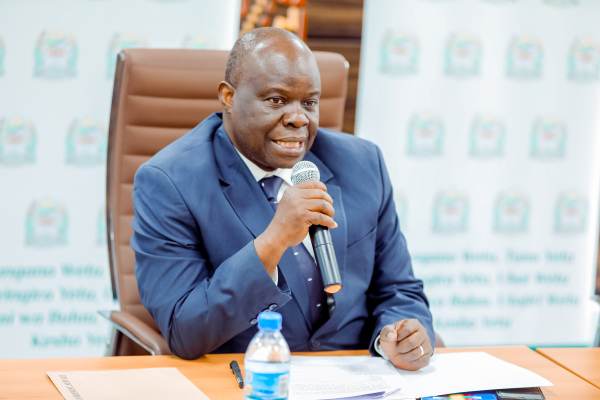
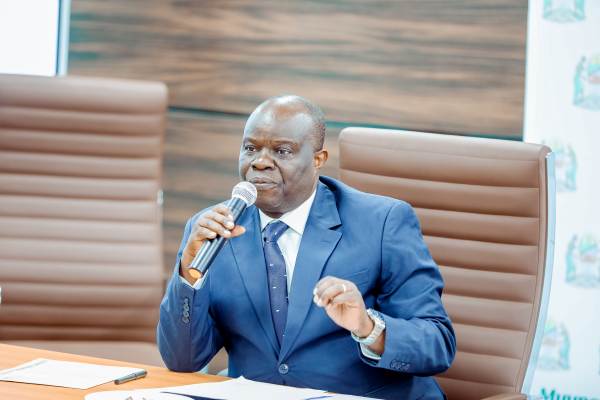
Addressing the meeting, Permanent Secretary Dr. Richard Muyungi described performance evaluation as more than an administrative exercise, saying it provides the foundation for improving institutional efficiency and ensuring government programmes deliver tangible results.
“Performance assessment enables us to identify what has been achieved, learn from the challenges encountered and develop stronger strategies that will allow the Vice President’s Office to discharge its responsibilities more effectively during the 2026/27 financial year,” Dr. Muyungi said.
“It is our responsibility to ensure that every plan we develop contributes directly to the government’s priorities and the successful implementation of the National Development Vision 2050.”
He urged every department and unit to strengthen collaboration, embrace innovation and ensure public resources are utilised efficiently to maximise development impact.
The review reflects a growing recognition across government that achieving Tanzania’s long-term economic ambitions will depend not only on investment in infrastructure and productive sectors but also on improving the effectiveness of public institutions responsible for policy implementation.
Among the key presentations was a progress report from the Union Affairs Department, which reviewed implementation of Union policies, coordination of Union matters and measures being taken to address operational challenges while strengthening institutional effectiveness.
Participants also examined progress made by the Blue Economy Department, reflecting the government’s increasing emphasis on unlocking the economic potential of marine and freshwater resources.
The department outlined ongoing initiatives aimed at promoting the sustainable use of oceans, lakes and rivers, improving governance of aquatic resources and expanding the blue economy’s contribution to national growth.
The blue economy has emerged as one of the strategic pillars of Tanzania’s long-term development agenda, with growing opportunities in fisheries, aquaculture, maritime transport, coastal tourism and marine conservation expected to support economic diversification and job creation.
The meeting also included a presentation on Public Service Protocol, designed to reinforce understanding of government procedures, ethical standards and professional conduct among public servants.
Officials participating in the discussions stressed the importance of strengthening monitoring and evaluation systems, enhancing accountability and ensuring that implementation plans for the 2026/27 financial year remain closely aligned with national priorities.
For investors and the private sector, such internal reforms may appear administrative, but they have wider economic implications.
Effective public institutions underpin investor confidence, improve policy coordination and enhance the delivery of government services that support private-sector growth. As Tanzania pursues its Vision 2050 ambition of becoming a high-income, industrialised economy, the efficiency of public administration will be as important as the policies themselves. The Arusha meeting therefore represents more than an internal planning exercise. It reflects the government’s broader effort to ensure that institutional capacity keeps pace with the country’s increasingly ambitious economic and development agenda.