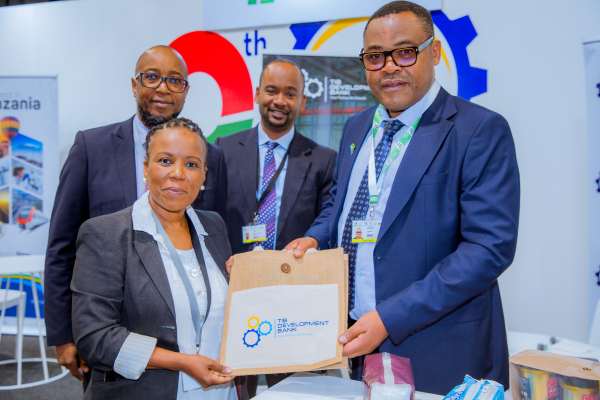
By Correspondent benny Mwaipaja, Durban
The Tanzania Investment Bank (TIB) is seeking stronger partnerships with regional development finance institutions to mobilise capital for large-scale industrial projects, positioning finance as a critical enabler of Tanzania’s ambition to become a US$1 trillion economy by 2050.
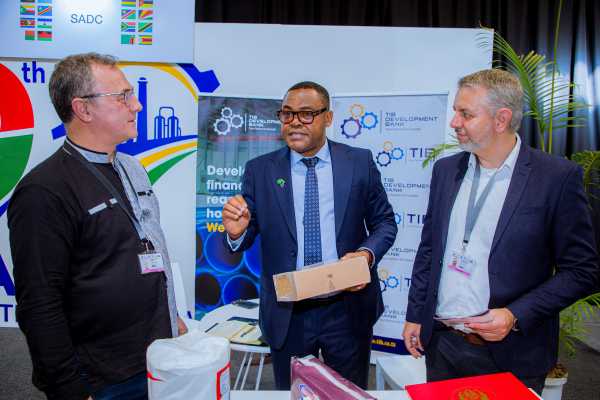
Speaking on the sidelines of the 9th SADC Industrialisation Week in Durban, South Africa, TIB Chief Executive Officer Deogratius Kwiyukwa said closer collaboration among financial institutions across the Southern African Development Community (SADC) would help unlock the investment required to drive industrial transformation throughout the region.
He said TIB was participating in the regional gathering to identify opportunities for co-financing strategic projects with peer institutions, enabling the bank to support Tanzania’s long-term industrial agenda under the country’s Development Vision 2050.
“Industrialisation requires patient capital and regional partnerships,” Kwiyukwa said, adding that development finance institutions have a unique role in mobilising resources for projects that are too large or too strategic for conventional commercial lending.
Turning infrastructure into industrial growth
Kwiyukwa argued that Tanzania has already laid much of the physical foundation for industrial expansion through major public investments in the Standard Gauge Railway (SGR), ports, roads, energy infrastructure and logistics networks.
The next challenge, he said, is ensuring that these strategic assets generate productive economic activity by attracting industries that add value to agricultural produce, critical minerals and other natural resources.
Rather than viewing infrastructure as an end in itself, he said Tanzania must integrate rail corridors, ports, reliable electricity, industrial parks, special economic zones, mining areas, agricultural production centres and export markets into a single industrial ecosystem capable of driving manufacturing-led growth.
Such an approach, he noted, would strengthen domestic value addition, expand exports and create sustainable employment opportunities.
Financing industrial ecosystems
Kwiyukwa said TIB and other development finance institutions across the SADC region could jointly finance entire industrial value chains built around strategic infrastructure.
That includes supporting manufacturing clusters along the SGR corridor, logistics and warehousing businesses linked to ports, and energy-intensive industries attracted by Tanzania’s expanding and increasingly reliable electricity supply.
He stressed that industrialisation is no longer about financing individual factories alone but about investing in integrated production ecosystems capable of generating broader economic spillovers.
Expanding value addition
According to the TIB chief executive, industries focused on processing agricultural commodities, critical minerals and other locally available resources will require substantial long-term investment if Tanzania is to achieve its industrial ambitions.
He noted that TIB has already provided concessional financing to manufacturers and public sector projects, supporting investments in agricultural value addition, including coffee and sugar processing, as well as water infrastructure.
With a stronger capital base and enhanced regional cooperation, he said, the bank would be positioned to finance even larger strategic investments.
Tanzania draws investor attention
The conference also provided an opportunity to showcase Tanzania’s expanding investment opportunities to regional and international financiers.
Several delegates expressed interest in exploring investment opportunities in Tanzania, citing the country’s improving infrastructure, growing industrial base and supportive policy environment.
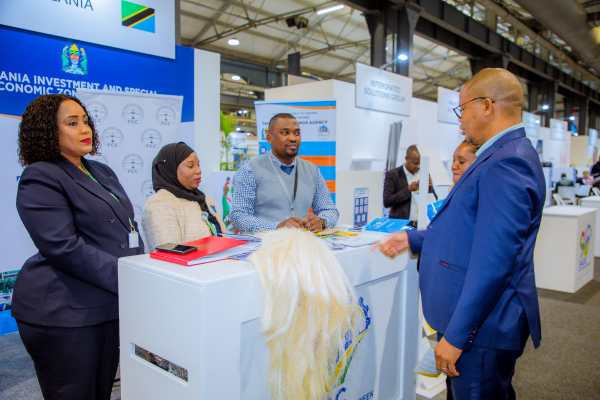
Their interest reflects increasing recognition of Tanzania as one of East Africa’s emerging manufacturing and logistics hubs, supported by continued public investment in transport and energy infrastructure.
Regional industrial agenda
This year’s SADC Industrialisation Week brought together government leaders, private sector executives, investors, development finance institutions and policy experts from across Southern Africa under the theme: “Advancing Sustainable and Inclusive Industrialisation through Infrastructure Development, Agricultural Transformation and Mineral Beneficiation for an Equitable World.”
Discussions throughout the forum focused on strengthening regional cooperation, increasing local value addition before exporting minerals and agricultural products, and mobilising greater investment into manufacturing, infrastructure and productive sectors. For Tanzania, TIB’s participation signals a broader shift in development finance – from funding isolated projects to mobilising regional capital capable of transforming infrastructure investments into competitive industrial value chains that support the country’s long-term economic aspirations under Dira 2050.