By Correspondent Benny Mwaipaja, London
Tanzania is strengthening its partnership with global banking giant – Citibank – as it steps up efforts to mobilise international capital for infrastructure, private sector investment and its ambitious long-term economic transformation agenda.
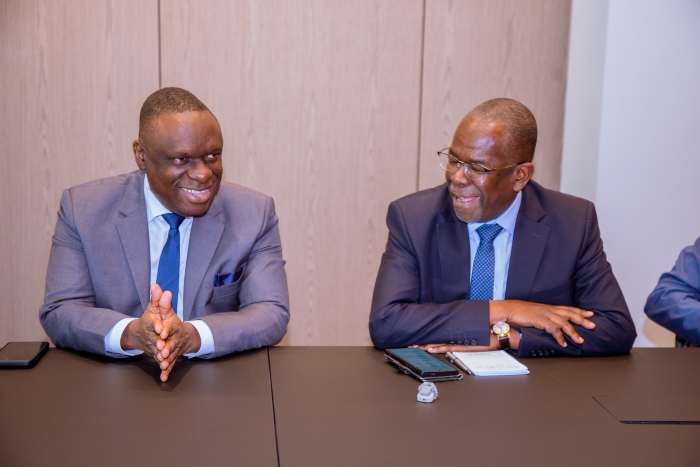
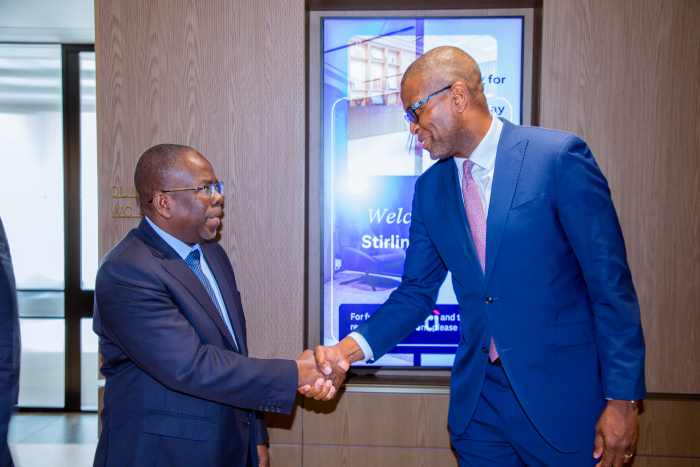
The renewed collaboration follows high-level talks in London between Finance Minister, Ambassador Khamis Mussa Omar and senior Citibank executives led by Akin Dawodu, the bank’s Chief Executive Officer for Sub-Saharan Africa.
The discussions focused on expanding cooperation in international capital markets, infrastructure financing, export credit agency (ECA) financing, capital market reforms and attracting global investors to Tanzania.
The meeting comes as Tanzania prepares to deepen its engagement with international financial markets, including plans for its inaugural Eurobond issuance, while positioning itself to finance large-scale strategic projects under the newly launched Development Vision 2050 (Dira 2050).
For Tanzania, the discussions represent more than a routine engagement with a global financial institution. They reflect a broader strategy to diversify financing sources, strengthen investor confidence and reduce dependence on traditional development financing.
Citibank, which has operated in Tanzania since 1995, reaffirmed its commitment to supporting the country’s access to international capital markets and helping expand its domestic capital market.
The bank also pledged to leverage its global investor network across Europe, North America, the Middle East and Asia to promote investment opportunities in Tanzania.
The lender further expressed interest in supporting the financing of strategic infrastructure projects, an area expected to play a central role in the country’s next phase of economic growth.
Speaking during the meeting, Ambassador Omar outlined Tanzania’s recent economic progress, highlighting major investments in electricity generation, the modernisation of the ports of Dar es Salaam, Tanga and Mtwara, and the expansion of aviation infrastructure.
He said these investments are laying the foundation for the implementation of Dira 2050, which officially came into effect in July 2026 and targets expanding Tanzania’s economy to US$1 trillion over the next 25 years.
According to the minister, achieving that ambition will depend heavily on private investment, which is expected to account for around 70 percent of total investment under the strategy.
“The private sector will be the principal engine of investment required to achieve the country’s long-term development goals,” he said.
Ambassador Omar also provided an update on the long-awaited US$42 billion liquefied natural gas (LNG) project, saying negotiations with investors have been largely concluded and that the Government and project sponsors have agreed on the principal commercial framework.
He said the project is expected to move into implementation once the remaining internal processes among project partners are completed.
Beyond financing, discussions also covered Tanzania’s ongoing business climate and tax reforms.
The minister noted that President Samia Suluhu Hassan had established two independent commissions to review the country’s business environment and tax system. Together, the commissions submitted 284 recommendations, many of which are now being implemented by the Government.
He said future tax reforms would prioritise widening the tax base, strengthening tax administration and increasing domestic revenue mobilisation rather than imposing additional tax burdens on businesses.
In a move aimed at institutionalising cooperation, Ambassador Omar proposed the establishment of a formal strategic partnership framework between Tanzania and Citibank.
The proposed arrangement would provide structured collaboration in sovereign capital markets, infrastructure financing, export credit agency facilities, investor relations, domestic capital market development, private sector investment promotion and tax administration reforms.
For investors, the strengthened relationship signals Tanzania’s determination to position itself as a credible destination for global capital at a time when African economies are increasingly competing for international investment. If successfully translated into concrete financing arrangements, the partnership could help accelerate delivery of strategic infrastructure projects while broadening Tanzania’s access to long-term international capital needed to support its Dira 2050 ambitions.