By Peter Nyanje
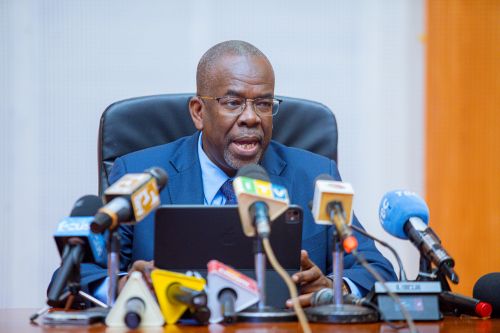
Tanzania’s business community, investors and development partners will tomorrow turn their attention to Dodoma as the Government tables what Finance Minister Khami Mussa Omar (pictured above) has described as a “special budget” that will set the tone for the country’s long-term development ambitions.
Minister Omar said the 2026/27 budget, expected to total TSh62.3 trillion, will be the first national budget to be implemented under the newly launched Tanzania Development Vision 2050 (Dira 2050), marking the beginning of a new chapter in the country’s economic transformation agenda.
Speaking to journalists in Dar es Salaam on Wednesday, Mr Omar said the budget carries unique significance for several reasons.
“This is not an ordinary budget,” the minister said. “It is the first budget under the implementation of Dira 2050, the first budget under the Fourth Five-Year National Development Plan covering 2026/27 to 2030/31, and the first full budget to implement the manifesto of the government elected during last year’s General Election.”
The budget will be presented simultaneously with those of other East African Community member states, in line with a regional agreement requiring partner countries to table their annual spending plans on the second Thursday of June each year. Burundi remains the only exception.
A budget built around Dira 2050
Tomorrow’s budget will provide the clearest indication yet of how President Samia Suluhu Hassan’s administration intends to translate the ambitions of Dira 2050 into practical policies and investment priorities.
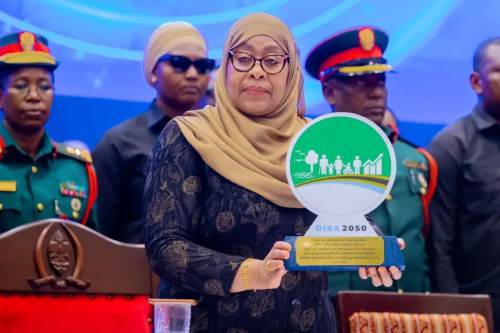
Launched by President Samia Suluhu Hassan last July, Dira 2050 succeeds the country’s long-serving Vision 2025 and seeks to position Tanzania as a high-income, industrialised and knowledge-based economy over the next quarter century.
Before the budget presentation, Parliament will receive an economic review from the Minister of State in the President’s Office responsible for Planning and Investment, Prof. Kitila Mkumbo, outlining the country’s economic performance during 2025 and prospects for 2026.
The report is expected to highlight economic growth, sectoral contributions to GDP, inflation trends, foreign trade performance and the state of foreign exchange reserves.
These indicators have become increasingly important amid a turbulent global environment, Mr. Omar said.
He noted for instance that the world economy is still grappling with the lingering effects of the Covid-19 pandemic, the Russia-Ukraine conflict, rising trade tensions among major economies and, more recently, escalating geopolitical tensions involving Iran.
“Global developments continue to affect all economies, including ours. Some of these impacts have already been reflected in our economic planning, and others will continue to shape our outlook going forward,” Mr Omar said.
Domestic revenue takes centre stage
One of the key messages from the Finance Minister is that Tanzania is increasingly financing its development ambitions through domestic resources.
Of the projected TSh62.3 trillion budget, approximately TSh46.8 trillion is expected to come from domestic revenue collections, the Minister said underlining the government’s continued focus on strengthening tax administration and broadening the tax base.
He expressed satisfaction with the performance of the outgoing budget, saying domestic revenue collection targets had largely been achieved despite growing expenditure demands.
“The current budget has performed well, particularly in terms of domestic revenue mobilisation. We faced some special expenditure requirements during implementation, but overall we have managed them effectively,” he said.
For businesses, this suggests the government is likely to maintain its emphasis on improving tax compliance while seeking new ways of expanding the revenue base without undermining economic growth.
Infrastructure to dominate spending priorities
As in previous years, infrastructure development is expected to absorb a substantial share of public expenditure, Minister Omar noted in his briefing.
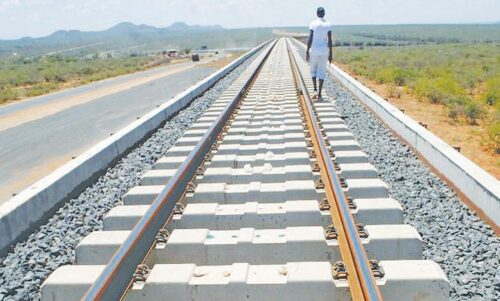
Among the flagship projects likely to receive significant allocations is the Standard Gauge Railway (SGR), which remains one of Tanzania’s most ambitious infrastructure investments.
While passenger services between Dar es Salaam and Dodoma have already commenced, construction continues on several remaining sections of the railway network.
“There is still substantial work to be done on the SGR,” Mr Omar said. “The project remains one of the government’s strategic priorities and will continue to receive attention in the coming financial year.”
Road infrastructure is also expected to feature prominently.
He acknowledged that many roads across the country require rehabilitation and upgrading, indicating that additional resources will be directed towards restoring critical transport links.
Water infrastructure is another area likely to benefit.
The government is expected to continue investing in the National Water Grid initiative aimed at improving water security for households, agriculture and industry.
Energy infrastructure, particularly electricity transmission and distribution networks, is also expected to receive increased funding as Tanzania seeks to support industrialisation and expand access to reliable power.
Economists say such investments will be critical if Tanzania is to meet the aspirations outlined in Dira 2050 and compete effectively in an increasingly technology-driven global economy.
New tax measures expected
Businesses awaiting tomorrow’s budget speech will be particularly interested in proposed tax reforms.
According to the Finance Minister, there will be few changes in tax structure which have been undertaken after the government undertook an extensive consultation process before finalising its fiscal proposals.
Stakeholders from the private sector, government institutions, business associations, universities, civil society organisations and individual citizens were invited to submit recommendations for improving the tax system, he said.
He said the ministry received 727 proposals covering taxation, legislation and administrative reforms.
Following months of review involving technical committees from both the public and private sectors, 125 proposals were accepted in full, while another 121 were approved after modification.
Nearly 300 proposals were rejected, with officials citing national economic interests and broader policy objectives.
“We want a tax system that promotes economic growth, creates jobs, attracts investment, broadens the tax base and reduces unnecessary burdens on taxpayers,” Mr. Omar explained.
Although the minister declined to disclose specific measures ahead of the budget presentation, he confirmed that new tax initiatives would be announced.
“There will be new tax measures,” he said. “They are the result of a long consultative process involving many stakeholders across the country.”
The bigger picture
Tomorrow’s budget arrives at a pivotal moment for Tanzania.
The country is entering a new development cycle, backed by an ambitious long-term vision, growing investor confidence and major infrastructure projects already underway.
At the same time, policymakers face the challenge of maintaining fiscal discipline while financing expanding development needs.
For businesses, the budget will offer important clues about the government’s priorities over the coming years – from taxation and investment incentives to infrastructure spending and economic reforms.
Mr. Omar concluded his briefing with a reminder that development ultimately depends on the collective efforts of all Tanzanians. “Nation-building is a shared responsibility,” he said. “Citizens must work hard and pay their taxes, while government must ensure that the revenues collected are used efficiently and transparently for the benefit of the people.”