By Correspondent Asia Singano, Tunduma
Tanzania and Zambia have intensified efforts to strengthen bilateral trade and regional economic integration following high-level discussions aimed at improving transport infrastructure, easing cross-border commerce and unlocking new investment opportunities between the two neighbouring economies.
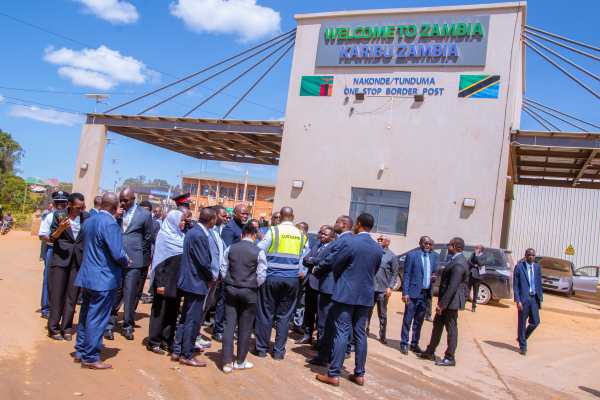
The discussions took place during the 5th Joint Trade Committee (JTC) meeting held in Tunduma, the strategic border town linking Tanzania and Zambia through one of Southern and East Africa’s most important trade corridors.
Leading the Tanzanian delegation was Deputy Minister for Finance, Mshamu Ali Munde, who said both countries are committed to improving the business environment and strengthening economic cooperation for mutual growth.
According to officials, the talks focused on expanding trade flows, modernising transport systems and addressing bottlenecks that continue to affect cargo movement and cross-border business activities.
The meeting also explored ways of improving infrastructure connectivity, particularly in transport and logistics, which remain critical to regional trade competitiveness.
Strategic trade corridor
The Tanzania-Zambia trade relationship is regarded as one of the most strategically important economic partnerships in the region, anchored by key infrastructure assets such as the TAZARA Railway and the Dar es Salaam Corridor.
For decades, Zambia has relied heavily on the Port of Dar es Salaam as a gateway for imports and exports, particularly copper and agricultural commodities destined for global markets.
The corridor also serves several land-linked countries in Southern and Central Africa, including the Democratic Republic of the Congo, Malawi and parts of Zambia’s mining belt.
Analysts say growing investment in Tanzania’s transport infrastructure – including expansion of the Port of Dar es Salaam, upgrades of road networks and the ongoing Standard Gauge Railway (SGR) project – is strengthening Tanzania’s position as a regional logistics and transit hub.
Focus on business climate
Officials from both governments noted that improving the ease of doing business remains central to unlocking the full trade potential between the two countries.
Discussions included measures to streamline customs procedures, reduce transport delays and create a more predictable regulatory environment for traders and investors.
The meeting was preceded by technical sessions involving experts from various ministries and later elevated to discussions at Permanent Secretary level.
Participating ministries included finance, transport, industry and trade, and foreign affairs from both Tanzania and Zambia.
Other Tanzanian leaders attending the meeting included Deputy Minister for Transport, David Kihenzile, Deputy Minister for Foreign Affairs and East African Cooperation, James Millya, and Deputy Minister for Industry and Trade, Denis Londo.
Regional integration gains momentum
The renewed push for deeper Tanzania-Zambia trade cooperation comes amid broader regional integration efforts across the African continent under the African Continental Free Trade Area (AfCFTA).
Economists argue that improved coordination between regional economies is becoming increasingly important as African countries seek to expand intra-African trade, industrialisation and supply-chain resilience.
Trade experts also note that Tanzania and Zambia possess complementary economic strengths. Tanzania offers strategic port access and a rapidly expanding logistics network, while Zambia remains one of Africa’s largest copper producers with growing demand for efficient export routes.

Agriculture, mining, manufacturing and energy are increasingly emerging as areas of cooperation between the two economies.
Growing importance of border towns
Tunduma itself has become a symbol of regional commerce, handling significant volumes of cargo traffic moving between East and Southern Africa.
The town has seen rising investment in warehousing, transport services, hospitality and small-scale trading activities linked to cross-border commerce.
However, business operators have continued to raise concerns over customs delays, inconsistent regulations and transport inefficiencies that increase the cost of doing business.
The Joint Trade Committee discussions are therefore expected to contribute towards resolving long-standing operational barriers while supporting broader regional trade ambitions. For Tanzania, the engagement also aligns with its wider strategy of leveraging infrastructure investment and regional connectivity to position itself as a major commercial gateway within Africa’s evolving trade architecture.