By Business Insider Reporter
A new partnership between the Foundation for Civil Society (FCS) and UNICEF Tanzania is placing youth and women at the centre of efforts to tackle some of the country’s most pressing social challenges.
Launched in Dar es Salaam on April 23, 2026, the initiative focuses on strengthening the capacity of youth- and women-led civil society organisations (CSOs) to deliver sustainable, community-driven solutions.
The collaboration marks a major milestone for FCS as its first direct partnership with a United Nations agency, signaling a growing shift toward locally led development.
FCS is Tanzania’s leading grant-maker, supporting youth, women, and grassroots organisations to become more effective, accountable, and sustainable in serving communities.
By investing in grassroots organisations, the programme aims to ensure that solutions to challenges facing children and adolescents are designed and implemented by those closest to the communities affected.
Speaking at the launch, the Deputy Executive Director and Head of Programme Quality and Learning at FCS, Cynthia Harris, emphasized the importance of building strong local institutions.
“This partnership is about more than support – it is about transformation. We are investing in the systems, leadership, and resilience of youth- and women-led organisations so they can drive change long after this programme ends,” she said. “When local actors are equipped and trusted, they become powerful engines of sustainable development.”
The programme targets CSOs in Dar es Salaam, Zanzibar, and Songwe, recognising their critical role as frontline responders to community needs. These organisations often operate with deep contextual knowledge and strong community trust, making them uniquely positioned to address complex social issues.
Unlike traditional short-term funding models, the initiative prioritises long-term capacity building. Participating organisations will receive tailored training, mentorship, and institutional support to strengthen governance, advocacy, leadership, and financial management skills.
UNICEF Tanzania’s Chief of Child Protection, Ms. Miranda Armstrong, underscored the importance of this approach in ensuring lasting impact.
“By investing in the long-term capacity of youth-led and women-led CSOs, we are equipping them with the resilience and independence needed to thrive beyond donor funding cycles,” she said. “This is how we build systems that continue to protect and empower children and adolescents well into the future.”
Tanzania’s demographic landscape adds urgency to the initiative. With adolescents aged 10 to 19 making up about 23 percent of the population, the country faces both an opportunity and a challenge.
While young people have the potential to drive innovation and economic growth, many continue to face serious risks, including teenage pregnancy, child marriage, and different forms of violence, as well as limited access to essential services.
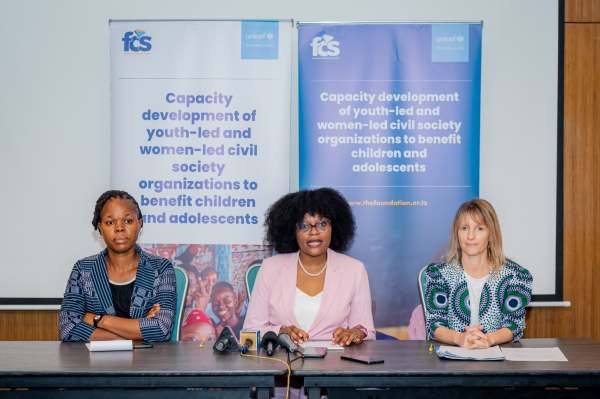
The Community Development Officer for Dar es Salaam Region, Given Sure, highlighted how the initiative aligns with national priorities and strengthens community-level responses.
“Strengthening youth- and women-led organisations directly supports Tanzania’s vision for inclusive development,” she said. “These organisations are at the heart of our communities, and empowering them means empowering citizens to take part in shaping solutions that affect their lives.”
She added that the programme contributes to the implementation of key national frameworks, including Dira 2050 and the National Plan of Action to End Violence Against Women and Children (NPA-VAWC II), by enhancing locally driven prevention and response efforts.
A total of 30 CSOs have been selected through a competitive process to participate in the initiative. In addition to receiving intensive training and mentorship, organisations that successfully complete the programme will be eligible to apply for seed grants of up to TSh 25 million. These funds will support pilot projects aimed at addressing critical challenges within their communities, providing an opportunity to translate new skills into tangible impact. As Tanzania continues to grapple with complex social challenges affecting its young population, the FCS–UNICEF partnership represents a strategic shift toward empowering those best placed to respond. By strengthening the capacity and leadership of youth- and women-led organisations, the initiative is laying the groundwork for more inclusive, sustainable, and locally driven development.