By Correspondent Happyness Hans, Kigoma
In a quiet but consequential transformation unfolding in western Tanzania, Kakonko District is emerging as a model for how targeted government investment can redefine healthcare delivery at the grassroots.
The Ministry of Health’s ongoing efforts to strengthen emergency and critical care services in Kigoma Region are not only improving patient outcomes – they are reshaping the very architecture of care in rural districts.
At the heart of this shift is a deliberate focus on building both systems and people. Since 2024, when the Government funded the construction of a dedicated Emergency Medical Department (EMD) and equipped it with modern tools, Kakonko District Hospital has steadily evolved from a basic care facility into one capable of handling life-threatening emergencies.
Today, cases such as road traffic injuries, cardiac events, respiratory complications, and strokes are managed with increasing speed and precision.
Health workers on the ground are already seeing the difference – and they are speaking about it with clarity. Speaking on April 18, 2026, the District Medical Officer for Kakonko Council, Dr. Nyetera Nyangi, said the ongoing training has been a game changer.
“The training has significantly improved our ability to manage emergency patients, particularly victims of road accidents, those with respiratory complications, heart diseases, and sudden strokes,” he noted.
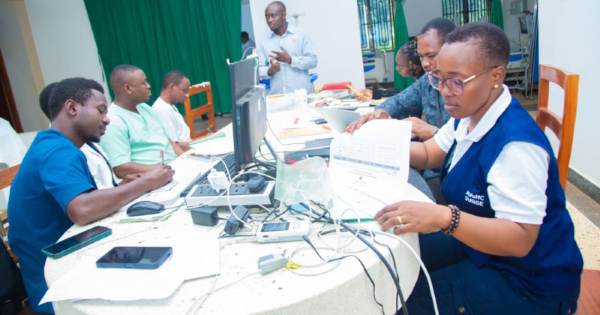
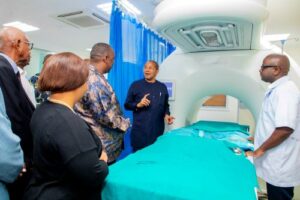
He added that the impact has been amplified by better tools: “The availability of modern and sufficient medical equipment has made it much easier for us to deliver timely and effective care.”
This combination of skills and equipment is proving decisive. For the District Hospital’s Medical Officer-in-Charge, Dr. Khalid Ukwete, the presence of national experts has done more than transfer knowledge – it has reshaped how care is delivered.
“The experts have strengthened our capacity in the proper use of medical equipment and improved our service delivery methods,” he said, adding that the engagements have also helped surface operational gaps. “They have also supported us in identifying key challenges, which is critical for continuous improvement.”
At the frontline of patient care, the changes are equally tangible. Nurse Officer Penina Kimei emphasised how the training is translating into better outcomes.
“We have enhanced our skills in rescuing emergency patients, using modern medical technologies, and providing care for cardiac cases,” she explained. Her experience reinforces a central lesson: investment in human capital is as critical as infrastructure.
This emphasis on capacity building reflects a deeper policy direction – one that recognizes that infrastructure alone cannot transform healthcare. By equipping doctors, nurses, and technicians with specialised skills in emergency and intensive care, the Government is laying the foundation for sustainable improvements.
Nurse Kimei’s call for continuous training underscores this point: healthcare transformation is not a one-off intervention, but an ongoing process.
Equally significant is what this means for patients. Historically, critical cases from districts like Kakonko would require referrals to distant regional or national hospitals, often at great cost and risk.
Today, the decentralisation of emergency services is changing that equation. Faster response times and on-site treatment are saving lives, reducing congestion at referral facilities, and bringing care closer to communities that need it most.

The implications extend beyond Kakonko. This initiative is part of a broader national push to strengthen Tanzania’s emergency response system – enhancing readiness for disasters, improving trauma care, and expanding ICU capacity across the country. It signals a shift from reactive to proactive healthcare planning, where districts are empowered to act as first responders rather than mere referral points.
Crucially, leadership and political will have played a defining role. The Sixth Phase Government’s commitment to healthcare investment – through funding, policy direction, and institutional support – has created an enabling environment for such transformations to take root. It is a reminder that systemic change in public health requires not just vision, but sustained execution. Perhaps the most profound impact, however, lies in equity. By elevating the quality of emergency care in rural and semi-rural areas, the gap between urban and rural health outcomes begins to narrow. Access to timely, life-saving treatment is no longer a privilege of geography, but an emerging standard.