Finance Minister highlights strong economic performance, stable inflation and expanding development partnerships as World Bank pledges continued support for strategic infrastructure and social development.
By Correspondent Benny Mwaipaja, Bangkok
Tanzania’s economy expanded by 6.3 percent in the first quarter of 2026, supported by improving fiscal performance and stable inflation, as the country strengthens its development partnership with the World Bank, which is financing 33 projects worth more than US$8.8 billion.
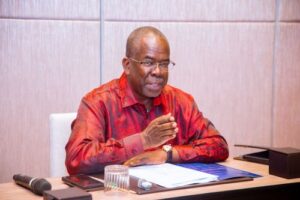
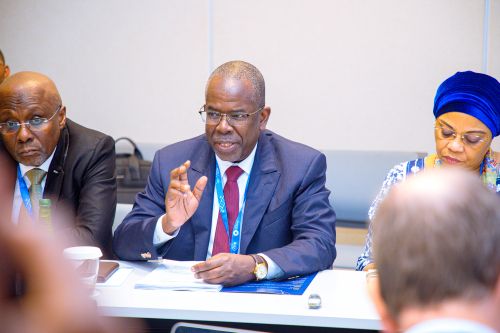
Finance Minister Ambassador Khamis Mussa Omar disclosed the figures on Monday, October 12, 2026, during talks with World Bank Vice-President for Eastern and Southern Africa, Dr. Ndiame Diop, on the sidelines of the Annual Meetings of the International Monetary Fund (IMF) and World Bank in Bangkok, Thailand.
Ambassador Omar said the latest economic performance represented an improvement over previous periods, reflecting the country’s continued economic resilience and progress in implementing development programmes.
He noted that government revenue collection and expenditure management had remained on track, while inflation continued to stay within the authorities’ target range of three to five percent.
The performance, he said, demonstrated Tanzania’s strengthening macroeconomic fundamentals and the importance of continued cooperation with international financial institutions in supporting sustainable economic growth.
A major focus of the discussions was the World Bank’s expanding development portfolio in Tanzania, which currently comprises 33 projects valued at more than US$8.8 billion.
The investments cover several priority sectors, including industry, education, healthcare, agriculture and social protection programmes such as the Tanzania Social Action Fund (TASAF).
Ambassador Omar said the partnership was instrumental in financing major strategic projects designed to improve Tanzania’s competitiveness, strengthen regional connectivity and stimulate economic activity.
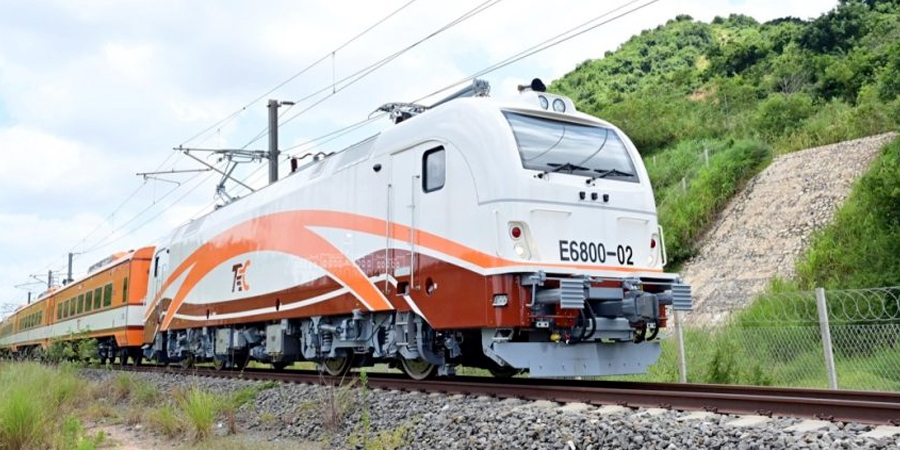
Among the priority investments are the development of Dar es Salaam Port, improvements to the Central Railway Line, also known as the metre-gauge railway (MGR), and the construction of the standard gauge railway (SGR).
The cooperation also extends to energy infrastructure, particularly projects intended to strengthen electricity interconnections between Tanzania and neighbouring Zambia.
These investments are expected to improve transport efficiency, facilitate regional trade, support industrial development and enhance Tanzania’s position as a strategic logistics gateway for landlocked countries in Eastern and Southern Africa.
On cooperation with the IMF, Ambassador Omar said Tanzania had completed its previous financing programme and was undertaking an internal assessment to determine its future financing requirements before considering new arrangements.
Between 2022 and 2026, Tanzania received approximately US$1.7 billion in IMF financing, comprising $1.063 billion under the Extended Credit Facility (ECF) and $636.5 million under the Resilience and Sustainability Facility (RSF).
The programmes, which concluded in August 2026, supported macroeconomic stability and measures aimed at strengthening the country’s resilience to climate-related challenges.
Ambassador Omar reaffirmed Tanzania’s commitment to maintaining constructive relationships with international financial institutions, noting that visits by senior World Bank and IMF officials had reinforced confidence in the country’s development progress.
For Tanzania, continued access to development financing remains particularly important as the government pursues infrastructure modernisation, industrialisation and investment in human capital.
Such financing can help bridge funding gaps in capital-intensive projects while supporting essential public services and initiatives aimed at improving household welfare.
For his part, Dr. Diop commended Tanzania for its economic and development achievements and reaffirmed the World Bank’s commitment to remaining a key partner in financing national and regional development priorities.
He identified energy, education, railway infrastructure, human capital development and poverty reduction through TASAF among the areas that would continue receiving the Bank’s support, subject to Tanzania’s development needs.
The World Bank also intends to maintain its involvement in regional projects aimed at strengthening economic integration and improving cross-border infrastructure.
The discussions come at a time when Tanzania is seeking to accelerate economic transformation through strategic infrastructure investment, stronger productive sectors and expanded access to essential services.
The continued partnership with the World Bank and IMF is therefore expected to remain an important component of the country’s efforts to mobilise development resources, sustain macroeconomic stability and support long-term economic growth.
For businesses and investors, the significance of these partnerships lies in their potential to reduce infrastructure bottlenecks, improve the reliability of energy and transport services, and create a more competitive operating environment.
However, translating large-scale development financing into sustained economic benefits will depend on effective project implementation, sound public financial management and the ability of completed investments to stimulate private-sector activity and employment. With economic growth reaching 6.3 percent in the first quarter and billions of dollars committed to development projects, Tanzania is positioning itself to build on its recent economic gains while deepening cooperation with international financial institutions.