Environment Minister calls for sustainable waste management systems, stronger pollution controls and flood preparedness as Tanzania’s commercial capital faces mounting environmental challenges.
By Business Insider Reporter
Tanzania’s commercial capital, Dar es Salaam, has been urged to transform waste management into an economic opportunity while strengthening its preparedness for potential El Niño-related rainfall and flooding, as the government pushes for more sustainable urban environmental management.
Minister of State in the Vice-President’s Office (Union and Environment), Engineer Hamad Yussuf Masauni, said the city’s authorities must establish reliable waste collection, treatment and disposal systems that protect public health, reduce pollution and create opportunities for investment and employment.
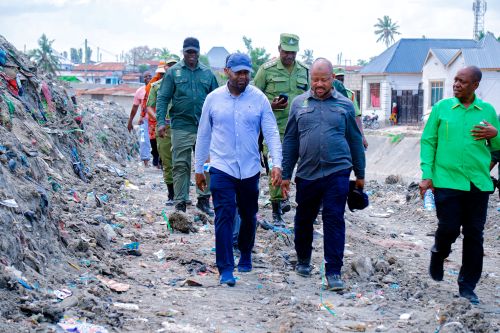
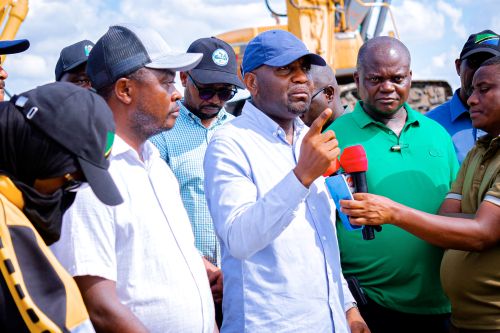
He made the remarks on October 11, 2026, during an inspection of environmental conservation and sanitation activities along the Ng’ombe River in Kinondoni District, Dar es Salaam.
Eng. Masauni stressed that maintaining cleanliness in the country’s principal commercial centre should not depend on occasional directives from senior government officials but must become an integral part of routine operations across municipal authorities and institutions responsible for environmental management.
“Dar es Salaam is the face of the country,” he said, emphasising the responsibility of leaders at every administrative level to ensure the city remains clean and environmentally sustainable.
His remarks highlight the growing importance of efficient waste management in supporting urban economic development, particularly in a city where expanding commercial activities, population growth and infrastructure development place increasing pressure on public services.
Beyond environmental protection, Masauni urged authorities to recognise waste as a potentially valuable economic resource rather than merely a disposal problem.
He said properly organised waste collection, handling and processing could generate income and employment opportunities while reducing environmental degradation.
The approach reflects the principles of a circular economy, in which materials traditionally regarded as waste are recovered, recycled or processed into products with commercial value.
For Dar es Salaam, developing such systems could create opportunities for private-sector participation in waste collection, recycling, processing and the production of reusable materials.
It could also encourage the emergence of small and medium-sized enterprises specialising in waste recovery and environmentally sustainable services.
However, realising these opportunities would require more coordinated collection systems, appropriate processing facilities and stronger enforcement of environmental regulations.
Masauni acknowledged the challenges associated with unplanned settlements in parts of the city but insisted that such conditions should not prevent authorities from controlling indiscriminate waste disposal.
He directed local government institutions, district authorities and regional leaders to strengthen supervision and ensure that environmental management responsibilities are carried out consistently.
The Minister warned that the Vice-President’s Office would not tolerate delays or weaknesses in implementing sanitation and environmental protection measures.
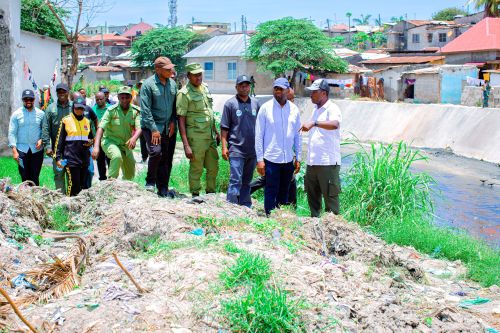
His intervention also comes amid concerns over the vulnerability of settlements along rivers and drainage channels to heavy rainfall.
Poorly managed waste can obstruct drainage systems and waterways, increasing the likelihood of flooding and damage to surrounding infrastructure and property.
For businesses, such disruptions can translate into higher operating costs, interruptions to transport and commercial activities, and potential damage to premises and equipment.
Strengthening waste management and maintaining waterways are therefore not only environmental priorities but also important measures for protecting urban economic activity.
Masauni called for practical steps to reduce the potential effects of El Niño-related rains, particularly in vulnerable residential areas.
For his part, Kinondoni District Commissioner Saad Mtambule said the district was implementing public awareness campaigns to encourage residents to participate in sanitation and environmental conservation activities.
He disclosed that residents living close to the Ng’ombe River had been instructed to vacate vulnerable areas to protect themselves from possible rain-related hazards.
According to Mtambule, demolition of houses in the affected areas had already begun as part of measures to reduce exposure to flooding risks.
He said waste collection and environmental management activities were continuing alongside efforts to strengthen community participation.
Mtambule emphasised that effective environmental protection required cooperation between government authorities and residents, particularly in preventing pollution and maintaining clean and safe neighbourhoods.
From an economic perspective, the government’s renewed emphasis on waste management presents an opportunity to rethink how Dar es Salaam finances and organises essential urban services.
A more structured waste management industry could attract investment, support recycling enterprises and create jobs, while reducing the financial burden associated with pollution, blocked drainage systems and flood damage.
At the same time, better environmental management could improve the city’s attractiveness to businesses, investors and visitors.
The challenge for municipal authorities will be translating the Minister’s directives into sustainable operational systems, supported by adequate financing, institutional accountability and public participation.
As Dar es Salaam continues to expand, integrating waste management, flood prevention and environmental protection into urban development planning will be increasingly important. Ultimately, the success of these measures will be determined not simply by cleaner streets and waterways, but by whether the city can establish an environmentally resilient urban economy in which waste becomes a productive resource and communities are better protected against climate-related risks.