By Costantine Muganyizi
Tanzania’s economy maintained relative macroeconomic stability during the first eight months of 2026, supported by expanding private-sector credit, strong export earnings, tourism receipts and adequate foreign exchange reserves.
However, rising underlying inflation, a widening external deficit and increasing public debt highlighted the challenges facing the country as it starts to implement its long-term development ambitions under Dira 2050.
The Bank of Tanzania’s September 2026 Monthly Economic Review (MER), which provides data through August, shows an economy balancing continued expansion against mounting external pressures, particularly higher international energy costs and disruptions to global trade.
Inflation remains contained, but pressures are building
Headline inflation rose gradually to 4.3 percent in August, from 4.2 percent in July and 3.4 percent in August 2025. Although the rate remained within the government’s 3–5 percent target, the composition of inflation pointed to emerging risks.
Core inflation, which excludes unprocessed food, energy and utilities, increased to 4.1 percent in August, compared with 2.0 percent a year earlier. Services inflation reached 5.9 percent, while transport inflation remained elevated at 13.8 percent.
Food inflation, by contrast, eased to 3.7 percent from 7.7 percent in August 2025, reflecting improved supplies of staple crops, including maize, rice and beans.
“The shift towards core and services inflation suggests that price pressures were becoming more broad-based, even as food supplies helped protect household purchasing power. Renewed increases in global oil prices and weather-related disruptions remained important risks,” economist Godwin Mugisha said.
Monetary policy tightens as credit expands
The central bank (BoT) adopted a less accommodative monetary policy stance after raising the Central Bank Rate to 6.25 percent in July 2026, seeking to contain the potential second-round effects of higher energy, fertiliser and transport costs.
Despite this tightening, credit to the private sector continued to expand rapidly, growing by 33 percent year-on-year in August. Lending growth was particularly strong in transport and communications, mining and quarrying, trade, construction and agriculture.
The overall bank lending rate eased slightly to 15.05 percent in August from 15.1 percent in July, while the negotiated rate for prime borrowers declined to 11.93 percent. This suggests that credit remained available to businesses, although borrowing costs continued to be significant.
Exports and tourism support foreign exchange earnings
The external sector benefited from tourism receipts, gold and other commodity exports.
“Exports of goods and services increased by 16.4 percent to US$20,216.2 million in the year ending August 2026. Goods exports rose by 19.8 percent to US$11,960.8 million, from US$9,981.2 million in the corresponding period of 2025, stemming from exports of gold and manufactured goods, together with gains in key traditional exports,” BoT notes in the new MER.
“Gold exports increased to US$5,625.0 million from US$4,321.5 million on account of higher global prices and volumes, contributing nearly two-thirds of the overall increase in goods exports,” it adds. “Travel receipts increased to US$4,389.7 million from US$4,314.7 million, reflecting continued resilience in tourism.”
Gross official foreign exchange reserves stood at US$5.89 billion at the end of August, sufficient to cover 4.2 months of projected imports, excluding foreign direct investment-related imports.
The shilling averaged TSh2,657.01 against the US dollar in August, compared with TSh2,653.52 in July. The annual depreciation was 6.7 per ent, partly reflecting a base effect arising from the shilling’s appreciation in August 2025.
However, the external position faced pressure from stronger import demand.
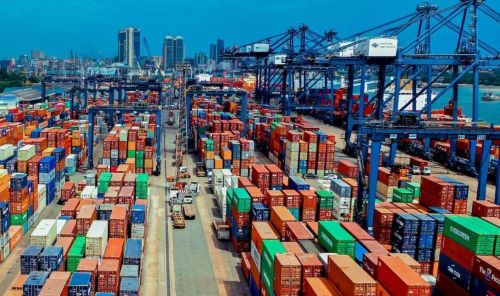
“Imports of petroleum products rose by 51.7 percent to US$3,425.6 million, from US$2,257.4 million in the year ending August 2025. Petroleum products accounted
for about one third of the increase in the goods import bill.”
The current account deficit widened to US$2.48 billion in the year ending August 2026, from US$1.70 billion in the corresponding period a year earlier. Imports of goods and services increased by 40.4 per cent, while exports rose by 18.8 per cent to US$1.85 billion.
Revenue collection strengthens, but debt rises
In June, the final month of the 2025/26 financial year, total revenue collections reached TSh4.66 trillion, exceeding the monthly target by 5.4 per cent. Tax revenue amounted to TSh3.73 trillion, surpassing its target by 12.5 per cent, reflecting improvements in tax administration and compliance.
Government expenditure stood at TSh4.72 trillion in June, including TSh1.92 trillion allocated to development projects. The figures point to continued efforts to finance public services and infrastructure while mobilising domestic resources.
Nevertheless, the national debt stock increased by 1.7 per cent month-on-month to US$52.22 billion at the end of August. External debt accounted for 70.3 per cent of the total, while domestic government debt reached TSh40.90 trillion.
The economic test ahead
Financial markets showed continued investor appetite for government securities. In August, Treasury bond auctions attracted bids worth TSh2.14 trillion against a combined tender of TSh621.5 billion for 15-year and 25-year bonds, demonstrating substantial demand for long-term government instruments.
Yet the broader economic picture remains mixed. Tanzania entered the final months of 2026 with contained headline inflation, strong private-sector lending and adequate foreign exchange reserves, but also with rising underlying price pressures, a widening current account deficit and a growing debt burden. “As implementation of Dira 2050 begins in the 2026/27 financial year, the central economic challenge is to convert macroeconomic stability into stronger domestic production, competitive exports, productive employment and higher household incomes,” economist Mr Mugisha told Business Insider.