Student financing expands as Tanzania strengthens investment in skills, digital services and sustainable higher education funding.
By Business Insider Reporter
Tanzania’s Higher Education Students’ Loans Board (HESLB) has recorded significant growth in student financing, loan recovery and digital service delivery over the past five years, positioning the institution as an increasingly important driver of human capital development and economic transformation.
The achievements include a record TSh1.06 trillion allocation for the 2026/27 academic year, expected to support at least 300,000 students, alongside improved loan collections and expanded financing for diploma programmes and specialised skills.
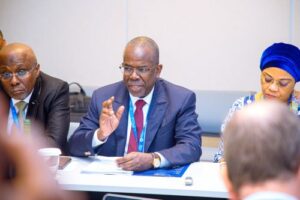
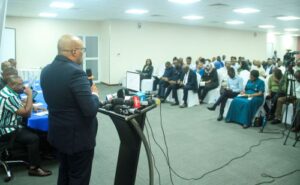
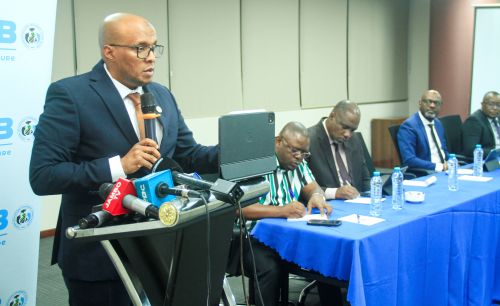
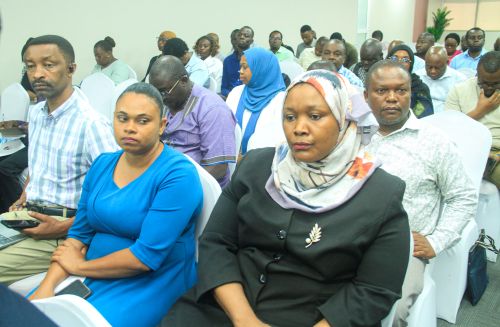
HESLB Executive Director, Dr. Bill Kiwia (pictured above), outlined the achievements during a meeting with media editors organised by the Office of the Treasury Registrar in Dar es Salaam on Monday, October 12, 2026.
He said the institution had progressively evolved from a conventional student loan provider into a comprehensive financing organisation managing applications, loan allocation, disbursement, customer services and repayment.
The transformation, he explained, reflects the government’s growing recognition of higher education financing as a strategic investment in Tanzania’s future workforce and economic competitiveness.
The Sh1.06 trillion allocation represents a 15.6 percent increase over the TSh916.7 billion provided in 2025/26, which benefited 289,932 students.
Dr. Kiwia disclosed that the first phase of loan and grant allocations for 2026/27, announced on October 10, had already covered 165,775 students, involving Sh535.7 billion.
Among first-year beneficiaries, 74,769 undergraduate students received allocations totalling TSh246.88 billion, while 8,538 diploma students were allocated TSh22.9 billion. Another 873 students received TSh4.5 billion through the Samia Scholarship programme.
Continuing students also benefited, with 79,115 undergraduates allocated TSh252.4 billion and 1,554 diploma students receiving Sh3.8 billion.
The expansion of diploma financing represents another major achievement, particularly as Tanzania seeks to strengthen technical and professional skills required by industries and emerging economic sectors.
Introduced in 2023/24, diploma-level loans have widened access to financing beyond traditional university degree programmes. For 2026/27, HESLB expects to finance 24,978 diploma students in priority disciplines, including 14,000 new entrants.
The Board has also expanded specialised scholarships supporting science, technology, engineering and mathematics (STEM).
Launched in 2022/23 with 636 beneficiaries, the Samia Scholarship programme is expected to support 2,738 students this academic year, including 1,000 newcomers.
Beyond financing expansion, Dr. Kiwia highlighted significant improvements in loan recovery, an essential component of building a financially sustainable student funding system.
HESLB collected a record TSh235.5 billion during 2025/26, exceeding its Sh220 billion target by seven percent.
The performance marked a substantial improvement from approximately TSh177 billion collected in 2023/24 and TSh194 billion in 2024/25.
Cumulative recoveries between 2005/06 and June 2026 reached TSh1.91 trillion, representing 69 per cent of the TSh2.77 trillion in matured loans.
The Board has introduced repayment initiatives, including the Kiduchu Fresh Tunasonga campaign, encouraging beneficiaries with limited incomes to make smaller contributions according to their financial capacity.
Dr. Kiwia stressed that repayments were essential because recovered funds could finance another generation of students.
Digital transformation has similarly strengthened operational efficiency.
Through its online loan application and management system, student accounts, mobile application and digital disbursement platforms, HESLB has simplified applications, verification and payments while reducing processing times.
The institution has also introduced artificial intelligence-powered customer assistance systems, including Bwanaboom and Bibiboom, to provide faster responses to student enquiries.
Institutional governance has improved, with HESLB attaining ISO 9001:2015 quality management certification and receiving clean audit opinions throughout its fifth strategic planning period.
The Board completed 82 per cent of its 2021/22–2025/26 strategic plan and resolved 80 per cent of audit findings. It also reported that 72 per cent of eligible loan applicants received allocations.
Its newly launched sixth strategic plan, covering 2026/27–2030/31, seeks to transform HESLB into a broader national student financing fund.
The strategy aligns with Tanzania Development Vision 2050, which targets higher education attainment among at least 25 per cent of Tanzanians by 2050.
Nevertheless, Dr Kiwia acknowledged continuing challenges, particularly approximately Sh800 billion owed by beneficiaries who have not come forward to repay their loans.

Reaching graduates in the informal economy and integrating institutional information systems also remain priorities.
He said future progress would depend on stronger partnerships, improved technology and sustained loan recovery.
For Tanzania’s economy, the achievements underscore the growing importance of higher education financing in developing skilled labour, widening economic opportunities and supporting long-term productivity. The challenge ahead is ensuring that expanding student access translates into employable skills, stronger repayment performance and a financially sustainable system capable of supporting successive generations.