By Correspondent Benny Mwaipaja, Bangkok
Tanzania is stepping up efforts to secure financing for priority development projects under the World Bank’s 21st International Development Association (IDA21) replenishment, as the government seeks to mobilise additional resources to support economic growth and the implementation of its National Development Vision 2050.
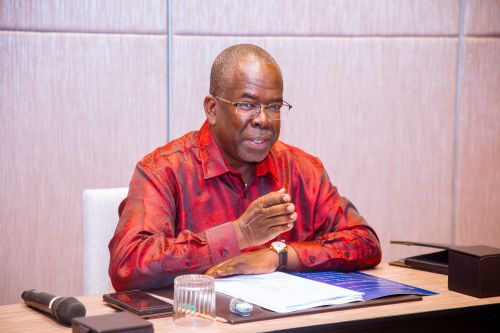
Finance Minister Ambassador Khamis Mussa Omar said the government had already submitted a preliminary list of projects for potential World Bank financing and would use the Annual Meetings of the International Monetary Fund (IMF) and World Bank Group in Bangkok to advance discussions on funding arrangements.
The meetings, scheduled for October 12–18, 2026, provide Tanzania with an opportunity to engage international financial institutions, development partners and potential lenders on financing its development agenda.
Speaking during a preparatory meeting for Tanzania’s delegation, Ambassador Omar said the country was determined to translate its participation into tangible economic and social benefits.
“One of the key priority areas is the implementation of the 21st IDA cycle (IDA21), for which the government has submitted a preliminary list of projects expected to receive World Bank financing, to ensure that national priority projects secure the funding they require,” he said.
IDA is the World Bank’s concessional financing arm, providing grants and low-interest financing to eligible developing countries to support investments in infrastructure, human capital and other development priorities.
For Tanzania, access to such financing is particularly important as the government seeks to expand infrastructure, improve public services and support private-sector-led growth while managing public debt and fiscal pressures.
Expanding financing options
Ambassador Omar said Tanzania’s participation in the meetings was strategic, particularly in mobilising external resources and strengthening the management of development financing.
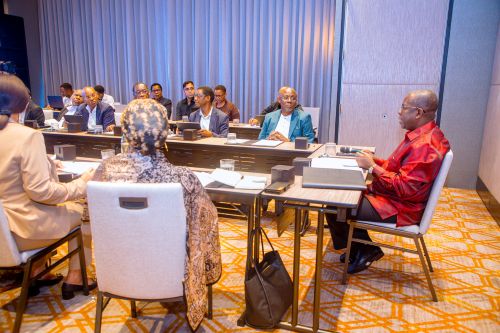
The delegation plans to hold high-level discussions with senior officials of the IMF and World Bank Group, including the World Bank vice-president responsible for the Eastern and Southern Africa region and executive directors.
The discussions are expected to focus on advancing Tanzania’s development priorities and identifying opportunities for additional financial and technical cooperation.
Beyond traditional development financing, Tanzania is also seeking to diversify its funding sources by engaging new lenders and maintaining dialogue with international credit rating agencies, including Moody’s and Fitch Ratings.
According to the minister, these engagements are intended to expand financing opportunities and strengthen investor confidence in Tanzania’s economy.
Credit ratings play an important role in shaping international investors’ perceptions of sovereign risk and can influence the cost and availability of external borrowing.
The government is also considering opportunities for general budget support (GBS), where appropriate, to help meet financing requirements for development programmes.
Ambassador Omar stressed that Tanzania’s participation in the annual meetings was not merely an exercise in economic diplomacy but a practical effort to secure resources and ensure that financed projects are implemented effectively.
Trade and tourism opportunities
During the preparatory meeting, Tanzania’s Honorary Consul in Thailand, Florean Rwehumbiza, briefed the delegation on efforts to strengthen economic relations between Tanzania and Thailand, particularly in trade, tourism and healthcare.
He said his office had been promoting Tanzania as a tourism destination across Southeast Asian markets, including Malaysia, Vietnam, Cambodia and Laos, as well as Hong Kong.
According to Rwehumbiza, the promotional initiatives have contributed to efforts to attract airlines to establish direct connections with Tanzania, potentially improving access for tourists and business travellers.
Improved air connectivity could support Tanzania’s tourism industry while creating additional opportunities for trade and investment between East Africa and Southeast Asia.
Medical tourism highlights financial outflows
Rwehumbiza also highlighted the growing demand for medical services in Thailand among Tanzanian patients.
He said Tanzania ranked second among African countries in the number of patients travelling to Thailand for treatment.
According to figures he presented, Tanzanians spent approximately 150 million Thai baht on medical services in Thailand between December 2025 and June 2026.
The expenditure highlights the financial significance of outbound medical tourism and the potential economic benefits of expanding access to specialised healthcare services within Tanzania.
Greater domestic capacity in advanced medical treatment could help retain some of the expenditure currently directed to overseas hospitals, while creating opportunities for investment in healthcare infrastructure, medical technology and specialist training.
On travel facilitation, Rwehumbiza said his office was pursuing arrangements to make travel between Tanzania and Thailand easier, including advocating for visa-on-arrival facilities for Tanzanian travellers.
He also outlined what he described as favourable yellow fever documentation arrangements for Tanzanian travellers entering Thailand, subject to their travel routes.
Parliament backs resource mobilisation
Deputy Chairman of Parliament’s Standing Budget Committee Ali Hassan Omar commended the Ministry of Finance for involving parliamentary representatives in the IMF and World Bank meetings.
He said the engagement would strengthen understanding of the government’s efforts to mobilise financial resources and support the successful implementation of National Development Vision 2050. The preparatory meeting was also attended by Zanzibar’s Minister of Finance, Dr. Juma Malik Akil.