
By Correspondent Peter Haule, Ngorongoro
The government is exploring the establishment of a new customs facility along its border with Kenya in the Ngorongoro District, a move aimed at strengthening cross-border trade, improving revenue collection and unlocking economic opportunities in one of the country’s strategically important frontier regions.
Deputy Minister for Finance, Eng. Mshamu Ali Munde, has directed Ngorongoro District authorities to prioritise land-use planning in areas earmarked for potential customs infrastructure, warning that unregulated settlements and commercial developments could undermine future government investment.
The directive followed a working visit to Ngorongoro, undertaken in response to a request by the constituency’s Member of Parliament, Yannick Ndoinyo, for customs services in the Loliondo and Sale divisions of Arusha Region.
Munde said the government was considering the proposal, with technical experts tasked with assessing potential sites before a decision is made.
“Strategic areas must be planned well in advance to prevent unregulated construction that could interfere with future government development plans. These areas should not be occupied indiscriminately,” he said.
The Deputy Minister expressed concern that residential and commercial developments were already emerging in locations considered strategically important for potential customs facilities.
He stressed that Ngorongoro’s geographical size, economic potential and proximity to Kenya required a comprehensive land-use strategy capable of accommodating future infrastructure, investment and population growth.
Unlocking border trade potential
The proposed customs facility could strengthen formal trading activities between communities in northern Tanzania and southern Kenya, particularly in areas where economic interactions already take place across the border.
Ngorongoro’s border communities have longstanding economic and social connections with neighbouring Kenyan communities, creating opportunities for trade in livestock, agricultural products, consumer goods and other commodities.
Improved customs infrastructure could help traders access formal clearance services closer to their operations, potentially reducing transport costs, improving compliance and facilitating legitimate cross-border commerce.
For the Tanzania Revenue Authority (TRA), better customs coverage could also create opportunities to strengthen revenue administration and improve the monitoring of goods moving across the border.
However, the scale of these benefits would depend on trade volumes, infrastructure requirements, regulatory arrangements and the eventual location of the facility.
Munde said challenges facing border communities should not be viewed solely as obstacles but also as opportunities for economic transformation through better planning and targeted investment.
He noted that Ngorongoro possesses considerable economic and strategic potential which, if properly managed, could stimulate local development and improve livelihoods.
Land-use planning key to investment
Beyond customs administration, the Deputy Minister placed particular emphasis on protecting strategically located land for future development.
He said the district’s continued growth required authorities to anticipate future demand for public infrastructure, commercial facilities and other investments.
Effective land-use planning, he added, would help create an enabling environment for investors while ensuring that government development projects are not obstructed by unplanned settlements.
The directive highlights the importance of coordinating infrastructure development with local planning, particularly in frontier areas where expanding commercial activity can rapidly increase demand for transport links, storage facilities and public services.
Munde said technical teams had been instructed to assess the proposed customs locations and determine their suitability under existing legal and administrative requirements.
:Our experts have been directed to analyse and assess these areas so that we can eventually reach a consensus on the appropriate course of action,” he said.
He emphasised that any final decision would take into account both government interests and the welfare of communities living in the affected areas.
Strengthening border management
The Deputy Minister also directed the Commissioner of Immigration responsible for border management to strengthen oversight of the frontier areas while the government evaluates the proposed customs facility.
He said information presented during the visit indicated that economic activities and cross-border movement increase significantly on Mondays.
According to Munde, the pattern presents an opportunity for relevant authorities to conduct on-site assessments and better understand the operational requirements of the border.
Such assessments could help establish whether additional customs and immigration infrastructure is necessary and identify measures to improve border management without unnecessarily disrupting legitimate economic activities.
The initiative also aligns with the broader objectives of the East African Community (EAC), which seeks to facilitate regional trade through improved border management, customs cooperation and reduced non-tariff barriers.
Nevertheless, the proposed Ngorongoro facility remains at the assessment stage, with no construction timetable, investment cost or final location announced.
Local authorities pledge cooperation
Ngorongoro District Commissioner, Lieutenant Colonel Robert Augustino Kakomangile, alongside representatives from the Immigration Department and TRA, pledged to implement the Deputy Minister’s directives.
They welcomed the visit, describing it as an important step towards addressing longstanding concerns about customs services and border infrastructure in the district.

The visit also fulfilled a commitment Munde had made to Ngorongoro MP Yannick Ndoinyo during parliamentary proceedings in Dodoma.
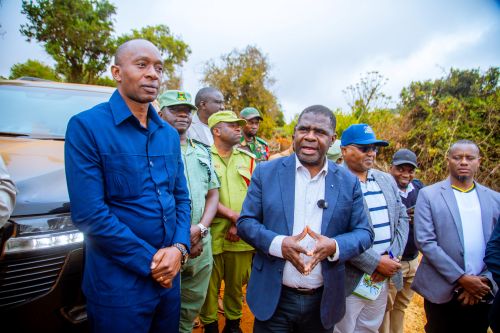
During the tour, the Deputy Minister inspected border areas at Njoroi Village in Ololosokwan Ward and Olmiti Village in Enguserosambu Ward, both in Loliondo Division.
For Ngorongoro, the government’s assessment could mark an important step towards integrating remote border communities more effectively into Tanzania’s formal trading system. If approved and supported by appropriate infrastructure, the customs facility could provide a new platform for local commerce, investment and revenue collection while strengthening Tanzania’s economic connections with neighbouring Kenya.