By Business Insider Reporter, Dodoma
Tanzania’s ambition to build a resilient, high-quality healthcare system is increasingly colliding with a hard economic reality: the sector remains one of the least attractive for private capital despite its growing demand and strategic importance.
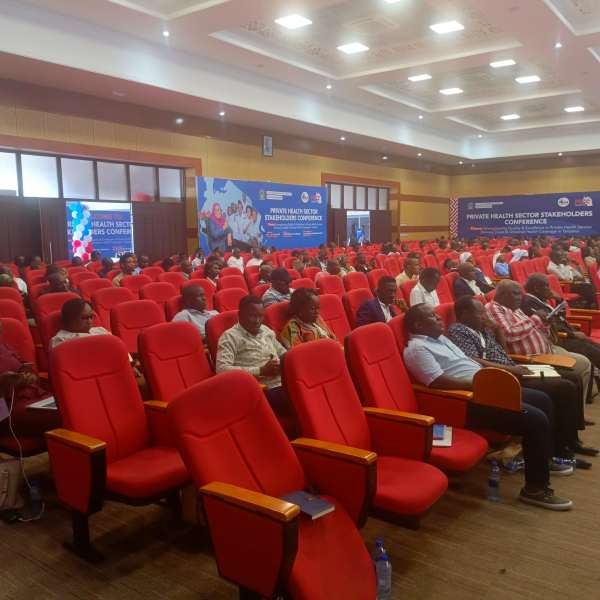
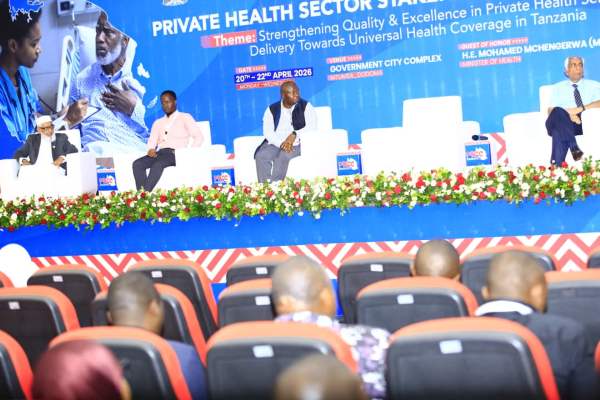
That tension took centre stage in Dodoma this week, where stakeholders at the inaugural Private Health Services Conference (PHSC) called for a fundamental reset in how government and business collaborate to finance and deliver care.
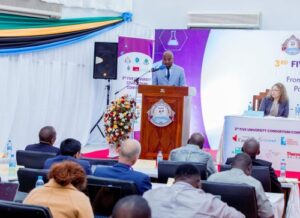
At the heart of the discussion was a stark proposition from Bashir Haroon (pictured), Executive Director of Shifaa Pan African Hospital: without deeper public–private partnerships, Tanzania risks underinvesting in a sector that is both a social necessity and an emerging economic frontier.
The investment paradox
Haroon’s intervention exposes a structural contradiction. Healthcare demand in Tanzania is rising sharply – driven by population growth, urbanisation and the surge in non-communicable diseases (NCDs) – yet private investment remains subdued.
He noted that the reasons are fundamentally economic. One, he said, healthcare is capital intensive, requiring significant upfront investment in infrastructure, equipment, and specialised personnel.
He also noted that despite the heavy investments needs, returns, meanwhile, are slow, often taking five years or more to materialise. Compared with sectors such as real estate, transport or manufacturing, the risk-return profile appears less attractive.
But the issue runs deeper than financial metrics.
“Healthcare is not a business per se – it is a service to humanity,” Haroon noted, framing the sector as one that blends commercial logic with social obligation. That duality complicates traditional investment models, particularly in markets where patient affordability remains constrained.
A sector shaped by moral economics
He noted that being the case, healthcare operates under what could be described as “moral economics”.
“Demand is universal and urgent – illness does not discriminate by income or status – but the ability to pay does. This creates a persistent gap between need and revenue potential, making it difficult for purely market-driven models to thrive without policy support,” he said.
In practical terms, he noted, this is where government intervention becomes indispensable – not as a replacement for private capital, but as a risk-sharing partner.
Mr. haroon said globally, successful healthcare systems rely on hybrid models. Public financing, insurance frameworks, regulatory support, and targeted subsidies help de-risk private investment while ensuring access and equity.
Tanzania’s structural opportunity
For Tanzania, the timing of this debate is significant. The country is advancing long-term frameworks such as Dira 2050, which positions healthcare as both a social service and a potential growth sector – particularly through medical tourism and specialised care.
Recent investments in institutions such as the Jakaya Kikwete Cardiac Institute and Muhimbili National Hospital signal a shift towards high-value, specialised treatment. However, scaling such capacity nationwide will require far greater private sector participation.
Mr. Haroon stressed that this is where public–private partnerships (PPPs) could play a catalytic role, especially in expanding tertiary and specialised care facilities, bridging infrastructure gaps in underserved regions, supporting digital health and diagnostics, and strengthening supply chains across pharmaceuticals and medical equipment.
The prevention gap
Another critical theme emerging from the discussions is the underinvestment in preventive healthcare.
As lifestyles change and urban pressures mount, non-communicable diseases – such as diabetes, hypertension and cardiovascular conditions – are becoming more prevalent. Yet preventive care remains underutilised, even among middle-income populations.
“This represents both a public health risk and a missed economic opportunity. Preventive healthcare reduces long-term treatment costs and creates new service markets – from diagnostics to wellness programmes – where private providers can play a leading role,” he advised.
Lessons from emerging markets
He drew comparative experience suggesting that policy clarity and private sector empowerment should be decisive.
“Countries such as India have built globally competitive healthcare industries by actively integrating private providers into national strategies, particularly in specialised care and medical tourism,” he said.

Tanzania’s policymakers appear to be moving in a similar direction, but execution remains key. Investors require predictable regulatory frameworks, viable financing mechanisms, and clear pathways to profitability.
Redefining the role of private capital
He also suggested the need for a shift in how private healthcare is structured. He said beyond large hospitals, there is growing scope for specialised diagnostic centres, polyclinics and outpatient facilities, as well as community pharmacies that go beyond dispensing medicines to providing professional advisory services within regulated limits.
“Such models are typically more scalable and capital-efficient, making them attractive entry points for investors. At the same time, digital transformation – from patient records to telemedicine – offers opportunities to reduce costs and expand access, particularly in rural areas,” he noted.
A system built on people
Amid the financial and policy discussions, one consistent theme stood out: healthcare remains fundamentally human-centred, Mr. Haroos stressed.
From frontline nurses to specialised consultants, he said the system depends on skilled professionals delivering compassionate care.
In advanced systems, nurses often form the backbone of patient management – an area Tanzania must continue to strengthen through training and investment.
The policy imperative
Ultimately, the message from Dodoma is clear. Tanzania cannot achieve universal, high-quality healthcare through public financing alone, nor can it rely solely on market forces.
A deliberate, well-structured partnership between government and the private sector is essential. Such collaboration must go beyond rhetoric, translating into actionable frameworks that align incentives, share risks, and unlock capital.

If executed effectively, the payoff extends beyond healthcare. It strengthens human capital, reduces economic vulnerability, and positions Tanzania to compete in emerging sectors such as medical tourism. In that sense, healthcare is not just a cost centre – it is a strategic investment in the country’s long-term growth.