
By Business Insider Reporter, Kibaha
Tanzania has reaffirmed that future industrial investment must be built on environmental sustainability, signalling that economic growth and environmental protection will increasingly go hand in hand as the country pursues its Dira 2050 development agenda.
Minister of State in the Vice President’s Office (Union and Environment), Eng. Hamad Yussuf Masauni, said investors seeking to establish industries in Tanzania must fully comply with environmental laws, warning that the government wants industrial expansion without compromising communities or natural resources.
Speaking during a development tour in Kibaha District, Coast Region, Masauni said environmentally responsible investment is essential if Tanzania is to achieve sustainable industrialisation while creating jobs and improving living standards.
“We welcome investment because it creates opportunities for our young people and strengthens the economy. What we do not want is investment that ignores environmental laws and eventually forces us to shut down factories that should have been creating employment,” he said.
His remarks come as Tanzania continues to position itself as one of East Africa’s leading investment destinations, with manufacturing identified as a key driver of economic transformation under Dira 2050 and the Third Five-Year Development Plan.
Sustainable investment becoming a competitive advantage
The government’s message reflects a growing global shift towards Environmental, Social and Governance (ESG) standards, which increasingly influence where international investors deploy capital.
Across global markets, financial institutions and multinational companies are placing greater emphasis on environmental compliance, carbon management and sustainable production before committing long-term investments.
For Tanzania, ensuring industries comply with environmental regulations is becoming an important component of improving the country’s investment climate.
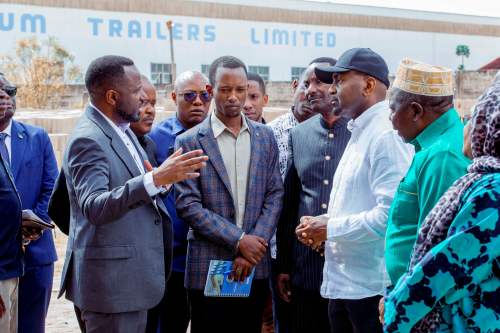
Masauni urged investors to work closely with environmental authorities from the earliest stages of project development to ensure industrial projects deliver economic benefits without becoming a burden to surrounding communities.
“We must maintain continuous engagement with environmental authorities so that investment contributes to development without creating environmental challenges for citizens,” he said.
Pwani emerging as industrial corridor
The Minister made the remarks while commissioning several development projects in Kibaha Municipality, including a new commercial centre and laying the foundation stone for an English-medium school in Kongowe Ward.
The visit also highlighted the rapidly growing economic importance of Coast Region, which has become one of Tanzania’s fastest-expanding industrial zones.
Pwani Regional Commissioner Abubakar Kunenge attributed the influx of investors largely to improved infrastructure, particularly the availability of reliable electricity.
“We have created a business-friendly environment for investors. Reliable power supply has encouraged continuous growth in the number of factories, helping raise household incomes and increase regional revenue,” Kunenge said.
The region has benefited from major public investments in transport infrastructure, electricity distribution and industrial parks, strengthening its role as an extension of the Dar es Salaam commercial and logistics corridor.
Its proximity to the Port of Dar es Salaam, the Standard Gauge Railway and key trunk roads has made Pwani increasingly attractive to manufacturers serving both domestic and regional markets.
Industrial growth and local enterprise
Beyond attracting large-scale manufacturers, the government is seeking to ensure industrial expansion stimulates entrepreneurship and employment among young Tanzanians.
Masauni stressed that youth should become active participants in the investment ecosystem rather than passive observers.
He noted that as new industries expand, demand for skilled workers, service providers and entrepreneurs will continue to increase.
The government is therefore investing in commercial infrastructure and business facilities designed to help young people establish enterprises that can support industrial development.
A modern vehicle service workshop located along the region’s main highway, for example, is expected to serve thousands of commercial vehicles operating between Dar es Salaam and the country’s interior, creating opportunities for mechanics, suppliers and transport-related businesses.
Stronger local revenues supporting development
Kibaha Urban Member of Parliament Silvestry Koka said improved tax collection has enabled the municipality to invest more aggressively in income-generating projects while expanding the statutory 10 per cent youth, women and people with disabilities loan programme.

According to Koka, investments in commercial infrastructure will strengthen private sector participation while supporting implementation of Vision 2050, which places private enterprise at the centre of Tanzania’s long-term economic transformation.
The government expects such investments to broaden the municipal revenue base, improve service delivery and create a more dynamic local business environment.
Balancing growth with environmental stewardship
As Tanzania accelerates industrialisation, policymakers increasingly recognise that long-term competitiveness will depend not only on attracting investment but also on ensuring that growth remains environmentally sustainable.
The country’s environmental legislation requires investors to undertake Environmental Impact Assessments (EIAs), adopt pollution-control measures and comply with environmental management standards before commencing operations.
These requirements are becoming increasingly important as global manufacturers and financiers prioritise sustainable supply chains and low-carbon production.
By emphasising environmental compliance alongside industrial expansion, Tanzania is seeking to position itself as a destination where responsible investment can flourish.
For businesses, the message is clear: future competitiveness will increasingly depend on combining profitability with environmental responsibility. As the country pursues its ambition of becoming an upper middle-income, industrialised economy by 2050, sustainable investment is no longer simply a regulatory obligation – it is emerging as a strategic business advantage.